



Mobile App for Managing Touchscreen Displays
Last updated: 12 May 2026
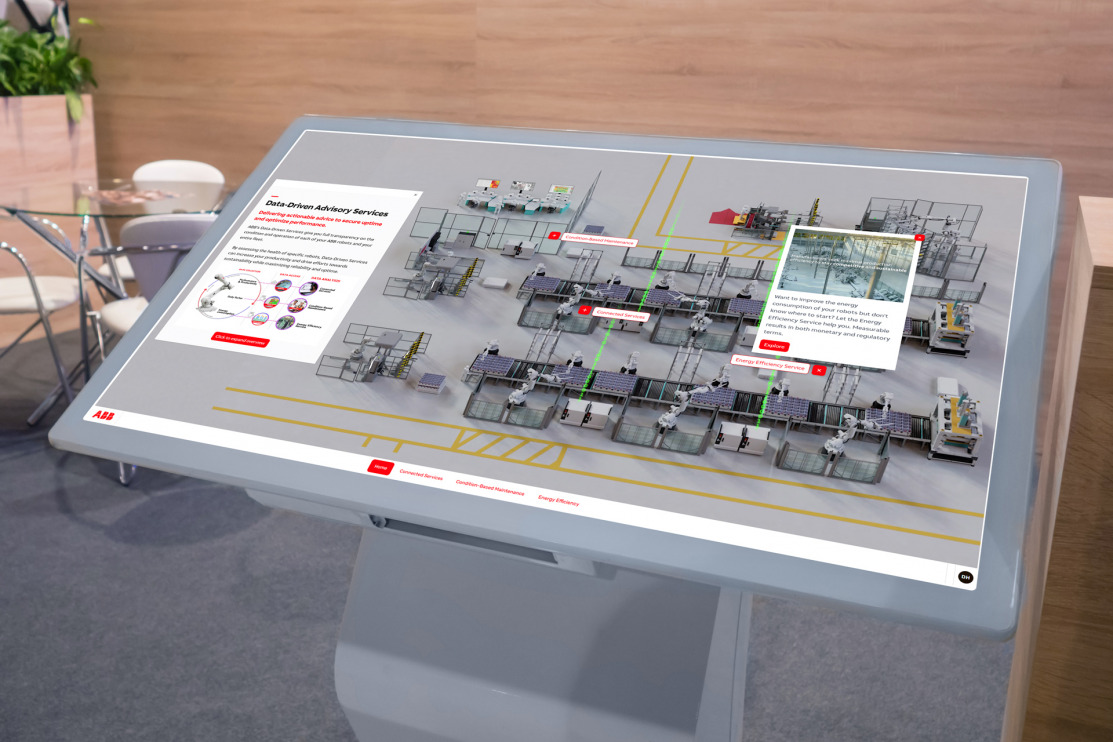
Trade show booths with interactive screens draw 35% more visitors than traditional static setups, yet most teams still manage their displays the old-fashioned way, manually adjusting content from a single workstation or fumbling with hardware controls. If you’re spending event hours troubleshooting display issues or missing lead opportunities because someone needs to physically walk to the booth to change the content, you’re leaving money on the table. The reality is that a mobile app for managing touchscreen displays eliminates these friction points entirely, giving your team the flexibility to optimize booth performance in real-time from anywhere on the event floor. In this guide, you’ll discover how mobile-first touchscreen management works, what features actually drive results, and why leading brands are moving away from static booth setups and toward apps that put display control in your team’s hands. Whether you’re managing a single 55-inch screen or coordinating four unique experiences across different booth zones, the right app transforms your touchscreen setup from a fixed installation into a dynamic, responsive marketing tool.
Key Takeaways
- A mobile app for managing touchscreen displays lets your team adjust content, monitor visitor engagement, and capture leads from anywhere on the event floor in real-time.
- The most effective touchscreen display apps combine remote control functionality with offline capability, eliminating dependency on unreliable event WiFi.
- Interactive displays with mobile management achieve average dwell times of 5 to 12 minutes per visitor, a 10–15x increase compared to passive booth setups.
- Lead capture tools integrated into mobile management apps enable instant delivery of content to visitors and provide post-event tracking data that directly improves ROI measurement.
Why Mobile Control Matters for Touchscreen Displays
The traditional approach to managing trade show touchscreens involves a laptop tethered to the booth, a dedicated team member monitoring the display, or worse, hardcoded content that cannot be changed once the event begins. Each of these setups creates bottlenecks. Your sales rep needs to walk over to the workstation to update a product feature. A technical issue requires someone with credentials to manually restart the system. A competitor’s booth just launched a flash promotion, and you have no way to respond quickly. Mobile app control removes these constraints entirely by putting display management in the palm of your team’s hand.
According to research from EXHIBITOR Magazine’s engagement studies, booths with interactive technology achieve average dwell times of 5 to 12 minutes per visitor, compared to roughly 45 seconds for passive displays. That’s a 10–15x increase in the window your sales team has to start a meaningful conversation. But that advantage only compounds when your team can dynamically respond to what’s working. If a particular product tour is generating more swipes and taps, a mobile app lets you instantly prioritize that content. If foot traffic slows, you can adjust the display messaging or trigger an eye-catching animation without losing momentum.
Beyond real-time optimization, a mobile app creates a shared command center for your booth team. Rather than one person being the gatekeeper of display content, your entire marketing and sales crew can collaborate, adjust messaging, and respond to visitor questions with the confidence that they have full visibility into what’s showing on screen. This distributed control model is especially valuable when our services scale to multiple displays or multi-zone booth layouts, where manual coordination would otherwise create chaos.
Essential Features of a Touchscreen Display Management App
Not every mobile app that claims to manage displays is built for the demands of event environments. The best platforms combine ease of use with technical robustness, ensuring that your team can make changes with confidence and that visitors experience seamless, lag-free interactions. Here are the features that separate effective apps from mediocre ones.
Remote Content Updates and Real-Time Publishing
The ability to push content updates to your touchscreen displays instantly, without restarting the system or losing visitor interactions, is foundational. A modern touchscreen display management app works by allowing authorized team members to update images, videos, product descriptions, and call-to-action messaging from any smartphone or tablet on the event floor. Changes propagate immediately to the screen, so if a demo video finishes or a promotion needs adjustment, it happens in seconds rather than minutes. This is particularly valuable for how to customize touchscreen interface for tradeshow scenarios where booth messaging must adapt to audience feedback or unexpected visitor flows.
Lead Capture and Contact Management Integration
68% of trade show attendees believe booths featuring innovative technology have limitless potential, signalling that visitors actively expect and reward tech-driven experiences. To capitalize on that expectation, your mobile app must integrate tightly with touchscreen software with lead capture tools, enabling visitors to share their contact details directly from the screen or allowing your team to send materials instantly. A properly designed app syncs visitor data in real-time, so your sales team can follow up with specific product details that each visitor actually engaged with, rather than generic company brochures. This level of personalization dramatically increases post-show conversion rates.
Offline Functionality and Network Independence
Event WiFi is notoriously unreliable, and most trade show venues charge premium rates for bandwidth. A mobile app that depends entirely on cloud connectivity becomes a liability rather than an asset. The most robust touchscreen display management solutions operate entirely offline, with the app managing displays via local network protocols (Bluetooth, local WiFi direct, or USB connection). Touchscreen software with offline capability ensures that your displays continue functioning flawlessly regardless of event venue internet conditions, while your team’s mobile app still provides full control and monitoring.
Analytics and Visitor Engagement Tracking
A display is only useful if you can measure how visitors interact with it. The best mobile apps include built-in analytics that track which content zones receive the most taps, how long visitors spend on each screen, which videos get watched to completion, and which call-to-action buttons drive the most clicks. This data streams directly to your mobile app dashboard, so you can see booth performance metrics in real-time and make evidence-based decisions about content strategy mid-event.
Real-World Benefits: Lead Capture and Engagement Tracking
The theoretical advantage of mobile display control becomes tangible when you see the numbers. Interactive displays can increase booth dwell time by 30–40% and lead capture by up to 35%. But these statistics only materialize when your team actively uses mobile management to optimize the experience.
Why Attendees Engage More With Interactive Touchscreens
The self-service nature of touchscreens is a fundamental part of why they work. Unlike static banners or brochures, interactive displays invite participation and transform passive observers into active leads. Attendees can browse content, explore products, and drill into detail at their own pace, no need to wait for a rep to become available. Interactive elements boost engagement between visitors and exhibitors by around 50%, and 81% of attendees remember booths that feature interactive touchscreens.
When you add mobile app control to this equation, your team can ensure that the content displayed is always the most compelling version. If a visitor is exploring your product catalog but seems hesitant, your team can quickly push a relevant video or customer testimonial to the screen to address unspoken objections. If a demo takes longer than expected to load, you can start an alternative interactive element immediately to keep momentum alive. This responsiveness is what transforms a passive viewer into a qualified lead.
Capturing and Following Up on Booth Interactions
A critical difference between traditional booths and mobile-managed displays is the ability to capture contextual lead data. When a visitor spends three minutes exploring your healthcare solutions module on a touchscreen, that specific engagement gets logged. Your mobile app shows that this prospect cared most about compliance features and security certifications. After the event, when your sales team follows up, they can reference exactly what that visitor explored, personalizing the conversation and dramatically improving response rates.
Olga Bryzgalova, Marketing Manager at a leading industrial firm, shared, “We love the ability to zoom in and show details that can’t be conveyed with a brochure. The interactive map is far more engaging than a static PDF, and sending materials directly from the booth to customers is invaluable.” This direct-from-booth delivery, managed seamlessly via mobile app, collapses the gap between discovery and follow-up, creating a continuous sales conversation.
Offline Functionality, Reliability, and Event-Day Performance
One of the most common objections to touchscreen display systems is, “WiFi is always expensive and unreliable at events. Will this work offline?” The answer is unequivocally yes, and your mobile app should be architected with offline-first design principles.
An effective mobile app for managing touchscreen displays operates independently of venue internet connectivity, storing all content and analytics locally on the display hardware while the app communicates via Bluetooth or local network protocols. This architecture means that even if the event venue’s WiFi collapses completely, your displays continue delivering visitor experiences without interruption. Your mobile app maintains full functionality, can still push content updates, can still capture leads, and can still monitor performance metrics. Once event internet is restored, all data syncs automatically to your cloud account for backup and post-event analysis.
This offline-by-design approach is particularly important for large-scale events, trade shows in remote locations, or situations where you’re deploying multiple displays across large booth footprints. GEA, a global equipment manufacturer, deployed four touchscreens across their booth, each presenting unique departmental experiences. As they reported, “With four touchscreens, we could present four unique experiences across departments, which brought a lot of traffic and engagement to our booth. Tracking what materials were sent and opened afterward has been very useful for us.” Without robust offline functionality and mobile app coordination, managing four independent displays would have been chaotic. With proper mobile management, it became a competitive advantage.
Choosing the Right Mobile App for Your Display Setup
The market for touchscreen display software includes many options, from basic kiosk platforms to enterprise solutions designed for large installations. However, most require technical expertise to customize, demand expensive implementation timelines, or lack intuitive mobile management interfaces. The most effective solutions for events and tradeshows are purpose-built for non-technical teams and offer no-code customization.
What to Look For in a Vendor
Evaluate potential mobile app providers against these criteria:
- Ease of use without coding experience: Your booth team shouldn’t need a developer to make content changes. A well-designed mobile app should be navigable by anyone in your marketing or sales department within minutes of first use.
- Proven offline capability: Confirm that the app and display software function completely independently of event venue WiFi, with local networking between the app and display hardware.
- Built-in lead capture and integration: Verify that visitor interactions can be captured, stored, and exported in formats compatible with your CRM or marketing automation platform.
- Real-time analytics visible from the mobile app: You should be able to see engagement metrics, dwell time, and content performance data directly from your phone, not buried in a separate dashboard.
- Dedicated support and consultation: Event environments are unpredictable. Vendors who offer pre-event planning calls, on-site support, or post-event analysis are significantly more valuable than those offering only software licenses.
Mark Currier, Director of Marketing & New Business at CLD Inc., emphasized this last point: “If you need a platform that lets you quickly create and customize interactive touchscreen content while having an experienced team to support and enhance your ideas, then POPcomms is for you.” This combination of technical functionality and human expertise is what separates solutions that deliver results from those that merely provide software.
Before committing to any platform, consult touchscreen software comparison chart resources and ask vendors for case studies or client references from similar industries or event types. Real-world experience matters far more than feature lists in marketing materials.
Getting Started: Implementation and Team Training
One objection that often surfaces is, “Will this take a long time to create?” The answer depends entirely on your choice of platform. With legacy approaches requiring custom programming, a typical interactive touchscreen installation takes 8–12 weeks. With specialist no-code software like POPcomms, interactive experiences can be created in a fraction of the time they used to take, often within days rather than months. This acceleration is possible because the software abstracts away technical complexity, allowing marketers to focus on content and user experience rather than code.
The Implementation Timeline
A realistic rollout for a mobile-managed touchscreen display setup looks like this:
- Week 1: Platform selection, account setup, mobile app download, and initial training with your team.
- Week 2–3: Content creation, customization of display layouts, and integration with your lead capture system or CRM.
- Week 4: Testing, QA, and dry-run sessions where your booth team practices managing the display from their phones.
- Event week: Deployment, on-site support, and real-time optimization based on live visitor data.
This compressed timeline is only possible when your vendor provides templates, pre-built interaction patterns, and accessible customization tools. Avoid solutions that require custom development or third-party integration work.
Training Your Team for Event Success
The most sophisticated mobile app is only effective if your booth team knows how to use it. Plan to invest a few hours in training, covering:
- How to update content in real-time from the mobile app interface
- How to monitor live engagement metrics and identify high-performing content zones
- How to capture visitor information and trigger follow-up actions directly from the app
- Troubleshooting basics and how to escalate technical issues to vendor support
- Post-event data export and how to integrate captured leads into your CRM
A well-trained team dramatically increases ROI from your touchscreen investment. One client noted, “We needed a solution that was truly user-friendly, something that anyone on our team could pick up and use without needing coding experience or specialized training. Simplicity and accessibility were absolutely key for us.” When every team member understands the mobile app, everyone becomes a booth optimizer, not just a passive monitor.
For deeper technical understanding, review our blog for guides on specific implementation scenarios, from integrating product demos to optimizing display layouts for multi-screen installations.
Frequently Asked Questions
Can I manage multiple touchscreen displays from one mobile app?
Yes, most modern touchscreen management apps support multi-display control from a single mobile interface. You can push content to all displays simultaneously or manage each screen independently, depending on your booth layout. This capability is particularly valuable for larger installations where different zones need different messaging.
What happens to my touchscreen display data if the event WiFi fails?
A properly designed mobile app uses offline-first architecture, meaning all content, visitor interactions, and analytics are stored locally on the display hardware. When event WiFi is unavailable, your displays and mobile app continue functioning without interruption. Data syncs to the cloud once connectivity is restored.
How long does it take to set up a touchscreen display with mobile management?
With no-code software platforms, most setups take 2–4 weeks from account creation to deployment, including content creation and team training. Legacy approaches using custom programming typically require 8–12 weeks, making no-code solutions significantly faster and less expensive.
Can visitors share their contact information directly through the touchscreen?
Yes, most mobile-managed touchscreen apps include built-in lead capture mechanisms, allowing visitors to input contact details on screen or allowing your booth team to send materials directly to visitor email addresses. These interactions sync to your mobile app and CRM in real-time.
Is mobile app control of touchscreens more expensive than traditional display software?
No, modern no-code touchscreen platforms like POPcomms are significantly more affordable than legacy custom programming approaches. Rather than expensive development fees, you pay a subscription for software access, templates, and support, making the total cost of ownership much lower.
Your booth team can spend hours manually managing displays and missing optimization opportunities, or you can put responsive control in every team member’s hands with a mobile app designed for events.
Take the next step today.
Related Posts
Omnichannel Events: Future Strategy Guide | POPcomms
Read
Touchscreen Software OS Compatibility in 2026
Read
How to Enhance Customer Experience with Interactive Touchscreens
Read
How Much Should an Interactive Touchscreen Cost for Advanced Manufacturers?
Read