




Buying Committee Alignment Software 2026
Last updated: 7 April 2026
In B2B sales, the biggest obstacle isn’t your competitor, it’s internal disagreement inside the buying committee. Most complex B2B deals stall not because a rival solution won, but because 6 to 13 stakeholders can’t reach consensus on whether to buy at all. This isn’t a sales problem. It’s an alignment problem. And the tools most sales teams use, fragmented PDFs, outdated slide decks, email chains, make it worse, not better. Buying committee alignment software exists to solve exactly this: helping sellers and marketers give every stakeholder the information they need to build the internal case for change. In this guide, you’ll learn what buying committee alignment software actually does, how it differs from generic sales enablement, and what separates tools that genuinely move deals from those that just look polished.
Key Takeaways
- Buying committee alignment software helps multiple stakeholders reach consensus by delivering consistent, accessible, buyer-centric information across touchpoints.
- The most effective alignment tools combine digital sales rooms, interactive buyer experiences, and content governance to reduce deal stall and shorten sales cycles.
- Static PDFs and email attachments create alignment friction because each stakeholder sees different versions and no one controls the narrative.
- Adoption succeeds when the tool is frictionless for sales teams and genuinely improves how buyers experience complex information, not when it adds extra work.
What Is Buying Committee Alignment Software?
Buying committee alignment software is a platform that helps sellers and marketers guide multiple decision-makers toward consensus by centralising, controlling, and personalising the information each stakeholder sees during the evaluation process.
The goal is not to replace salespeople or automate the sale. It’s to solve a specific, painful reality: in complex B2B deals, different committee members have different information, different priorities, and often conflicting recommendations. The CFO sees cost. The clinician sees workflow disruption. The procurement team sees risk. Without a structured way to address all three narratives simultaneously, deals hang in limbo.
Effective buying committee alignment software does this by:
- Centralising sales and marketing content in a single, version-controlled platform so no one is working from outdated materials.
- Creating interactive, visual experiences that help buyers understand complex products faster and with more confidence.
- Enabling digital sales rooms where remote and asynchronous buying can happen, so committees don’t need to be in the same room.
- Giving sellers insight into what each stakeholder is engaging with, so champions inside the buying organisation can build the internal case more effectively.
- Allowing marketing and sales to update critical information instantly, so global teams stay aligned and field reps always have the latest talking points.
This is particularly critical in sectors where products are physically or technically complex, industrial automation, medtech, life sciences, defence, and advanced manufacturing, where explaining differentiation in a PowerPoint slide isn’t possible, and where buying committees routinely involve 6 to 13 people with completely different technical knowledge.
Why Buying Committees Stall (And How Software Helps)
Deal stall happens when committee members can’t collectively make sense of what they’re buying. It’s not about price objections or competitor pressure. It’s about internal misalignment: the clinical champion believes in the value, the finance team worries about total cost of ownership, the IT team hasn’t been briefed on integration requirements, and procurement is waiting for someone to justify the vendor selection. Meanwhile, email threads multiply, information gets lost, and momentum dies.
In healthcare, this is painfully common. A hospital system might have a clinical steering committee, an IT governance committee, an infection control team, and a procurement group, all evaluating the same product through completely different lenses. Without a clear, accessible way to show how your solution meets all of those requirements, the deal stalls. One internal stakeholder sees a risk that hasn’t been addressed, and because the information isn’t easily accessible to others, that concern festers instead of being resolved.
The same dynamic plays out in industrial manufacturing. A facilities manager sees the productivity benefit. The operations director worries about training costs. The engineering team has questions about compatibility with existing systems. The finance team needs ROI justification. If your sales team is sending separate emails and presentations to each group, you’ve lost control of the narrative. Each stakeholder is forming their own impression, and those impressions rarely align.
Buying committee alignment software solves this by creating a single source of truth, a place where the complete story of your solution exists: the business case, the technical specifications, the ROI model, the implementation timeline, the risk mitigation plan. It’s not hiding behind an email attachment or a slide deck that went out-of-date three weeks ago. It’s alive, it’s controlled, and every stakeholder can access the version that matters to them.
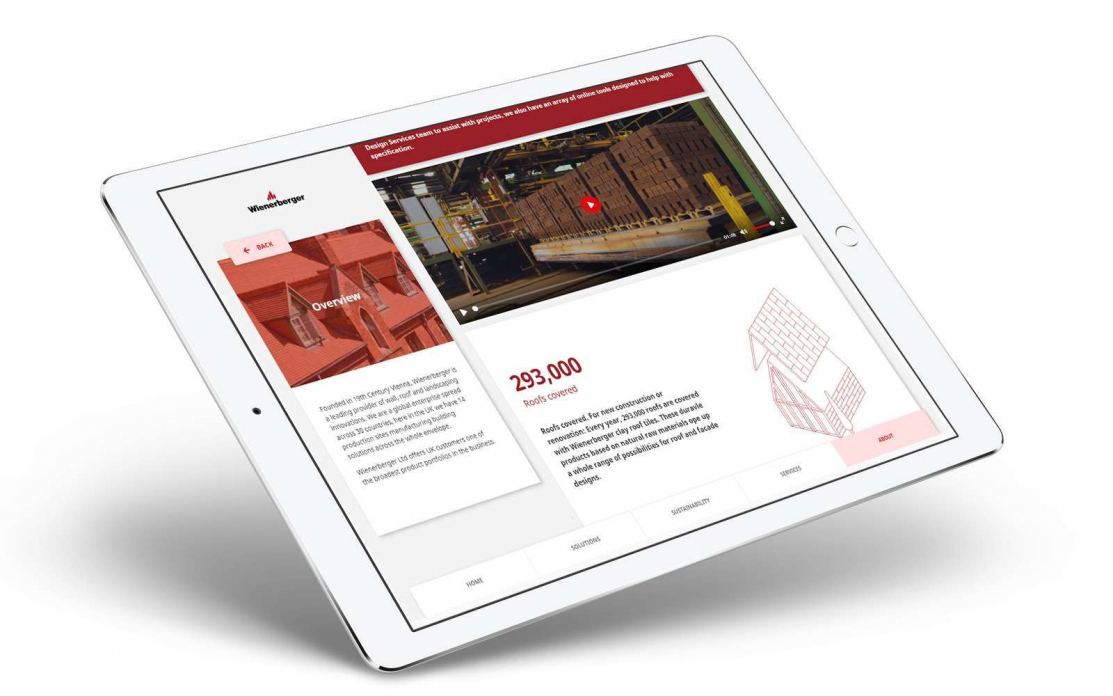
Daniel Cheung, Lead Channel Marketing Manager at Wienerberger, put it simply: “From a first meeting with a customer to getting information out to them would take a week, now it’s minutes.” That speed of alignment matters enormously in competitive deals. The buyer who can get their committee aligned fastest wins.
Key Features That Actually Drive Alignment
Not all buying committee alignment tools are built the same. Some are just better-looking document repositories. Others are genuinely designed to solve the alignment problem. Here’s what separates the useful from the forgettable:
1. Interactive, Visual Content That Explains Complex Products
PDFs and static presentations force buyers to interpret what they’re seeing. Interactive content, 3D product models, animated workflows, decision trees, and comparison tools let buyers explore and understand at their own pace. This is especially critical when your products are technically complex and physically differentiated.
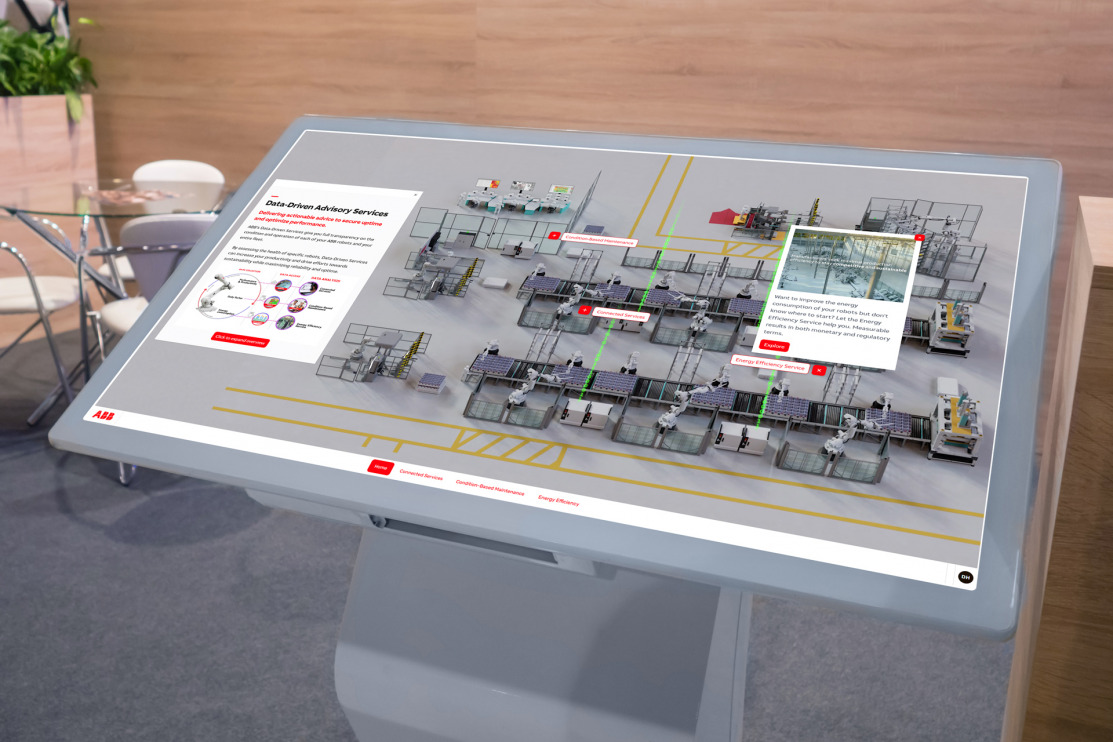
ABB’s Ignacio Blanco describes it this way: “POPcomms turned a complex portfolio into a persuasive, buyer-centric experience, explaining a complex service in under 3 minutes.” That’s the difference between selling complexity and explaining it.
2. Digital Sales Rooms for Asynchronous Buying
Not every stakeholder can attend a live presentation. A digital sales room is a customised, secure space where you can deliver content tailored to different buyer personas, track engagement, and allow committee members to review materials on their own timeline. This is essential for global deals, where time zones make synchronous selling impractical.
3. Real-Time Content Updates and Version Control
When your product roadmap changes or pricing updates, your sales team shouldn’t be hunting through old emails trying to figure out which deck is current. The ability to update critical content instantly has been a major benefit for our global teams, according to Tugba Ladikli, MMS Marketing at BD. One platform update, and every sales rep, every channel partner, every buyer has access to the latest information immediately.
Anne-Rieke Schweigatz, VP Marketing at Syntegon, reinforces this: “POPcomms ensures that content is always current, so our sales teams can be confident it is the very latest information they’re sharing with prospects.” Confidence in your materials translates directly to confidence in your pitch.
4. Engagement Insights and Deal Intelligence
Which stakeholders are engaging with your content? What sections are they spending time on? Which objections are they still wrestling with? Tools that provide this visibility let your sales team respond proactively. If the technical deep-dive is being ignored, that’s a signal someone on the committee doesn’t understand the value yet. That’s actionable intelligence for your internal champion.
5. Mobile and Trade Show Capability
Many complex B2B sales still start at trade shows and events. If your alignment tool only works on desktop, you’re missing the moment of highest buyer engagement. Platforms that work on touchscreen, tablets, and mobile let you put your story directly in a buyer’s hands at the moment they’re most receptive.
Common Objections, And Why They Miss the Point
When evaluating buying committee alignment software, you’ll hear several objections surface, usually from teams that haven’t fully grasped why the traditional approach is broken. Let’s address the main ones directly.
Objection 1: “We Can Just Use PowerPoint and PDFs”
This is the most common default, and it’s seductive because everyone knows how to use PowerPoint. But here’s what actually happens:
- Sales reps assemble “Frankenstein decks” from multiple outdated sources.
- Different stakeholders see different versions of the truth.
- When your product story changes, half your sales team is still using the old narrative.
- PDFs sent via email have no version control and no insight into what buyers actually engaged with.
- Complex products can’t be adequately explained in a linear slide format.
PowerPoint works fine for simple stories. If you’re selling a commodity and your value proposition is “we’re cheaper” or “we deliver faster,” static slides are probably sufficient. But if your product is technically differentiated, if you need to address multiple stakeholder concerns in a single buying process, if you’re selling to committees of 6 to 13 people with conflicting priorities, PowerPoint isn’t solving your problem. It’s just making it feel more organised.
Objection 2: “Our Sales Reps Won’t Use It”
This is valid, and it surfaces because many sales tools are designed for salespeople who love technology. Most don’t. If the platform requires training, adds extra steps to the selling process, or creates more work before someone can actually contact a buyer, adoption will fail.
The solution isn’t to mandate adoption. It’s to build a tool that’s so obviously useful that reps want to use it because it makes their job easier. A platform where content is always current, where you can personalise materials in seconds, where you have insights into what buyers care about, that reduces friction and improves close rates. That sells itself.
Objection 3: “Our Products Aren’t Complex Enough”
This is a misconception. Interactive content and visual storytelling aren’t just for aerospace defence or pharmaceutical manufacturing. They work for any product where you need to help a buyer understand something quickly, where multiple people are involved in the decision, or where you’re competing on differentiation rather than price.
A building materials company, a healthcare equipment supplier, and a software integrator all sell products that can be explained more effectively with visual, interactive experiences than with text-heavy slides. The question isn’t whether your product is “complex enough.” It’s whether your buyers make sense of it more quickly and confidently with better tools.
Objection 4: “We Can’t Prove the ROI”
This is the finance objection, and it’s rational. Before committing budget, leadership wants to see hard data on conversion uplift, deal acceleration, or revenue impact. The challenge is that ROI from buying committee alignment software isn’t a single variable, it’s the sum of several improvements:
- Shorter sales cycles (typically 2-4 weeks faster in complex deals).
- Higher win rates because aligned committees make faster decisions.
- Reduced deal stall (the “no decision” outcome is eliminated or reduced).
- Faster ramp for new sales hires (they have access to the best narrative, not fragmented materials).
- Reduced content creation overhead (one system instead of scattered files).
Track these metrics before and after implementation, and the ROI becomes tangible. Shorter sales cycles and reduced stall translate directly to revenue acceleration.
Objection 5: “We’re Too Busy Right Now”
This is the timing deflection, and it almost always masks a deeper concern: either budget uncertainty or lack of internal champion pushing for change. The answer is to clarify what “too busy” actually means. If it means “we don’t have bandwidth to implement,” that’s a valid implementation timeline issue, not a reason to delay. If it means “we don’t have a budget,” say so and have that conversation. Deflecting until “next quarter” usually means it never happens.
How to Choose the Right Solution for Your Business
Not every buying committee alignment platform is designed for your specific sales context. Here’s how to evaluate:
Match the Tool to Your Sales Motion
Are you selling primarily through field teams at trade shows? You need mobile-first, touchscreen capability. Are your deals happening entirely remotely? Digital sales rooms with asynchronous engagement are critical. Are you supporting a channel or distributor network? Content governance and instant updates matter more than anything else.
The best tool for your business is the one that solves your specific alignment problem, not the one with the longest feature list.
Assess the Learning Curve
No matter how good the platform is, if it requires three weeks of training before someone can actually use it, adoption will fail. Look for platforms that are intuitive enough that a marketing person without technical training can build and update content without needing engineering support.
Evaluate Content Governance and Compliance
This matters especially in regulated industries, healthcare, life sciences, and defence. Your platform needs to handle version control, approval workflows, and access control without creating bottlenecks. If it takes two weeks to update a single piece of content because it has to pass through seven approval gates, you’ve lost the speed advantage.
Check for Integration Capability
Your alignment platform shouldn’t live in isolation. It needs to integrate with your CRM, your content management system, your email platform, and your marketing automation tools. If integration is difficult or requires custom engineering, you’re creating technical debt.
Test with a Real Use Case
Before committing, ask for a proof of concept focused on a specific, current deal. Not a demo of generic features. Take a real customer scenario, build out the buying committee alignment workflow, and see whether the tool actually helps. This is the only way to know if the tool works for your sales process, not just in theory.
Getting Buy-In From Your Sales Team
Even with the right platform, adoption fails if your sales team doesn’t see immediate, personal benefit. Here’s how to secure buy-in:
Make It Easier, Not Harder
Sales reps care about one thing: closing deals faster. If your alignment platform helps them do that, they’ll use it. If it adds work before they can contact a buyer, it’s dead on arrival. Start by identifying the single biggest pain point in your current sales process, usually content sourcing or version confusion, and make sure the platform solves that first.
Demonstrate Speed to Personalization
Show your sales team that they can customise materials for a specific buyer or committee in minutes, not hours. This isn’t just a nice feature. It’s the difference between “I have generic slides for this industry” and “I have materials built specifically for this company’s concerns.” Reps feel the difference immediately.
Share Engagement Data
Once the platform is live, show your team what buyers are engaging with. This transforms abstract adoption into concrete intelligence. A sales rep sees that a buyer spent 8 minutes on the ROI section and skipped the technical specifications? That’s actionable insight that helps them shape the next conversation.
Adoption succeeds when the tool becomes an extension of how your sales team already sells, not a replacement for it. You’re not trying to automate the sale. You’re trying to make the sale easier and faster.
If you’re evaluating options in this space, work through our blog, where we’ve published practical guidance on buyer enablement and digital sales rooms. We also document how teams across industrial, healthcare, and advanced technology sectors are using interactive platforms to solve the alignment problem. If you’d like to understand how this works in your specific context, our services page outlines the workflows we help teams build. And if you’re ready to explore whether this approach makes sense for your business, contact us for a straightforward conversation about your sales process.
Frequently Asked Questions
What is the main purpose of buying committee alignment software?
Buying committee alignment software helps multiple stakeholders in a complex sale reach consensus by centralising controlled, personalised information. It solves the “no decision” problem where deals stall because committee members can’t align on whether to buy, accelerating sales cycles and improving win rates.
How does interactive content improve buying committee alignment?
Interactive content lets buyers explore and understand complex products at their own pace, rather than passively reading slides. Visual formats like 3D models, animated workflows, and decision trees help different stakeholders, technical, financial, clinical, grasp value faster and with more confidence in their own areas of concern.
Why can’t sales teams just use PowerPoint and email for buyer alignment?
PowerPoint and email create alignment friction: no version control, different stakeholders see different materials, no insight into buyer engagement, and complex products can’t be adequately explained in linear slide formats. They work for simple commodities but fail in multi-stakeholder, technically differentiated sales.
How do you measure ROI from buying committee alignment software?
Track metrics before and after implementation: sales cycle length, deal stall rate, win rate, and new rep ramp time. ROI comes from the combination of faster cycles, reduced “no decision” outcomes, and lower content creation overhead, not from a single metric alone.
What industries benefit most from buying committee alignment software?
Industrial manufacturing, medtech, life sciences, healthcare, defence, and advanced technology are primary users because these sectors involve technically complex products, multi-stakeholder buying committees, and sales cycles where alignment speed determines win rate. However, any B2B business selling to committees of 4+ stakeholders benefits.
Managing multiple stakeholder narratives manually takes weeks and often fails to align them at all.
If you’d like to see how POPcomms could work for your business, book a 30-minute consultation and we’ll show you what’s possible.

Related Posts
Content Management for Sales Enablement | POPcomms
Read
6 Financial Benefits of Sales Enablement Tools | POPcomms
Read
How to Customize Touchscreen Interfaces for Tradeshows
Read
Revenue Enablement Tools: 12 Top Solutions | POPcomms
Read