




Educating multiple stakeholders in complex sales
Last updated: 7 April 2026
Most complex B2B deals stall not because a competitor wins, they stall because the buying committee can’t agree internally. In 2026, the average complex purchase involves 6 to 13 stakeholders, each with different priorities, technical depth, and business concerns. A clinician in a hospital sees value differently than the procurement manager three floors below. An engineer in a manufacturing plant speaks a different language than the finance director signing the cheque. Without proper stakeholder education in complex sales, these groups fragment, momentum evaporates, and deals die in silence. This article will show you exactly how to build internal consensus across diverse buying committees, and why the tools and approaches that worked five years ago simply don’t work anymore.
Key Takeaways
- Complex B2B sales stall because buying committees lack alignment, not because competitors win, stakeholder education is the mechanism that builds internal consensus.
- PowerPoint decks, PDFs, and one-off slides create inconsistency and erode trust when different stakeholders receive different versions or messaging.
- Stakeholders need role-specific education: clinicians need clinical evidence, procurement teams need commercial justification, and technical teams need engineering depth.
- Interactive, visual, and governed content platforms reduce sales cycle length by ensuring every stakeholder gets the right information, in the right context, at the right time.
Why Most Complex Sales Stall at the Stakeholder Level
I’ve spent 25 years working with B2B marketing and sales teams, and I’ve seen the pattern repeat across industrial, healthcare, and defence sectors: the biggest blocker to winning a complex deal isn’t the competitor sitting across the table. It’s the buying committee sitting across from each other internally.
When a prospect evaluates a complex solution, whether that’s a manufacturing system, a medtech platform, or an advanced therapy product, they don’t make a decision alone. A purchasing manager needs to believe it fits the budget. An end-user (clinician, engineer, operator) needs to trust it will improve their day-to-day work. IT needs to verify it integrates with existing systems. Compliance needs to sign off on regulatory or safety requirements. Finance needs to see ROI. And everyone needs to agree it’s worth the risk of change.
The problem is that most of these stakeholders never hear a coherent, role-appropriate explanation of why your solution matters to them specifically. Instead, they receive fragmented information: a generic corporate slide deck, an outdated PDF, a sales rep’s improvisation, or nothing at all. Each stakeholder forms a different impression. Doubt creeps in. The internal debate drags on. And eventually, the deal goes cold, not because the competitor was better, but because the buying group couldn’t build internal confidence.
This is not a sales problem. It’s an education problem.
The Real Problem With Traditional Sales Materials
Let me be direct: static PowerPoint decks and PDFs don’t work for stakeholder education in complex sales anymore. Not because they lack style, but because they lack control, consistency, and accountability.
Here’s what typically happens: Marketing creates a master slide deck. Sales modifies it for a specific deal, removing some slides, reordering others, adding comments in the margins. A sales rep at a trade show opens a two-year-old version on their laptop. A channel partner receives the deck via email and forwards a customised version to their own prospects. Within weeks, you have 20 different versions of the same story, each slightly different, each potentially wrong.
When a buying committee member asks “Is this current?” or “Does this reflect our latest capabilities?”, your sales team has no reliable answer. Trust erodes. Stakeholders compare notes and find inconsistencies. Momentum halts.
Static materials create a false choice: either centralise so tightly that sales can’t adapt to real customer contexts, or decentralise so completely that brand and accuracy disappear.
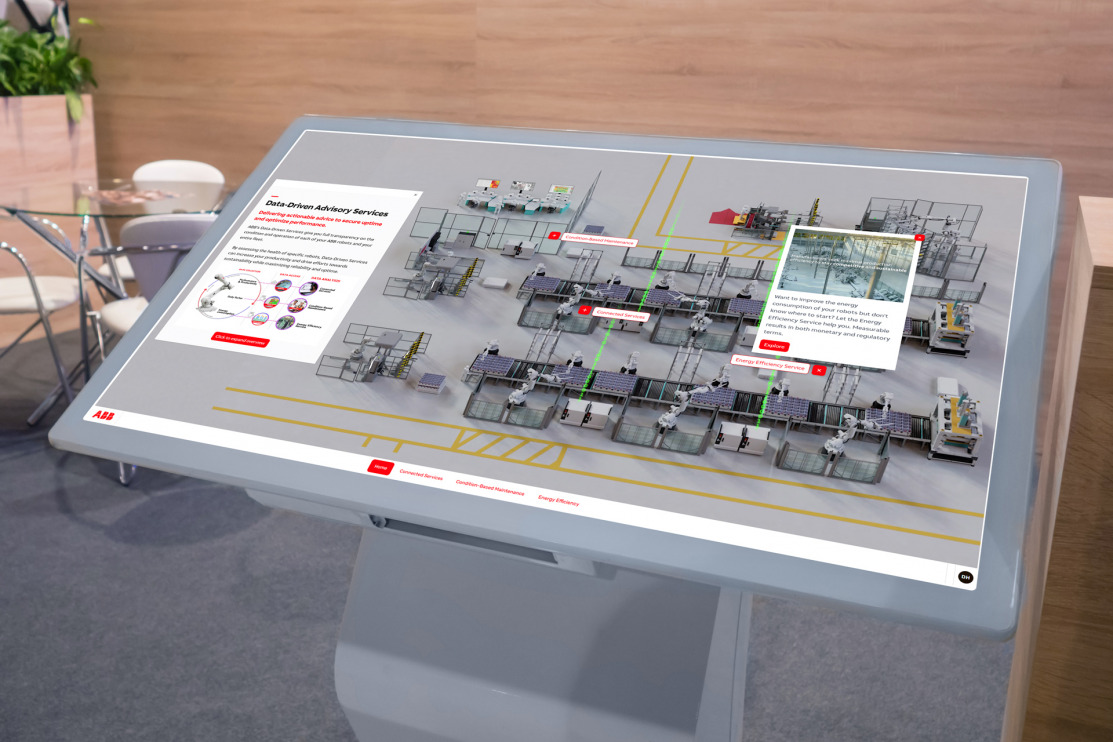
This is where most companies are stuck today. And it costs them deals. ABB faced exactly this challenge, a complex portfolio that needed to be explained consistently, yet flexibly, across dozens of markets and sales teams. As Ignacio Blanco, Senior Global Marketing Manager at ABB, noted: “POPcomms turned a complex portfolio into a persuasive, buyer-centric experience, explaining a complex service in under 3 minutes.” The shift from “How do we cram everything into one slide deck?” to “How do we tell the right story to the right person in the right context?” changed how they engaged buying committees.
How to Educate Multiple Stakeholders Without Losing Control
Educating stakeholders effectively in a complex sale means three things happen simultaneously: consistency, personalisation, and speed.
Consistency: Every stakeholder hears a truthful, current story
This doesn’t mean every stakeholder hears the same story. It means every stakeholder hears a story that is truthful, current, and aligned with your brand and positioning. A financial stakeholder learns ROI. A technical stakeholder learns about integration and performance. A clinical stakeholder learns about outcomes and safety. But all three are hearing the current truth, not an outdated version, not a rep’s interpretation, not a dealer’s customisation that departed from accuracy.
Version control and governance are not bureaucratic overhead, they are the foundation of trust in complex sales. When Anne-Rieke Schweigatz, VP Marketing at Syntegon, implemented centralised content governance, she reported: “POPcomms ensures that content is always current, so our sales teams can be confident it is the very latest information they’re sharing with prospects.” That confidence is not about the platform, it’s about the ability to stand behind what’s being said.
Personalisation: Role-specific narratives without recreating content
You don’t need to build entirely separate materials for each stakeholder type. Instead, you need modular, interactive content that lets each stakeholder focus on what matters to them, without you having to create 20 different decks.
A good stakeholder education platform lets a sales rep or marketing team member say: “Here’s a presentation about our manufacturing solution. The financial stakeholder can dive deep into ROI. The technical stakeholder can explore engineering specs. The operations stakeholder can see implementation timeline and training.” All from one source, all current, all on-brand.
This approach works particularly well when you have physical complexity or technical depth that slides can’t capture. Our blog posts on buyer enablement describe how industrial companies, those selling complex machinery, automation systems, or medtech platforms, can embed interactive 3D models, explainer videos, and technical documentation without forcing stakeholders to switch between tools.
Speed: Getting information to stakeholders in minutes, not weeks
One of the most common delays in complex sales happens in the post-meeting follow-up. A prospect asks a detailed question. The sales rep needs to check with product. Marketing needs to source the right collateral. Finance needs to pull together a custom ROI model. Days pass. The prospect’s internal evaluation stalls. Competitor activity fills the vacuum.
Daniel Cheung, Lead Channel Marketing Manager at Wienerberger, observed: “From a first meeting with a customer to getting information out to them would take a week, now it’s minutes.” That speed isn’t just convenient, it’s the difference between maintaining momentum and watching a deal go cold.
When stakeholder education materials are centralised, up-to-date, and accessible, sales teams can respond to questions immediately. Prospects can share interactive presentations with their internal committees on the same day. The buying group can move from question to answer to internal alignment in hours, not weeks.
Sector-Specific Stakeholder Challenges and Solutions
Industrial, Manufacturing, and Engineering
In these sectors, products are physically complex and technically differentiated, impossible to explain on a single slide. Engineers need to see how a system works. Operations teams need implementation timelines. Finance needs cost-benefit analysis. Procurement needs supplier credentials and lead times.
The additional challenge: your 3D product models, schematics, and technical documentation live in SolidWorks or STEP files in the engineering department. Your sales team has JPEGs and outdated drawings. Interactive, visual platforms bridge this gap by making complex product information accessible to non-engineers without oversimplifying the truth.
Trade shows are another critical channel, but the handoff from event to follow-up often breaks down. Once prospects leave the booth, momentum evaporates. A touchscreen presentation at the event can be followed immediately with a digital sales room that the prospect’s buying committee can access remotely, maintaining the narrative continuity that builds stakeholder alignment.
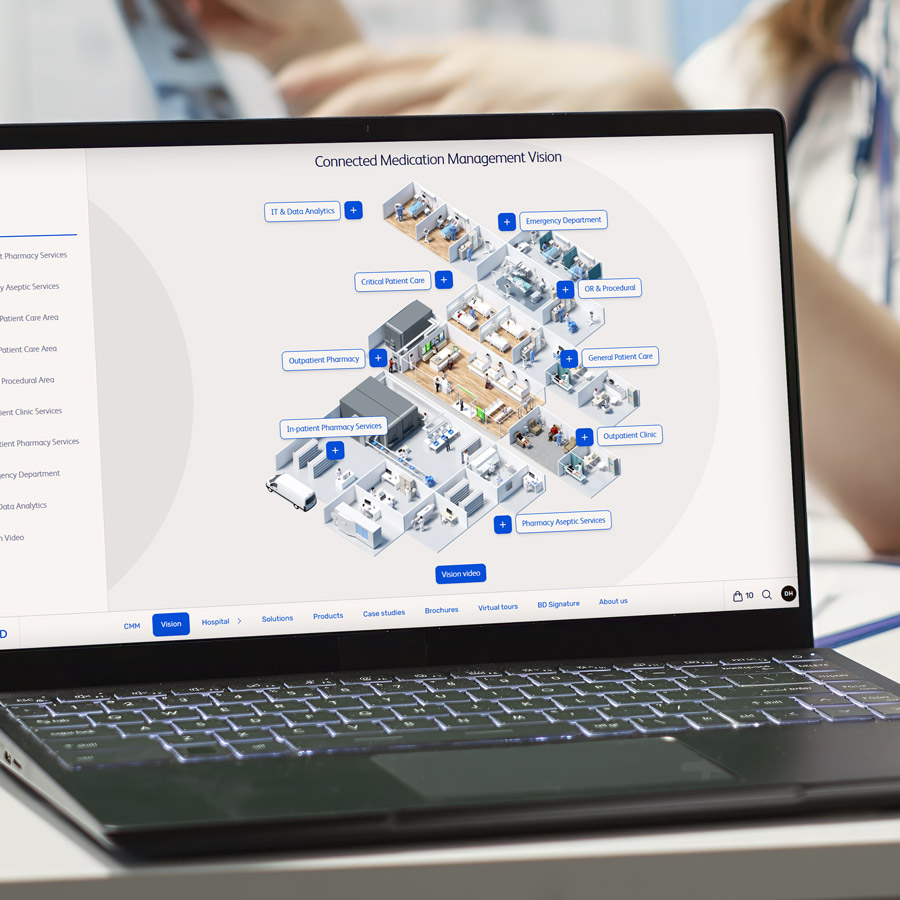
Healthcare and Medtech
Healthcare buying committees are uniquely fractured. A hospital system might involve clinical staff (doctors, nurses), IT teams, infection control, procurement, and finance, each with completely different educational needs and priorities.
Clinical and commercial audiences require completely different messaging from the same product, yet both are essential to the buying decision. A clinician needs to understand patient outcomes, ease of use, and clinical evidence. A procurement officer needs cost per unit, tender compliance, and service terms. A hospital finance team needs budget impact and ROI. Your sales rep cannot deliver all three messages equally well in a single presentation.
Regulatory constraints add another layer. Content must be version-controlled and compliant, which sounds restrictive, but it’s actually enabling. When you know exactly which messaging has been approved by legal and regulatory, you give your sales team confidence. Tugba Ladikli, MMS Marketing and BD at a global medtech company, notes: “POPcomms helps us tell a complex story in a simple, visual, and engaging way that brings the customer journey to life.” Simplicity and engagement aren’t the enemy of compliance, they’re the outcome of rigorous, governed content management.
For medtech and related sectors, explore our medtech interactive content platform resources to see how role-specific education accelerates buying committee alignment.
Pharma, Life Sciences, and Advanced Therapies
These sectors face a specific education challenge: highly complex scientific messaging needs to be translated for non-expert buyers and procurement teams. Sales teams often lack a clear, confident value proposition for advanced therapy products, which means different reps communicate different narratives. Content becomes fragmented across digital asset management systems, intranets, and email. Revenue shortfalls are directly linked to the inability to communicate evolving capabilities compellingly.
The solution is the same as it is for other complex sectors: centralised, governed, role-appropriate stakeholder education that lets you explain sophisticated science in terms that procurement and finance can actually evaluate.
Defence and Aerospace
Defence and aerospace companies face additional constraints around IP sensitivity and classification. Interactive tools must handle access control carefully, ensuring that sensitive 3D models or technical specifications don’t reach unvetted stakeholders.
Trade show budgets have contracted significantly, from millions to hundreds of thousands. That means every event interaction must count. No more generic walk-in booth experiences. Every prospect encounter needs to be purposeful and backed by follow-up materials that the entire buying committee can reference remotely.
3D models of actuation systems, engines, and defence equipment exist in engineering but aren’t accessible to the sales team. Interactive presentation platforms with proper access controls can change this, letting sales confidently present complex technical information without compromising IP.
Building Confidence Across the Buying Committee
Stakeholder education is ultimately about building confidence. When a buying committee member, especially a champion inside the organisation who is advocating for your solution, can quickly access clear, current, relevant information, they can build an internal case with confidence. They don’t have to hedge. They don’t have to say “I think this is how it works, but I’m not sure.” They can say: “Here’s the evidence.”
This is the overlooked value of proper stakeholder education. It’s not about drowning buyers in more content. It’s about giving them the right content, in the right format, at the right time, so they can convince each other.
Consider how this plays out in a real scenario: A hospital procurement manager is evaluating a medtech platform. She needs to present to the clinical committee, the IT team, and finance. Instead of assembling a custom deck from three different sources, she logs into a centralised platform where the clinical evidence, IT integration specs, and financial impact model all live in one place, current, governed, visually clear. She can share specific sections with specific stakeholders. She can update her own internal presentation in minutes if new information arrives. The entire buying committee moves through evaluation faster, with less friction, with more confidence.
That speed and clarity, that’s what reduces the “no decision” stall. And that’s why traditional static materials don’t cut it anymore. Our services include digital sales room design and buyer enablement workflows specifically built to accelerate this process.
Measuring What Actually Matters in Stakeholder Education
The objection we hear most often is: “It looks great but we can’t prove the ROI.” This is understandable. Marketing budgets are under scrutiny. Leadership wants hard data before committing to new tools.
But here’s what’s important: you don’t measure the success of stakeholder education by vanity metrics. You measure it by business outcomes. Does it reduce sales cycle length? Do deals move faster from discovery to close? Do buying committees reach consensus earlier? Can sales reps access current information faster? Do your global teams have confidence they’re sharing the latest capabilities?
The most effective way to measure stakeholder education impact is to track sales cycle velocity, win rate improvement, and rep adoption, not presentation downloads or slide views.
These are harder to measure, but they’re what matter. And they’re measurable. Track the time between first prospect presentation and buying committee sign-off. Compare it before and after you implement proper stakeholder education tools. Track deal velocity at different stages of the buying process. Measure rep adoption,how quickly do your field teams actually use new tools, and do those who use them close deals faster?
You’ll often find that consistent, role-appropriate stakeholder education shaves 2–4 weeks off complex sales cycles. In high-value deals (six figures, seven figures), that time saved translates directly to revenue.
Frequently Asked Questions
Why do complex B2B sales stall if the product is good?
Complex sales stall because buying committees of 6–13 stakeholders can’t reach internal alignment, not because competitors win. Each stakeholder (clinician, engineer, finance, IT, procurement) needs role-appropriate education and evidence to build confidence. Without it, the internal debate drags on and deals go cold.
What’s wrong with using PowerPoint and PDFs for stakeholder education?
Static materials create version control chaos. Your master deck gets modified by different reps, dealers, and teams until multiple conflicting versions exist. Stakeholders receive outdated information and inconsistent messaging, eroding trust. You lose the ability to ensure every stakeholder hears current, accurate information.
How do you educate different stakeholder types without creating separate decks?
Use modular, interactive content that lets each stakeholder focus on what matters to them without recreating materials. A clinician dives into clinical evidence. A procurement officer explores cost and compliance. A technical stakeholder reviews engineering specs. All from one current, governed source.
How long does it take to implement stakeholder education systems?
Implementation timelines vary, but the most common concern, “It’s too complex to set up”, is overstated. No-code platforms with the right support can be live in 4–6 weeks. The real work is agreeing on messaging and stakeholder segmentation, not technology setup.
What metrics should you track to prove ROI on stakeholder education?
Track sales cycle velocity (time from discovery to close), win rate improvement, and deal velocity at different buying stages. You should also measure rep adoption (do your field teams actually use the tools) and confidence (do reps feel equipped to answer stakeholder questions). Cycle reduction of 2–4 weeks on high-value deals translates directly to revenue.
Building internal alignment in a buying committee takes intentional education, and the right tools to deliver it consistently.
If you’re working with complex products, multiple stakeholder types, or field-based sales teams, a proper stakeholder education system can measurably shorten your sales cycles and improve win rates. Contact us to discuss how your organisation could benefit from centralised, governed, buyer-centric content experiences.

Related Posts
Digital Buyer Room Governance: Ownership, Access Control, and Content Lifecycle
Read
Sales Enablement CMS | Right Info, Right Time
Read
How Do You Use Martech to Build Buyer Confidence?
Read
Touchscreen Software With Lead Capture Tools
Read