




Real-Time Sales Material Customization
Last updated: 17 April 2026
Your sales rep finishes a demo. Your champion says “I need to show this to my team.” You send a PDF. Three days later, the buying committee has three different interpretations of what they just saw. The deal stalls. This happens because your sales materials aren’t customized, they’re static, generic, and impossible to adapt in real time when a prospect’s needs shift during a conversation.
The ability to customize sales materials in real time, adjusting content, tone, technical depth, and focus instantly based on who is in the room, has become the difference between deals that close and deals that die in your buyer’s inbox. When you can reshape your message in minutes instead of hours, you’re not just saving time. You’re solving the core problem that stops most complex B2B deals: your buyers can’t build a shared understanding when they’re all seeing different versions of your story.
In this article, you’ll learn why static sales materials fail buying committees, how real-time customization actually works in industrial and healthcare selling, what it costs you when you don’t have it, and how to implement it without disrupting your existing sales process. Most importantly, you’ll discover why this capability has become essential for enterprises competing in industries where buying decisions involve multiple stakeholders with conflicting priorities.
Key Takeaways
- Real-time customization of sales materials means adapting content instantly during buyer conversations based on stakeholder role, technical depth, and business priorities without rebuilding decks or waiting for approvals.
- Static materials fail because buying committees of 11+ people each see different content, form incompatible conclusions, and stall on internal alignment,a problem that cannot be solved with more PDFs.
- Organizations enabling real-time customization report turnaround times from first meeting to delivery dropping from one week to minutes, with 70% reductions in production and logistics costs.
- The most effective implementation bridges existing sales tools without replacing them,enabling reps to share a live link instead of attachments, letting buyers build understanding together in one shared space.
Why Static Sales Materials Fail in Complex B2B Selling
The most effective approach to real-time customization is enabling your sales team to deliver one coherent story that each stakeholder in a buying committee can experience at their level of technical depth and business priority, without that requiring your rep to create separate documents for each person.
When a buying committee of 11 people evaluates your solution, they’re not reading the same material. Your procurement leader reads one deck. Your technical buyer reads another. Your CFO reads a business case. Your operations director reads something else entirely. By the time they all arrive at an internal meeting, each stakeholder has formed a different conclusion about the same solution,and now they’re debating interpretations of your message instead of evaluating whether to buy.
This isn’t a content quality problem. It’s an architecture problem. You’ve created excellent rooms,but you’re delivering them brick by brick instead of as a building. Every new attachment you send creates another thing the buying committee has to reconcile, debate, and misinterpret in meetings you’ll never attend. The champion who advocates for your solution gets pulled into internal politics because they’re trying to sell based on a half-remembered demo and a messy inbox full of PDFs.
Static materials are designed for individual consumption. They cannot produce collective agreement. That’s not a quality failure, that’s a format failure. One stakeholder who never saw the business case can kill a seven-figure deal without saying a word, and you’ll never know why.
Industrial and healthcare buyers face this problem acutely. Your solutions are complex. Your buying cycles are long. Your stakeholders are spread across procurement, operations, compliance, finance, and clinical teams. They speak different languages. They prioritize different things. Static content that works for a SaaS buyer who reads email in sequence doesn’t work for a manufacturing or medical device buying committee that meets quarterly and needs to align 8 different decision-makers in an hour.
The Real Cost of One-Size-Fits-All Content
Most organizations don’t measure the cost of static sales materials because it’s invisible. You see the cost of creating them. You don’t see the cost of the deals they don’t close.
Here’s what typically happens: Your sales rep delivers a great demo. Your champion loves it. But then they have to recap everything to their buying committee using a half-remembered story and a PDF attachment. That’s the moment your deal starts to die. The gap between the demo and the decision is where most complex deals are won or lost, and it’s the gap where sellers have the least visibility and decision making stages have the least buyer support.
Without real-time customization, you’re forcing your champion to do the work you should be doing. They become your internal salesperson, and they’re selling without tools. Meanwhile, you have no visibility into what’s happening in that internal committee meeting. Is the technical buyer challenging the implementation plan? Is the CFO comfortable with the business case? Is compliance aligned? You don’t know. By the time you hear back, the deal has already stalled or moved to a competitor.
The cost compounds. Organizations without real-time customization capabilities typically experience:
- Longer sales cycles: What should take 30 days takes 60 because buying committees need multiple rounds of internal alignment before moving forward. Each round requires your rep to resend documents, answer the same questions again, and wait for the next internal meeting.
- Higher no-decision rates: When buyers can’t build shared understanding quickly, they often choose the safest option: decide later. No-decision is more expensive than losing to a competitor because you’ve paid the internal selling cost with zero return.
- Wasted content production: You create content designed for every stakeholder type. Most of it goes unused because it was created for individuals, not for committees. The instinct is to produce more content. But more content doesn’t mean more clarity, it means more noise.
- Version control nightmares: Your sales team has 47 variations of your main deck. Some are outdated. Some are off-brand. Some include pricing information that’s no longer current. You can’t govern what’s being shared, and your brand message gets fragmented across every rep’s hard drive.
- Logistics and print costs: Even in 2026, many industrial and healthcare organizations still print materials for tradeshows, customer visits, and boardroom meetings. Those costs add up, and they’re wasted when the content becomes outdated within weeks.
One of our healthcare customers was experiencing exactly this problem. From their first meeting with a prospect to getting customized information out to their entire buying committee would take a week. Procurement had to brief legal. Legal had to coordinate with clinical. Clinical had to align with finance. By the time everyone had the right version of the story, the buying window had shifted. Now, that same process takes minutes,one shared link that every stakeholder experiences at the right level of detail for their role. The result: 70% reduction in print and logistics costs, faster deal progression, and stronger internal alignment on both sides of the table.
How Real-Time Customization Changes the Buyer Experience
Real-time customization works by decoupling content creation from content delivery,enabling your sales rep to deliver a coherent, role-specific experience instantly without rebuilding assets, waiting for approvals, or creating separate documents.
Here’s what happens in a traditional setup: Your rep finishes a discovery call. They identify that the buying committee includes a procurement leader, a technical director, a compliance officer, and a CFO. They go back to the office, request a custom deck from marketing (which takes 3–5 days), wait for legal to review any compliance language, and then send four different PDFs,one tailored for each stakeholder. By the time the materials arrive, the buying window has shifted. The committee has already formed initial impressions based on conversation alone.
With real-time customization, the rep shares a single link during the call. That link opens to a guided experience that the buying committee navigates together. The procurement leader sees procurement-specific information: implementation timeline, resource requirements, cost structure. The technical director sees technical integration points, system architecture, and risk mitigation. The compliance officer sees regulatory alignment, audit trails, and data security. The CFO sees ROI modeling, cost-benefit analysis, and budget impact. All of them are experiencing the same solution story,but at their level of priority and technical depth.
Critically, how to improve B2B buyer experience isn’t just about personalization, it’s about enabling the committee to build understanding together. When each stakeholder can see the same core narrative at their own depth level, they can have productive internal conversations. The technical director isn’t confused by financial jargon they don’t need. The CFO isn’t overwhelmed by technical details. They’re all building the same understanding, just from different angles. That’s when internal alignment accelerates.
Real-time customization also means your sales rep can respond to objections and questions immediately, without waiting for marketing to create new content. A buyer asks about implementation in a specific facility type? Your rep tailors the experience to show that use case in real time. The committee wants to see how your solution handles their specific compliance requirements? The experience adapts. This isn’t about creating custom content for every interaction, it’s about having a flexible, responsive system that your rep can navigate in the moment based on the direction the conversation is taking.
Real-Time Customization in Industrial and Healthcare Contexts
Industrial and healthcare buying is fundamentally different from SaaS. Your buyers aren’t scrolling through an email on their phone at 9 PM. They’re sitting in a conference room with 8–11 people who each have different priorities, different vocabularies, and different risk tolerances. They need to make a decision that involves capital expenditure, operational change, and sometimes regulatory implications. That decision doesn’t happen because someone read a great deck. It happens because the buying committee reached internal consensus.
Consider a medical device scenario. Your solution is a diagnostic platform that integrates with existing hospital infrastructure. The chief medical officer cares about clinical accuracy and physician adoption. The IT director cares about system integration and uptime. The compliance officer cares about FDA alignment and audit requirements. The CFO cares about cost per use and ROI against the existing solution. The procurement leader cares about contract terms and supplier stability. All of them need to be aligned before the hospital commits capital and changes workflow.
Traditional sales enablement was designed for a salesperson to access content quickly. But it never solved the buyer’s problem: how does a committee of 5–11 people build shared understanding when they have conflicting priorities? That’s why what is buyer enablement in manufacturing has become critical for complex B2B sales. Real-time customization is the operational backbone of buyer enablement,it’s what makes shared understanding actually possible.
One of our ABB customers had a complex industrial automation solution. The sales cycle involved technical engineers, procurement specialists, operations leaders, and finance. Each wanted different information. The traditional approach meant the sales team sending multiple decks and hoping the buyer would knit them together internally. Now, with real-time customization, the same experience serves all stakeholders. The engineer sees system architecture. The procurement specialist sees lead times and supply chain. The operations leader sees integration with existing systems. The finance team sees unit costs and volume discounts. The result: faster buying committee alignment and a 49% improvement in win rates because the buying group was aligned internally before they even made the formal decision.
The more complex the solution, the more a buying group needs a shared space to build understanding,not more documents to read alone. Real-time customization is how you create that shared space.
Implementation Without Disruption
The biggest objection most organizations have to implementing real-time customization is: “This is going to require us to overhaul our entire content strategy and retrain 200 salespeople on a new platform.” That’s not how it works in 2026, and it’s not how it should work.
The most effective implementations operate at the last metre of your sales process, the moment your rep shares something with a prospect. Everything else stays exactly as it is. Your content creation process doesn’t change. Your sales methodology doesn’t change. Your CRM stays connected the way it is. The only thing that changes is how the final asset gets delivered to your buyer.
Here’s the implementation pattern that works:
- Consolidate your source content: You already have everything you need. Your website has product information. Your sales decks have value propositions and use cases. Your case studies have proof points. Your technical documentation has system architecture. Instead of starting from scratch, you’re organizing what already exists into a library where each piece is tagged by audience, technical depth, and business priority.
- Build a simple architecture, not a complex platform: Your rep doesn’t need to learn a new tool. They need the ability to share a link instead of an attachment. That link opens to an experience that automatically presents the right content for the right stakeholder role. No rebuilding. No waiting for approvals. Just a guided buyer experience that your sales team can activate in seconds.
- Enable governance without friction: For the first time, you have visibility into what’s being shared with buyers. You can see which content is being used, which stakeholders are engaging with what information, and whether buying committees are building alignment around your key messages. That visibility also means you can enforce brand standards and ensure compliance language is accurate,without creating bureaucracy that slows sales down.
- Connect to your existing buyer experience mapping: If you’ve already done customer journey mapping, real-time customization is the operational layer that brings those insights to life. You’ve identified the key decision-makers and what information each one needs. Now, instead of your rep guessing how to tailor a presentation, they share an experience that delivers exactly what your buyer mapping says each stakeholder needs.
The adoption pattern is completely different from traditional sales enablement platforms. Those platforms are built for salespeople to use, which means you have to drive adoption through training, incentives, and enforcement. Real-time customization adoption is organic. Your rep shares a link instead of sending an email attachment. The buyer experiences a better interface. Everyone benefits. No new workflow for sales to learn.
One of our customers in medical device manufacturing described it this way: The ability to update critical content instantly has been a major benefit for our global teams. From a first meeting with a customer to getting information out to them would take a week, now it’s minutes. That speed isn’t because they bought an expensive platform and overhauled their sales process. It’s because they connected their content library to a delivery layer that their reps could activate without changing anything about how they sell.
Measuring the Impact on Deal Velocity and Win Rates
Real-time customization drives measurable outcomes because it attacks the specific bottleneck where most complex deals stall: the gap between the demo and the decision. Here’s what organizations typically see:
Faster buying committee alignment: When every stakeholder can access information tailored to their role and level of technical depth, internal consensus builds faster. Buying committees that previously needed 3–4 internal meetings to align now align in 1–2. Time from first touch to formal decision compresses from 60–90 days to 30–45 days in industrial and healthcare contexts.
Higher win rates: This is the most significant metric. Organizations with structured buyer enablement stakeholder engagement strategies see 49% higher win rates because the buying group is aligned internally before they formally decide. Real-time customization is the operational engine that makes that alignment possible. When each stakeholder sees information at their level of priority, they move faster and with higher confidence.
Reduced no-decision outcomes: The research is clear: 86% of B2B deals stall after entering the pipeline. Most stall because the buying committee can’t reach internal agreement, not because of competitive pressure. When you enable customized stakeholder experiences, the internal alignment problem disappears. No-decision rates drop, and deals that would have stalled resolve faster.
Lower content production costs: You’re not creating more content,you’re using existing content more effectively. One customer reported a 75% reduction in development costs for creating complex interactive buyer experiences once they could customize and deploy existing assets in real time instead of building new assets for each stakeholder group. You’re also reducing print and logistics costs, one customer saw a 70% reduction by moving from printed collateral to digital customizable experiences for tradeshows and customer meetings.
Improved sales team productivity: Your reps spend less time managing versions, waiting for custom decks, and chasing down which stakeholder saw which information. They spend more time selling. Sales rep time saved multiplies across your team, and compounds across your deal pipeline. One organization with 40 sales reps reported that real-time customization capabilities created the equivalent of 8 additional full-time salespeople through time savings alone.
The organizations getting the most value from real-time customization aren’t the ones with the most advanced technology. They’re the ones with the clearest understanding of their buyer journey. They’ve mapped their decision-making stages. They know which stakeholders need which information. They understand the sequence of decisions that has to happen for a deal to close. Real-time customization is what turns that knowledge into action.
If you want to understand how this plays out in your specific industry context, our services include buyer journey mapping and customization strategy for industrial and healthcare organizations. We’ve worked with enterprises like Becton Dickinson, ABB, and Patterson UTI to implement real-time customization in their sales processes. The pattern is consistent: faster decisions, higher win rates, and measurably stronger buyer confidence because the buying committee can align internally before they commit.
Frequently Asked Questions
What is real-time sales material customization exactly?
Real-time customization means adapting sales content instantly based on the buyer’s role, priorities, and technical depth during a sales conversation, without creating separate documents or waiting for approvals. Your rep shares a single link; the system delivers role-specific experiences to each stakeholder in a buying committee simultaneously, enabling them to build shared understanding at their own level.
How does customization help buying committees align faster?
Buying committees stall because each stakeholder sees different content, forms different conclusions, and arrives at internal meetings with incompatible understandings. Customization ensures procurement sees procurement-focused information, technical buyers see technical architecture, and finance sees ROI, all from the same core narrative. That means they’re building consensus on the same story, not debating different interpretations.
Why don’t traditional sales enablement platforms handle customization?
Most sales enablement platforms were built to help salespeople find and organize content quickly. They solve the seller’s problem. Real-time customization solves the buyer’s problem: enabling a committee to build shared understanding. These are different architectures. One is a content library for salespeople. The other is an experience layer for buying committees.
How quickly can we implement real-time customization without disrupting our sales process?
Effective implementations work at the final step of your sales process: how content gets delivered to buyers. Everything else, your content creation, your sales methodology, your CRM, stays the same. Most organizations activate real-time customization within 6–8 weeks by consolidating existing content and building a light architecture layer on top. Adoption is organic because your reps share a link instead of an attachment.
What’s the typical ROI from implementing real-time customization?
Organizations implementing buyer enablement strategies that include real-time customization see modern enablement tools deliver ROI of 666%, with up to 43% increase in deal closure and up to 60% increase in company growth. Additional benefits include 70% reduction in print and logistics costs, 75% reduction in complex interactive content development costs, and sales cycles that compress from 60–90 days to 30–45 days in industrial contexts.
Customizing sales materials for every stakeholder in a buying committee shouldn’t require rebuilding your content strategy from scratch.
If you’re ready to enable faster buying committee alignment and measurably stronger deal velocity, let’s talk about what real-time customization looks like in your industry.

Related Posts
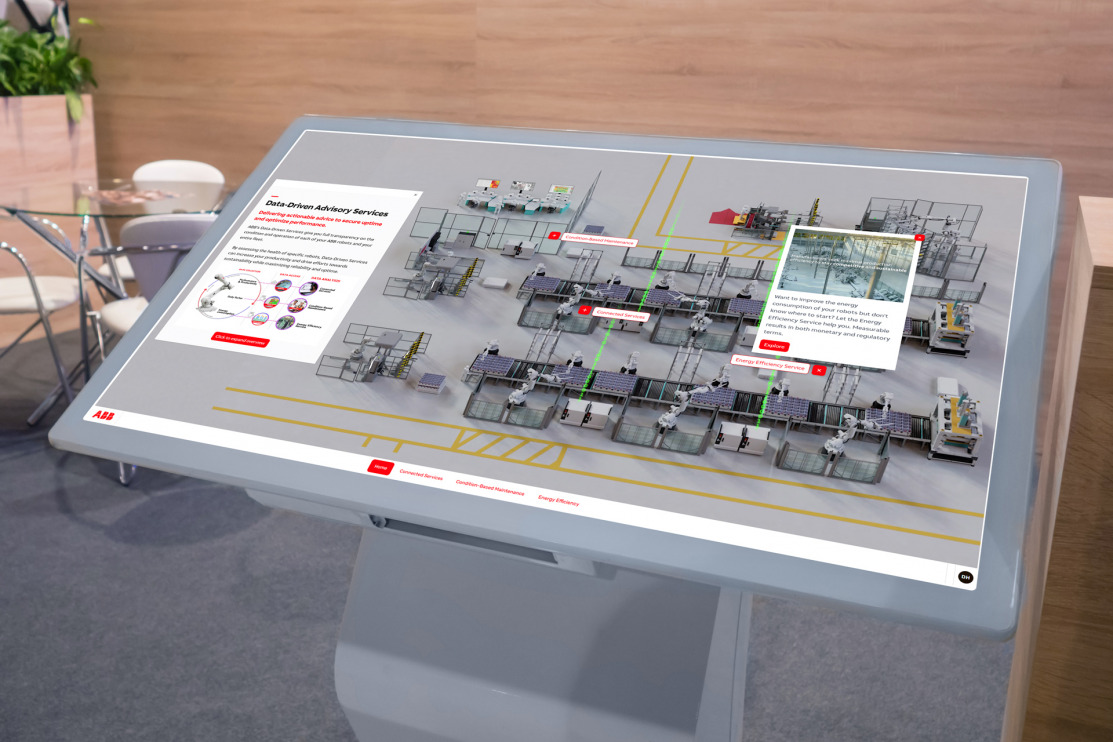
Touchscreen Software With Lead Capture Tools
Read

Case Study: How POP Creates Interactive Presentations Your Entire Team Can Use
Read
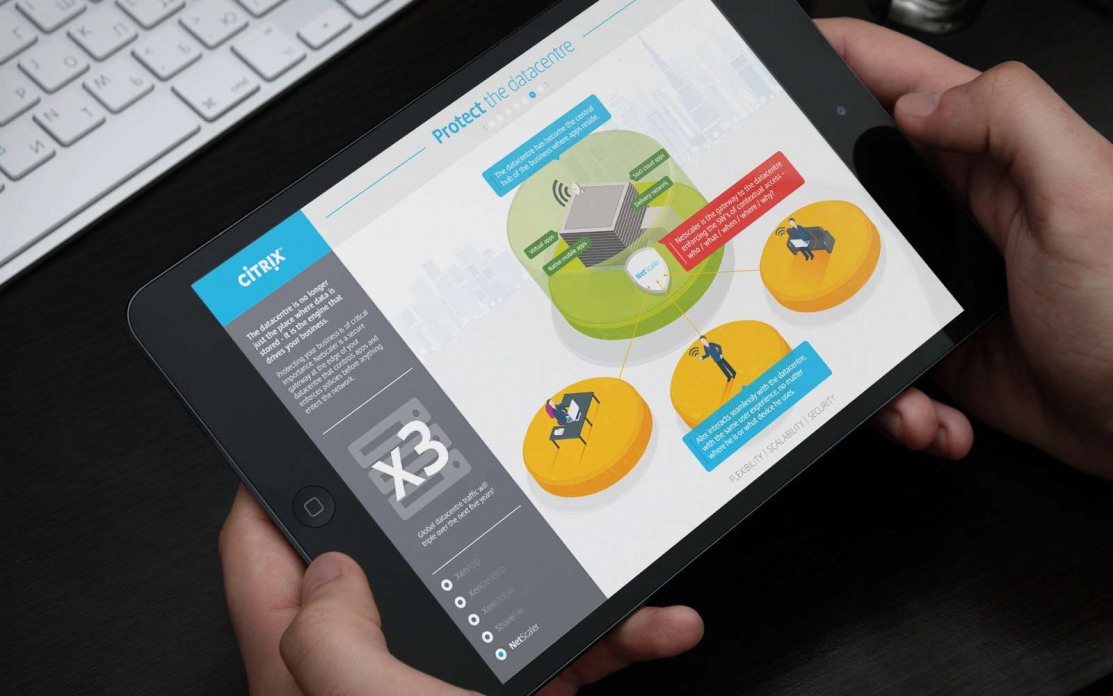
Case Study: How POP Create Interactive Presentations That Are Easy for Customers to Share Internally
Read
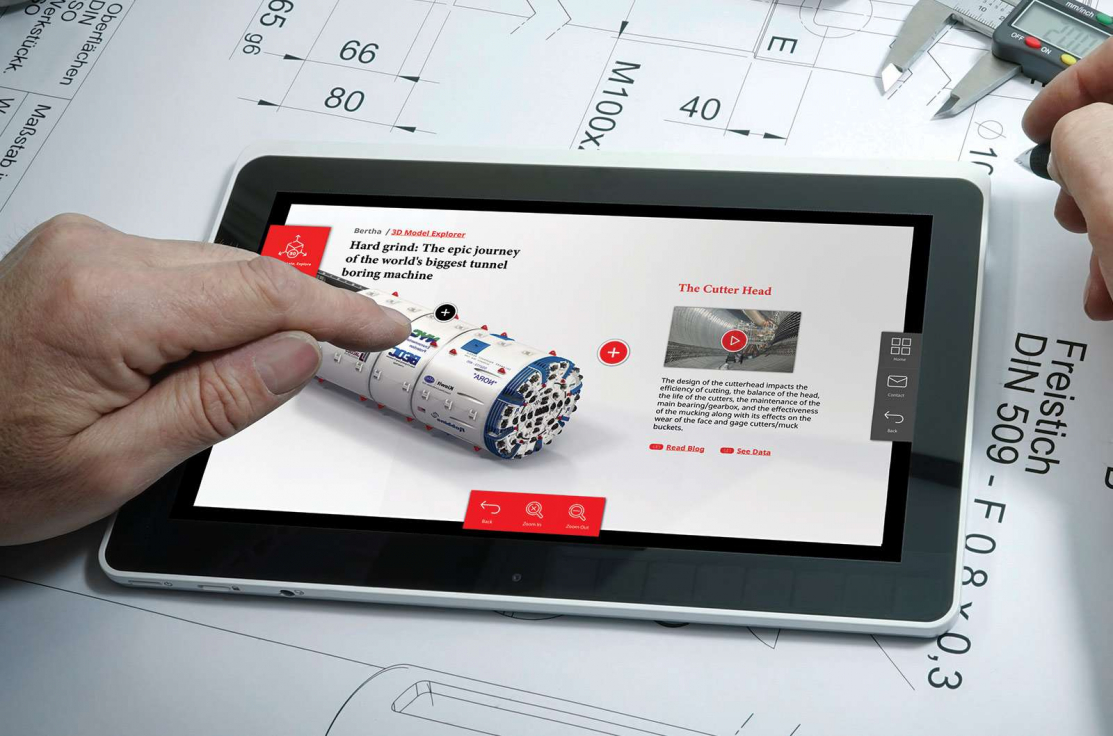
Visual Storytelling for Presentations | POPcomms
Read