




Measure Buyer Enablement Effectiveness in 2026
Last updated: 18 April 2026
Your buyer enablement initiative is live, your sales team is sharing links with prospects, and your first quarter of data is in,but how do you actually know if it’s working? Most industrial and healthcare organisations measure buyer enablement the same way they measure everything else: pipeline volume and closed deals. Both are important. Neither tells you why deals close or why they stall. The most effective way to measure buyer enablement effectiveness is to track stakeholder engagement patterns, deal velocity changes, and buying committee alignment,not just final outcomes. This guide walks you through seven practical measurement steps that industrial and healthcare teams can implement immediately, with specific metrics, tools, and frameworks that prove both revenue impact and operational efficiency gains.
Key Takeaways
- Buyer enablement effectiveness is measured through engagement depth (how many stakeholders accessed content), buying committee alignment (did they reach consensus), and deal compression (did the sales cycle shorten).
- The gap between demo and decision is where most deals are won or lost, track content engagement after the demo to see if your buyer enablement system is filling that void.
- Sales reps hitting targets and deal closure rates improve measurably when they have structured buyer enablement, with organizations reporting 49% higher win rates and 84% of reps meeting targets.
- ROI calculation for buyer enablement includes both revenue acceleration (faster deals, higher win rates) and operational efficiency (reduced printing costs, faster content deployment, lower development overhead).
Why Traditional Sales Metrics Miss Buyer Enablement Impact
Most industrial and healthcare sales organisations measure success in pipeline stages and deal closure rates. Those metrics are important. But they’re lagging indicators, they tell you what happened after the buyer made a decision, not what influenced the decision itself. Deals don’t die in your pipeline. They die in your buyer’s inbox. That’s the gap that traditional sales enablement platforms were never designed to measure.
When you give a sales rep a deck and a link, the traditional approach asks: “Did the rep use it?” When you give a buying committee a shared space to build understanding together, the right question becomes: “Did the buying committee reach alignment?” Those are completely different metrics.
Here’s the visibility problem: your CRM tells you a deal closed. It doesn’t tell you that your champion spent three days trying to explain your solution to their procurement team using a half-remembered demo and a PDF. It doesn’t capture the moment when one stakeholder never saw the business case and quietly vetoed the deal. It doesn’t show you the internal misalignment that cost you $500,000 in revenue.
Buyer enablement effectiveness requires a different measurement framework, one focused on what happens during the buying process, not just after it ends. That’s where the data lives that actually predicts deal outcomes.
Step 1: Define Your Baseline, What Does Success Look Like?
Before you can measure buyer enablement effectiveness, you need to define what you’re measuring. Start with three baseline metrics from your current state, the numbers you’ll compare against in 6 and 12 months.
Establish Your Baseline Metrics
Average sales cycle length: How many days from first meeting to contract signature? For industrial and healthcare deals, this typically ranges from 90 to 270 days depending on complexity and buying committee size. Document your current average by deal size and product category.
Win rate by deal type: What percentage of qualified opportunities close successfully? This should be segmented by complexity level and committee size. A deal with five stakeholders almost always has a different win rate than a deal with one.
Percentage of deals that stall or expire: How many opportunities die to “no decision” rather than to a competitor? Track this separately, it’s the most expensive outcome because the selling cost was paid with zero return. Most industrial organisations find this number is between 15% and 30% of qualified pipeline.
Content consumption patterns: Which materials are actually being used in the sales process? How many reps use collateral, and which pieces get shared with buyers most frequently? This baseline tells you whether your current content strategy is even functional.
Document these four metrics now, before you implement buyer enablement. They become your control group. Everything you measure later is measured against this baseline.
Step 2: Track Engagement Across the Buying Committee
This is where buyer enablement measurement diverges completely from sales enablement. Sales enablement asks: “Did the rep find the deck?” Buyer enablement asks: “Did each stakeholder in the buying committee engage with content that mattered to their role?”
The most important engagement metric in buyer enablement is multi-stakeholder participation. Here’s why: stakeholder engagement through buyer enablement increases the probability that buying committees reach consensus. When you can see that five different people from different functions all accessed materials explaining the business case, procurement requirements, technical architecture, and financial impact, you have visibility into alignment.
Track These Engagement Signals
- Number of unique stakeholders engaged per opportunity: How many people from the buying committee accessed your buyer enablement materials? This should increase with your platform adoption. A deal with three engaged stakeholders has a materially different outcome than a deal where only the champion was exposed to your story.
- Engagement depth by role: Did the technical buyer engage with technical content? Did the procurement stakeholder engage with commercial and compliance materials? Role-specific content consumption is a signal that your buyer enablement system is actually helping each stakeholder build their piece of the understanding.
- Time spent and content visited: Which materials receive the most engagement? Which are skipped? If your procurement deep-dive is getting zero views, that’s a signal that either the buying committee doesn’t include procurement in this stage, or your procurement content isn’t resonating. Both are valuable insights.
- Post-demo engagement velocity: This is critical. How quickly after a sales demo do you see stakeholders engaging with follow-up content? When engagement happens within 24–48 hours, it’s a signal that momentum is real and the buying committee is actively building understanding. When there’s silence for a week, that’s a warning signal that the deal has stalled.
These metrics should be automatically captured by your buyer enablement platform and surfaced to sales reps in real time. A sales rep who can see that three new stakeholders just engaged with technical content overnight knows exactly what to talk about on the next call.
Step 3: Measure Deal Velocity and Compression
Deal velocity is the speed at which opportunities move through your pipeline. Buyer enablement’s primary impact is deal compression,moving deals from stage to stage faster by reducing the friction in the buying committee’s decision-making process.
The Deal Compression Framework
For industrial and healthcare organisations, measure velocity at three critical gates:
- Demo to business case alignment (Gate 1): How many days after a discovery meeting or demo does the buying committee align on the business case and internal value proposition? This is where buyer enablement has the most dramatic impact. Without a shared space to build understanding, your champion has to explain the entire solution in a series of internal emails and meetings. With buyer enablement, the buying committee can review materials together and reach alignment faster. Track the delta between your baseline and post-implementation timelines.
- Business case alignment to RFQ/proposal request (Gate 2): Once the committee agrees on value, how long until they formally request pricing and terms? This is often compressed by 30–50% when the procurement stakeholder has already reviewed and agreed to technical requirements and commercial terms through your buyer enablement materials.
- RFQ to contract signature (Gate 3): The final stage is usually the fastest, but it’s still measurable. Does the buying committee already understand your contract terms, SLAs, and compliance requirements? Or do they discover new objections in the legal review phase because one stakeholder never saw them? Buyer enablement reduces Gate 3 friction too.
The benchmark you’re aiming for is a 20–30% reduction in average sales cycle length within the first 12 months. Industrial organisations using our services report that the time from first meeting to getting information to the buying committee dropped from a week to minutes, enabling much faster internal decision cycles.
This isn’t just a speed metric, it’s a revenue metric. Every day a deal spends in your pipeline is a day it can stall, a day a competitor can influence, a day a stakeholder can change their mind. Compressing the sales cycle directly compresses the window where deals can die to “no decision.”
Step 4: Monitor Stakeholder Alignment and Confidence Signals
Alignment is the outcome that predicts deal closure. You measure alignment through behavioral signals captured during the buying process.
Alignment Indicators
Consistent messaging in internal meetings: This is hard to measure directly, but your champion’s willingness to reference specific materials in follow-up conversations is a proxy. When a stakeholder says, “I reviewed the technical architecture in the materials you sent, here’s how it addresses our concern,” that’s a signal that they’re building the right understanding. When they say, “I don’t really understand how this works,” that’s the opposite signal.
Ask your sales reps: “Are buyers referencing specific details from your materials in conversations?” Track how often this happens. It should increase as adoption grows.
Reduced objection cycling: Does procurement keep raising the same concerns in every meeting? If yes, it’s a signal that they never reviewed the materials that address those concerns. One stakeholder’s lack of engagement creates friction for the entire buying committee. When engagement is distributed and deep, objections get resolved once instead of recycled infinitely.
Internal champion confidence: Ask your reps directly: “On a scale of 1–10, how confident does your champion feel explaining this solution to their boss?” Better enablement should increase this number. A champion who can point to a visual walkthrough, a financial model, and a compliance checklist has much higher confidence than one armed with a PDF and memory.
Buying committee size stability: In complex deals, decision-makers sometimes change. A new stakeholder joins the committee and becomes an unknown factor. When your buyer enablement materials are available, a new stakeholder can catch up in hours instead of weeks. Track whether new stakeholders who come in late are causing deal delays or whether your materials are helping them ramp fast.
Step 5: Calculate ROI, Revenue Impact and Cost Savings
Buyer enablement effectiveness ultimately lives or dies on revenue impact and operational efficiency. Here’s how to calculate both.
Revenue Impact Calculation
Win rate improvement: If your baseline win rate was 40% and it increases to 49% (a 9-point improvement), calculate the incremental revenue on your historical pipeline volume. If you close $5 million in deals per year with 100 opportunities, that 9-point improvement on the same 100 opportunities is $450,000 in additional annual revenue. Multiply by your average deal value to get a true picture for your organization.
Sales cycle compression value: When you reduce average sales cycle length by 25 days (a realistic benchmark), you compress the window where deals stall. That means more deals in your fiscal year close within that year instead of slipping to next year. Calculate the value of deals that move from Q4 into Q3, or Q2 into Q1. For a $50 million sales organization, a 25-day compression cycle often releases $2–3 million in additional annual revenue through timing alone.
Deal size improvement: When buying committees are better aligned, they’re more likely to approve larger scope than the original RFQ. Track whether average deal value increases,it often does by 10–15% when procurement and technical stakeholders are both engaged in the earlier stages.
These three elements together, win rate improvement, cycle compression, and deal size expansion, create the revenue case. Conservative industrial organisations typically see $3–5 million in first-year revenue impact from a mature buyer enablement implementation.
Operational Efficiency Gains
Beyond revenue, measure the operational efficiency that buyer enablement delivers:
- Content production and maintenance cost reduction: When you move from PowerPoint versioning chaos to a single governed source of truth, you eliminate rework. Your content team spends less time managing versions and more time creating materials. Most organisations see a 40–50% reduction in content maintenance overhead.
- Sales rep time allocation: Reps spend less time troubleshooting the buyer’s inbox chaos (“Did they get the email? Should I resend the deck?”) and more time on actual selling conversations. Sales reps report being able to spend 5–7 more hours per week on high-value activities instead of administrative work.
- Print and logistics cost reduction: When content is available digitally at trade shows and in customer meetings, your logistics and printing costs plummet. Real-time sales material customization enables digital delivery. Most organisations see a 70% reduction in print and logistics costs by shifting from paper-based to digital presentation. For a global industrial organization with 200+ sales reps, that’s often $400,000–$600,000 per year.
- Content development speed: When you’re not hand-coding interactive experiences from scratch, development overhead drops dramatically. Creating complex interactive buyer experiences using modern platforms now takes days instead of months, with a 75% reduction in development costs. That means you can refresh your messaging and materials quarterly instead of annually.
Add these operational gains to your revenue impact and the total economic value of buyer enablement becomes clear.
Step 6: Build Your Measurement Dashboard
You can’t manage what you don’t measure, and you can’t measure what you don’t see. Build a real-time dashboard that captures buyer enablement effectiveness across six dimensions:
Dashboard Structure
Engagement Dashboard (updated daily): Shows total stakeholders engaged this month, engagement by role, average time spent per stakeholder, and engagement velocity post-demo. This tells your sales leadership whether adoption is real or cosmetic.
Deal Velocity Dashboard (updated weekly): Maps average time in each pipeline stage for deals with buyer enablement vs. deals without. Shows which stages are compressing and which still have friction. Segments by deal complexity and buying committee size.
Win Rate Dashboard (updated monthly): Tracks win rate by deal type, comparing deals where the buying committee was engaged in your enablement materials vs. deals where engagement was light. This directly answers the question: “Does buyer enablement actually increase our win rate?”
Alignment Signal Dashboard (updated manually by reps, weekly): A simple scorecard reps complete: “On a 1–5 scale, how confident is the champion in their ability to sell internally?” “Is procurement aligned?” “Are objections getting resolved faster?” These qualitative inputs feed your quantitative metrics.
Financial Impact Dashboard (updated quarterly): Revenue impact from win rate improvement + cycle compression value + deal size changes, minus platform costs. This is the number you report to the CFO.
Operational Efficiency Dashboard (updated quarterly): Content production cost reduction, rep time savings, print/logistics savings, development speed improvements. This is the operational case.
All six dashboards feed into a single executive summary: “Buyer Enablement Effectiveness at a Glance.” This becomes your monthly business review slide.
Step 7: Report Impact to Leadership and Iterate
Measurement means nothing if you don’t communicate it and act on it. Here’s how to structure your monthly business review around buyer enablement effectiveness.
The Monthly Reporting Cadence
Sales leadership monthly review: Show engagement metrics, deal velocity changes, and early win rate signals. Be transparent about where adoption is working and where it’s stalling. If 40% of reps are using buyer enablement and 60% aren’t, that’s a use-case problem, not a platform problem, and you need to fix it before you can measure true impact.
Finance quarterly review: Present the full ROI calculation: revenue impact, operational savings, platform cost, and net incremental value. Most industrial organisations reach breakeven on buyer enablement investment in 3–6 months and show cumulative positive ROI by month 9.
Executive quarterly review: Frame buyer enablement effectiveness in terms the C-suite cares about: win rate, revenue acceleration, deal quality, and competitive win vs. “no decision” performance. Read our latest insights on buyer enablement trends to stay current on benchmarks and best practices for your industry.
Acting on What the Data Tells You
If engagement is uneven by function: You have a content gap. One buying committee function isn’t seeing materials that resonate with their role. Work with your product and marketing teams to fill the gap.
If engagement is high but deal velocity hasn’t improved: You have a friction point that buyer enablement isn’t solving. Maybe your contracts are still causing delays. Maybe procurement needs a different kind of content. Dig into the objections that are still cycling.
If win rate hasn’t moved: Two possibilities: (1) adoption is too light to move the needle, you need stronger sales enablement and incentives to drive usage, or (2) buyer enablement is addressing the wrong problem. Revisit your baseline diagnosis of why deals are stalling.
Measurement is iterative. After six months, you should have enough data to identify what’s working and what needs adjustment. Use that data to evolve your buyer enablement strategy.
Frequently Asked Questions
How long does it take to see measurable results from buyer enablement?
Most industrial organisations see engagement metric improvements within the first month and deal velocity changes within 3–6 months. Win rate and revenue impact require a full sales cycle (90+ days for most complex deals) to measure accurately. Don’t expect significant revenue impact to show in the first 30 days, the data lives in pipeline progression and stakeholder alignment signals first, then translates to closed deals.
What’s the most important metric to track for buyer enablement effectiveness?
Multi-stakeholder engagement depth is the leading indicator. If three or more people from the buying committee are engaging with role-specific content, deal closure probability increases materially. This metric moves fast and predicts later outcomes. Win rate is a lagging indicator, you’ll only know if you won after the decision is made. Engagement tells you whether you’re building alignment in real time.
Can we measure buyer enablement effectiveness if we already use a sales enablement platform?
Yes, but you’ll be measuring different things. Your sales enablement platform tracks how often reps access content. Buyer enablement measurement tracks how often buyers access it and whether they reach alignment. The two complement each other, reps need to find the right content, and buyers need to understand it together. Neither platform alone measures effectiveness. You need visibility into what happens when the rep shares the link with the prospect.
How do we isolate buyer enablement impact from other sales changes?
Segment your analysis by deal cohort. Deals that leverage your buyer enablement materials vs. deals that don’t become your treatment group and control group. Track win rate, cycle time, and deal size for both cohorts. The delta between groups is your buyer enablement impact. This requires some discipline in data tracking, but it’s the only way to isolate causation instead of just correlation.
What if our buying committees are small? Does buyer enablement still matter?
Buyer enablement matters more in complex, multi-stakeholder deals than in simple transactions with a single buyer. If your typical deal has five or more stakeholders spanning multiple functions, buyer enablement impact on alignment and win rate is dramatic. If your deals have one or two stakeholders, the ROI is lower but the fundamentals still apply,any stakeholder benefits from a clearer, more interactive way to understand your solution versus a PDF.
You now understand what to measure and how to track it. But measuring buyer enablement effectiveness requires a platform designed to capture the right signals, one built for how industrial and healthcare buyers actually make decisions, not adapted from SaaS velocity sales.
Take the next step today.

Related Posts
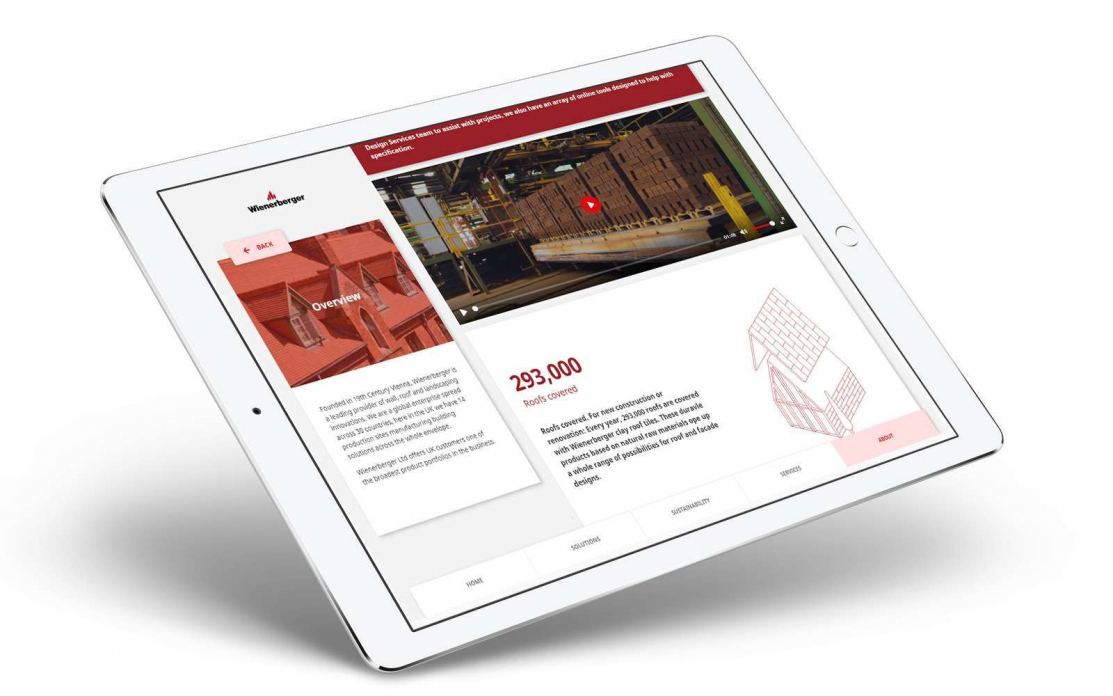
POP Scoops Construction Marketing Award for Excellence in Digital Sales Tool Development
Read

Why Your Sales Presentation Can Make or Break Your Business
Read
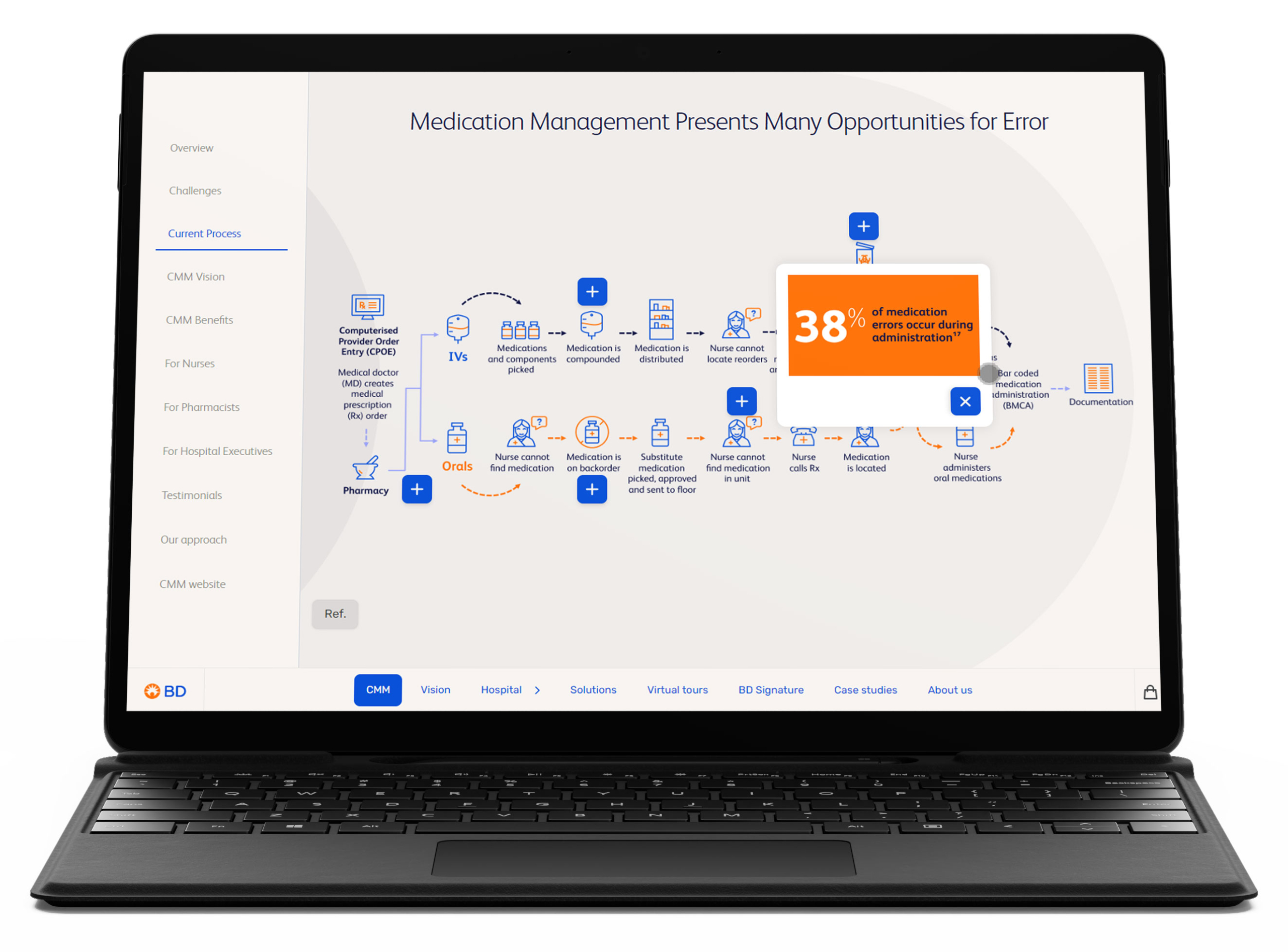
Comparing Buyer Enablement Software to Generic B2B Tools
Read
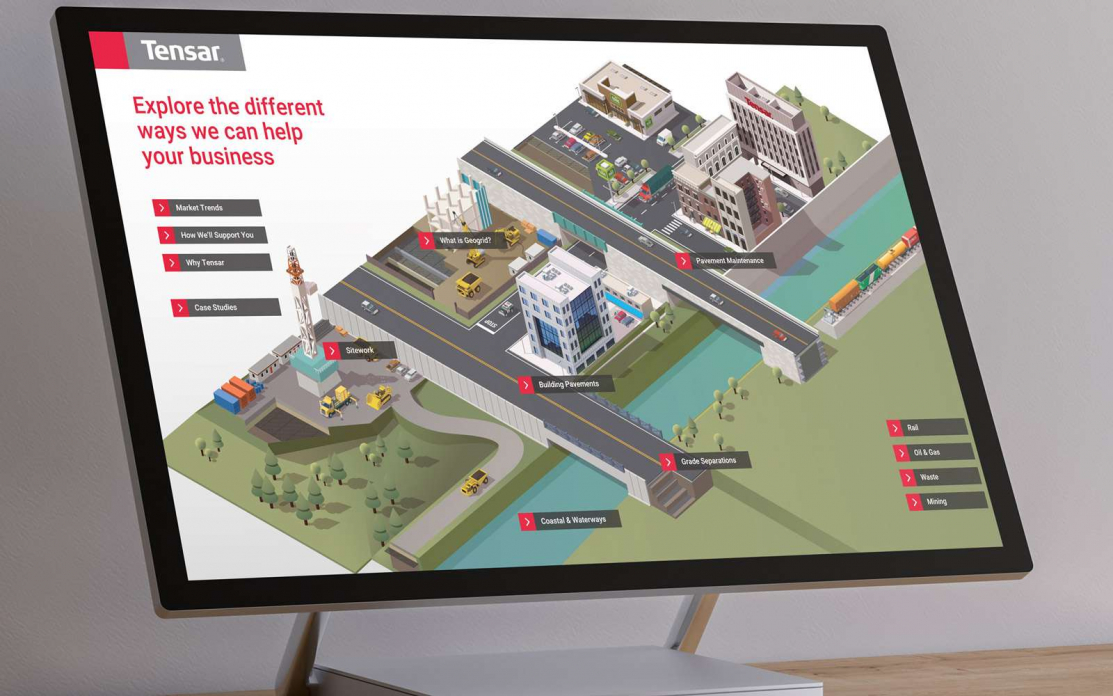
How to Impress Customers With a World Class Sales Enablement Tool
Read