




Sales teams need content that actually helps them sell, not a maze of folders and old decks. A good sales content management platform turns that mess into clear, guided experiences that buyers can use to make confident choices. When pressure builds in July and everyone is focused on hitting second half targets, the last thing you want is people wasting time hunting for files or sending out outdated slides.
In industrial, healthcare and technology sales, that problem is even bigger. Buyers expect to explore on their own, on their own time, with content that feels made for them. A generic PDF will not cut it. We are going to walk through how to design a sales content management platform that supports those real buying journeys, helps sellers in the moment, and grows smarter over time.
Turn Sales Content Chaos Into Buyer Clarity
By mid-year, content tends to be scattered across shared drives, email threads, and personal folders. Different teams create their own versions, so there are multiple stories out in the field. Deals slow down because no one is quite sure which asset is current, or what to use for a specific type of buyer.
Buyers feel that chaos too. They get:
- Generic pitch decks
- Long PDFs with everything thrown in
- Little sense of how it all fits their world
A modern sales content management platform should fix that. It should act like a buyer enablement engine, not just a place where files go to hide. Central, interactive and controlled content becomes the single source of truth that both sales and buyers rely on.
The goal is simple: a platform sales teams enjoy using in live meetings, and that buyers can return to when they need to explain your solution to others inside their organisation.
Start with How Buyers Actually Buy
The worst way to design a platform is to copy your org chart. Buyers do not care which internal team owns what. They care about solving problems, staying compliant and making a safe, smart choice.
Industrial, healthcare and tech deals often include:
- Technical experts checking feasibility
- Clinical or safety teams reviewing risk
- Finance teams checking numbers
- Senior leaders looking at strategy and outcomes
Each group needs different levels of detail and different formats. A sensible starting process looks like this:
- List your typical buying committees, by role
- Break the process into stages, from first interest to onboarding
- Match content types to each stage and role
Content should be grouped by buyer problem, industry or outcome, not by product codes. A plant manager, a clinician or an IT lead should all be able to find what they need in a few clicks, in language that makes sense to them.
Design for Sellers First, Governance From Day One
If a seller cannot find what they need in under 30 seconds, they will not use the platform. They will go back to old decks on their laptop. Adoption lives or dies on that moment in front of the customer.
Helpful design choices include:
- Simple, clear navigation by use case, industry or problem
- Search that understands common sales terms and phrases
- Mobile and tablet-friendly layouts for field meetings
- Quick shortcuts to recommended and top-performing content
At the same time, you need strong control. That means role-based permissions, version control, expiry dates for regulated content, and clear owners for each asset. In healthcare or regulated industrial settings, this is non-negotiable.
Central content control stops the spread of “rogue decks”, while still allowing sellers to personalise within safe limits.
Turn Static Assets Into Interactive Experiences
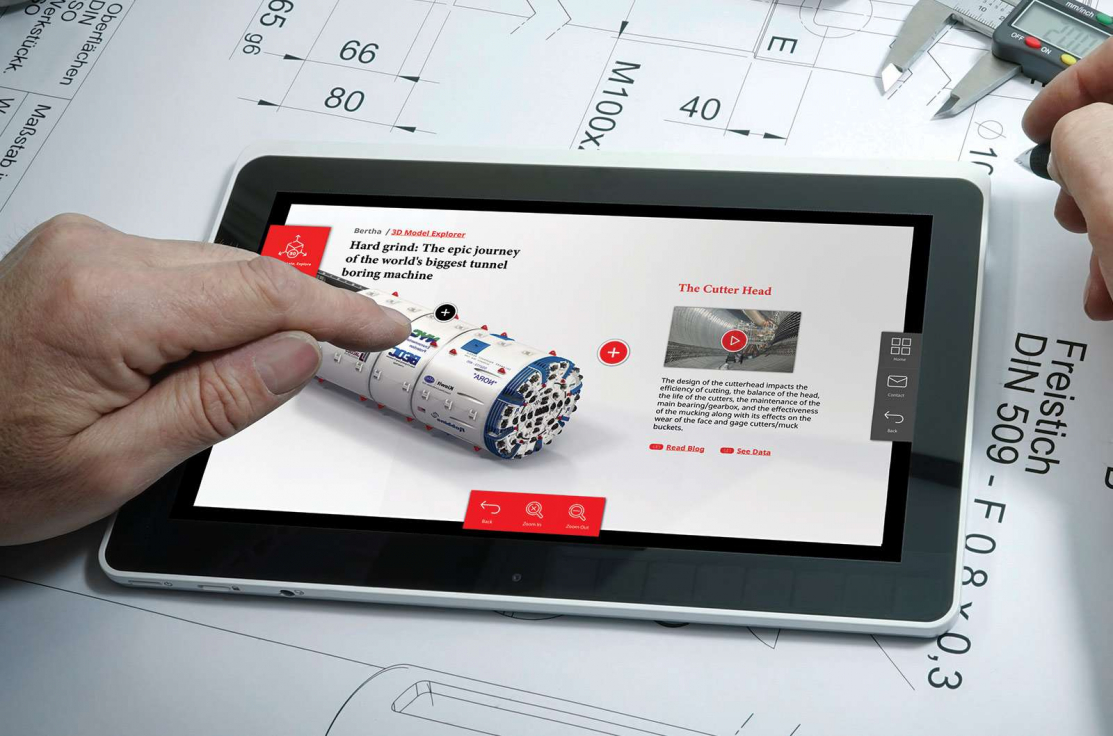
Static slides and long PDFs can feel heavy and hard to use in complex sales. Interactive content is far easier to explore and far easier to explain to others.
For example, you might create:
- Modular product configurators for complex industrial systems
- Interactive paths that follow a clinical workflow from end to end
- Scenario-based demos for multi-layered technology platforms
Within a sales content management platform, these interactive pieces can use branching paths, data inputs and different routes for different roles. A technical buyer can go deep, while a business sponsor can stay high-level.
The goal is not flashy graphics. It is clear, guided exploration that turns complex ideas into something a buying group can understand, discuss and share.
Use Analytics and Personalisation to Keep Improving
A true sales content management platform comes with rich engagement analytics. This is what sets it apart from a shared drive. You can start to see what actually happens when content reaches buyers.
Useful metrics include:
- Which assets each sales rep uses most
- How long buyers spend on specific slides or modules
- Where they drop off in interactive flows
- Which content appears in faster, successful deals
From mid-year onwards, these insights help teams refine content before budgeting and planning season kicks in. You can retire pieces that do not get used, improve those that do, and tune experiences by sector or role.
At the same time, personalisation needs to be both scalable and safe. Templates with locked brand elements, controlled content blocks and set structures let reps tailor messages without breaking compliance rules. Data integrations with CRM or product systems can feed live details into those experiences so sellers spend less time rebuilding slides.
As late summer and autumn planning ramps up, this kind of controlled personalisation helps teams respond quickly and precisely to RFPs and follow-up questions.
Frequently Asked Questions About Sales Content Platforms
Q1: What is a sales content management platform and how is it different from a simple file repository?
A1: A sales content management platform is a structured space built for sales and marketing content. It offers tailored navigation, smart search, permissions, version control, analytics and often interactive experiences, so teams can run better buyer conversations and understand which content supports revenue.
Q2: How do I measure the ROI of a sales content management platform?
A2: You can look at time saved searching or recreating content, higher use of approved assets, shorter sales cycles, better win rates and stronger deal values. With CRM links, you can also see which content appears most in opportunities that progress and close.
Q3: How long does it typically take to implement a platform like this?
A3: Timelines depend on size, structure and content volume. The key work sits in content audits, journey mapping and governance, not only technology setup. Many teams start with a focused pilot area, learn from it, then roll out more widely.
Q4: How do we keep content compliant and up to date, especially in regulated sectors?
A4: Use role-based permissions, approval workflows, review cycles and automatic expiry or alerts. Assign owners for each content group and rely on templates with fixed sections where set wording is required.
Q5: What should we prioritise if our budget is limited this year?
A5: Focus on clear structure based on buying journeys, fast search and useful analytics. Start with core decks, key product overviews, sector case studies and a few high-impact interactive demos, then grow from that foundation.
Transform Your Sales Conversations With Smarter, On-Brand Content
If you are ready to give your team instant access to the right content for every customer conversation, our sales content management platform is the ideal place to start. At POPcomms, we work closely with you to organise, personalise and present your content so it is easy to find, use and adapt in the moment. Share a few details about your goals and challenges and we will show you how the platform can support your sales process. If you would like to speak to a member of our team directly, please contact us.

Related Posts

Real-Time Sales Material Customization
Read

Decision Room Design Patterns for Buying Committees: Roles and Workflow
Read
Visual Storytelling for Presentations | POPcomms
Read

No-Code Governance for Complex B2B Sales: Templates, Permissions, and Controls
Read