




Last updated: 12 May 2026
Most product launch events still rely on static banners, printed collateral, and sales reps talking at visitors, instead of letting attendees control their own experience. The cost of that approach is attention, engagement, and qualified leads that walk away without a conversation. Booths with interactive screens draw 35% more visitors compared to traditional setups, yet many launch organisers haven’t made the shift. If you’re planning a product launch in 2026 and wondering whether touchscreen software is worth the investment, the answer is in the data, the attendee psychology, and the real-world results we’ve seen across hundreds of events. This guide walks you through exactly what touchscreen software does for product launches, how to choose the right platform, and what ROI you can realistically expect.
Key Takeaways
- Interactive touchscreen displays increase booth dwell time by 30–40% and can boost lead capture by up to 35% compared to passive setups.
- Touchscreens allow attendees to explore products at their own pace without waiting for a sales representative, transforming passive observers into engaged leads.
- Modern touchscreen software like POPcomms requires no coding or IT expertise and works offline, eliminating traditional barriers to deployment.
- 81% of attendees remember booths with interactive touchscreens, and 84% feel more confident about brands offering hands-on experiences.
Why Touchscreen Software Matters for Product Launches
A product launch is not just about announcing something new, it’s about creating a moment where your audience understands what you’ve built, why it matters, and why they should care. The difference between a booth that generates 10 qualified leads and one that generates 50 often comes down to one thing, engagement. Interactive touchscreen displays invite participation and transform passive observers into active leads, which is why 68% of trade show attendees believe booths featuring innovative technology have limitless potential. When visitors walk into your booth and see a touchscreen, they instantly expect to engage with something real, something they can control, something that respects their intelligence and their time.
The self-service nature of touchscreens is fundamental to why they work so well at product launches. Attendees can browse product specs, explore use cases, watch demo videos, and drill into detail at their own pace, without needing to wait for a representative to become available. This removes friction from the discovery process and gives your sales team a much larger window to have a meaningful conversation. Interactive trade show booths achieve average dwell times of 5 to 12 minutes per visitor, compared to roughly 45 seconds for passive displays. That’s a 10–15x increase in the time your team has to start building rapport and understanding buyer intent.
Beyond the immediate engagement numbers, there’s a deeper psychological shift happening. 81% of attendees remember booths that feature interactive touchscreens, and 84% feel more confident about brands that offer hands-on experiences. This isn’t just about foot traffic, it’s about creating memory and trust. When someone physically interacts with your product on a touchscreen, they move from observer to participant. That mental shift makes them more likely to follow up after the event, more likely to recommend you to colleagues, and more likely to progress through your sales funnel. For a product launch specifically, where you’re trying to establish market presence and capture early adopters, this psychological advantage is invaluable.
How Touchscreen Software Works
Touchscreen software for product launches typically runs on a hardware display, it displays interactive content that attendees can navigate using their fingers. The software sits between your content (videos, product specs, configurators, forms) and the hardware (the physical touchscreen), managing how that content is organised, navigated, and delivered. What’s changed dramatically since 2010 or 2015 is that you no longer need a dedicated development team to build these experiences. Modern touchscreen software platforms use visual editors and template-based systems, allowing non-technical marketing teams to create and update interactive experiences without writing a single line of code. This is the shift that has made touchscreen technology accessible to companies of all sizes.
The workflow typically looks like this, you start with your content (product images, videos, PDFs, specifications). You import that into the touchscreen software platform, arrange it into a logical user journey, customise the layout and branding, and then deploy it to your touchscreen hardware. Some platforms allow you to manage multiple touchscreens simultaneously from a single dashboard, which is especially useful if you’re running product launches across several cities or regions. The software can also capture lead data in real time, tracking what materials attendees viewed, what products they were interested in, and even automatically sending those materials to their email address directly from the booth.
One critical feature for product launch events is offline functionality. Major events often have unreliable or expensive WiFi, so your touchscreen software needs to work completely offline without any loss of functionality or performance. Touchscreen software with offline capability has become essential, and when you evaluate platforms, this should be a non-negotiable requirement.
Key Features to Look For
Not all touchscreen software is created equal, especially when you’re choosing a platform specifically for a product launch. Here are the features that matter most.
Lead Capture and CRM Integration
You’re at a product launch to generate leads, so your touchscreen software needs to capture visitor data seamlessly. The best platforms allow visitors to enter their contact information (or scan a badge) directly on the touchscreen, and then automatically send selected materials to their inbox. Some platforms integrate directly with your CRM or marketing automation system, so leads flow into your system without manual data entry. Touchscreen software with lead capture tools should allow you to track which materials were viewed, how long each visitor spent on the screen, and what products generated the most interest.
Customizable Layouts and Branding
Your product launch has a visual identity. Your touchscreen experience should reflect that. Look for software that lets you upload your logo, match your brand colours, customise fonts, and control the overall look and feel without requiring design expertise. Templates can speed this up, but customization should be straightforward. The goal is that your touchscreen booth feels like a natural extension of your launch event, not a generic kiosk dropped into the space.
Multimedia Support
Product launches live on storytelling, and stories are told through video, images, and interactive demos. Your touchscreen software should handle high-quality video playback, 360-degree product views, interactive product configurators, and PDF documents without any lag or complexity. How to integrate touchscreen software with product demos is a critical question, so test whether the platform handles embedded demos smoothly, syncs video playback across multiple screens, and maintains performance even with large media files.
Multi-Screen Management
Many product launches deploy multiple touchscreens across a booth or venue to showcase different product lines, use cases, or customer stories. Your software should allow you to manage all of these screens from a central dashboard, push content updates to all screens simultaneously, and track engagement across the entire setup. With four touchscreens, you could present four unique experiences across departments, which brings a lot of traffic and engagement to your booth. The software should make managing that complexity invisible to your team.
Offline Performance
This cannot be overstated, your touchscreen software must work completely offline. If your event is in a venue with poor connectivity, you need a platform that stores all content locally on the device and doesn’t require any internet connection to function. Performance, lead capture, video playback, and form submission should all work exactly the same whether you’re online or offline.
Addressing Common Concerns
When product launch managers first consider touchscreen software, three questions almost always come up.
Will This Take Forever to Set Up?
No. Before platforms like POPcomms existed, touchscreen experiences had to be custom-programmed by developers, which meant 8–12 weeks of development time and significant expense. Modern, no-code platforms flip that model on its head. With specialist software built for product launches and trade shows, interactive experiences can be created in a fraction of the time they used to take. Most launch teams can build and deploy a multi-screen experience in 2–3 weeks, including content refinement and testing. Some simple launches can be ready in days.
Will This Be Prohibitively Expensive?
The economics have shifted dramatically. Before, a custom-built touchscreen experience cost £30,000–£60,000 or more. Specialist no-code platforms now offer flexible pricing models, from per-event licensing to annual subscriptions, and they eliminate the need for expensive developers. You’re paying for the software and the support, not for custom engineering. For most mid-size product launches, the cost is comparable to a professionally printed booth backdrop, and the ROI is far higher. Affordable touchscreen software for small businesses proves that high-quality interactive experiences are no longer exclusive to enterprise-level budgets.
What If WiFi Fails at the Event?
This is a legitimate concern, and it’s exactly why offline functionality is non-negotiable. Your touchscreen software should be installed on the device itself, meaning it requires zero internet connection to run. All content is stored locally, all lead capture happens locally, and when you sync back to the cloud after the event, you get all the data without losing anything. This removes the entire WiFi dependency and gives you peace of mind.
Measuring Success and ROI
How do you know if your touchscreen investment paid off? The answer is in the data your platform captures. Touchscreen software with ROI tracking should give you visibility into several key metrics.
Engagement metrics show how visitors interacted with your content, how long they spent on the screen, which products or topics generated the most interest, and how many visitors engaged with video versus other content types. This tells you what resonated and what fell flat.
Lead quality metrics reveal how many qualified leads you captured, what information they provided, and what content they engaged with before providing their contact details. You can then track those leads through your sales funnel to see which ones moved to opportunities, which ones won, and what the customer acquisition cost was relative to other launch channels.
Comparative metrics allow you to measure your touchscreen booth against other booths at the same event or against your previous launches. If your touchscreen booth captured 40% more leads than your passive booth did at the last event, that’s quantifiable ROI. Interactive elements boost engagement between visitors and exhibitors by around 50%, so you have a realistic benchmark to measure against.
For a product launch specifically, also track awareness and sentiment, do follow-up surveys show that attendees who visited your touchscreen booth had better product understanding than those who didn’t? Did they feel more confident about your brand? These qualitative metrics, combined with lead volume and sales outcomes, paint a complete picture of success.
Choosing the Right Platform
You now understand what touchscreen software does and what features matter. Here’s how to evaluate platforms and make a decision that fits your specific product launch.
Start With Your Content and Use Cases
Before evaluating software, define what you actually need to show. Are you demonstrating a product configurator where visitors can customise options? Are you telling customer success stories with video testimonials? Are you collecting detailed lead information with forms? Are you running multiple screens with different themes? Your use case should drive your feature requirements, not the other way around.
Test for Ease of Use
Ask every platform vendor for a trial or demo account where you can actually build something. Don’t just watch a demo video, actually try to import your content, create a user journey, and customise the branding. If you can’t do this without contacting support, that’s a red flag. The best platforms prioritise simplicity and accessibility for non-technical teams, because your launch team will need to make edits and updates, possibly on the fly during the event.
Evaluate Support and Expertise
A platform is only as good as the team behind it. Our services include dedicated support, strategy consultation, and ongoing optimisation, because we understand that technology alone doesn’t guarantee success. Look for vendors who offer training, troubleshooting support, and ideally, strategic guidance on how to get the most out of your touchscreen investment. If you need a platform that lets you quickly create and customise interactive touchscreen content while having an experienced team to support and enhance your ideas, then POPcomms is for you. The vendor should feel like a partner in your launch, not just a software provider.
Consider Integration Capabilities
Your touchscreen software doesn’t exist in isolation, it connects to your CRM, your email marketing platform, your analytics tools, and potentially your badge scanning system. Evaluate how easily the platform integrates with your existing tech stack. Can leads automatically sync to HubSpot or Salesforce? Can you pull data into your analytics dashboard? These integrations save hours of manual work and reduce the chance of data errors.
Request References and Case Studies
Ask the vendor for references from companies in your industry or with similar launch sizes. Better yet, read published case studies. Look for specific results, not just testimonials. Real clients should be able to tell you things like how many leads were captured, what the engagement dwell time was, and how the platform performed under real event conditions.
We’ve worked with companies across industrial, healthcare, and technology sectors. One energy company deployed four touchscreens across their booth and saw 60% more visitor interaction than their previous static setup. A manufacturing client tracked booth engagement across three regional launches and found that visitors who used the touchscreen were 3x more likely to become qualified opportunities. These results aren’t anomalies, they reflect how much of a difference interactive experiences make when done well.
Make a Decision Framework
Create a simple scoring matrix, list your must-haves and your nice-to-haves, score each platform against those criteria, and make a decision based on the total score rather than being swayed by a single impressive feature. Typical must-haves include offline functionality, lead capture, ease of customisation, and responsive support. Nice-to-haves might include advanced analytics, multi-language support, or specific integration capabilities. Contact us if you’d like help thinking through your specific requirements.
Frequently Asked Questions
How long does it take to build a touchscreen experience for a product launch?
With modern no-code platforms, most product launch experiences can be built and deployed in 2–3 weeks, including content gathering, design, testing, and final refinement. Simple single-screen setups can be ready in days, while multi-screen experiences with custom lead capture workflows might take 3–4 weeks.
What happens if the WiFi fails during my product launch event?
If your touchscreen software has offline capability, which it should, then WiFi failure is not a problem. All content runs locally on the device, lead capture data is stored on the device, and everything syncs to the cloud when connectivity is restored. No data is lost and user experience is completely unaffected.
Can I use the same touchscreen experience for multiple events or tour locations?
Yes. Most touchscreen software platforms allow you to deploy the same experience to multiple screens across different events, update content centrally and push changes to all locations simultaneously, and track engagement data from all events in a unified dashboard. This is especially useful for multi-city product launch tours.
How much does touchscreen software typically cost for a product launch?
Pricing varies, but modern no-code platforms typically offer flexible models, from per-event licensing (£2,000–£5,000) to monthly subscriptions (£500–£2,000/month). This is a fraction of the cost of custom development, which used to run £30,000–£60,000+. Cost depends on complexity, number of screens, and level of support required.
What’s the best way to measure ROI from a touchscreen booth at a product launch?
Track lead volume and quality (how many leads, what information did they provide), engagement metrics (dwell time, content viewed, interest patterns), and sales outcomes (how many leads converted, what was the customer acquisition cost). Compare these results against your previous launches or against passive booths at the same event to quantify the impact.
Creating a touchscreen experience for your product launch forces you to think clearly about what matters most to your audience, and that clarity alone tends to improve launch outcomes.
Take the next step today.
Related Posts
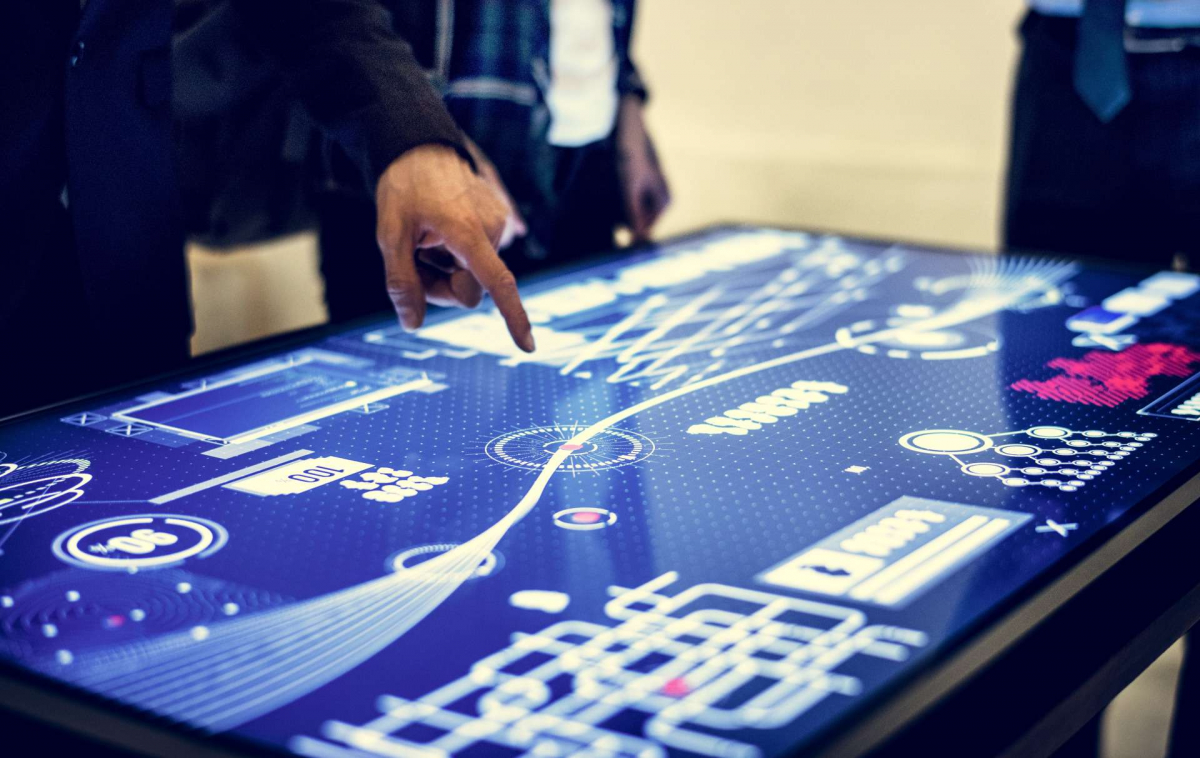
Interactive Touchscreen Examples | POPcomms
Read
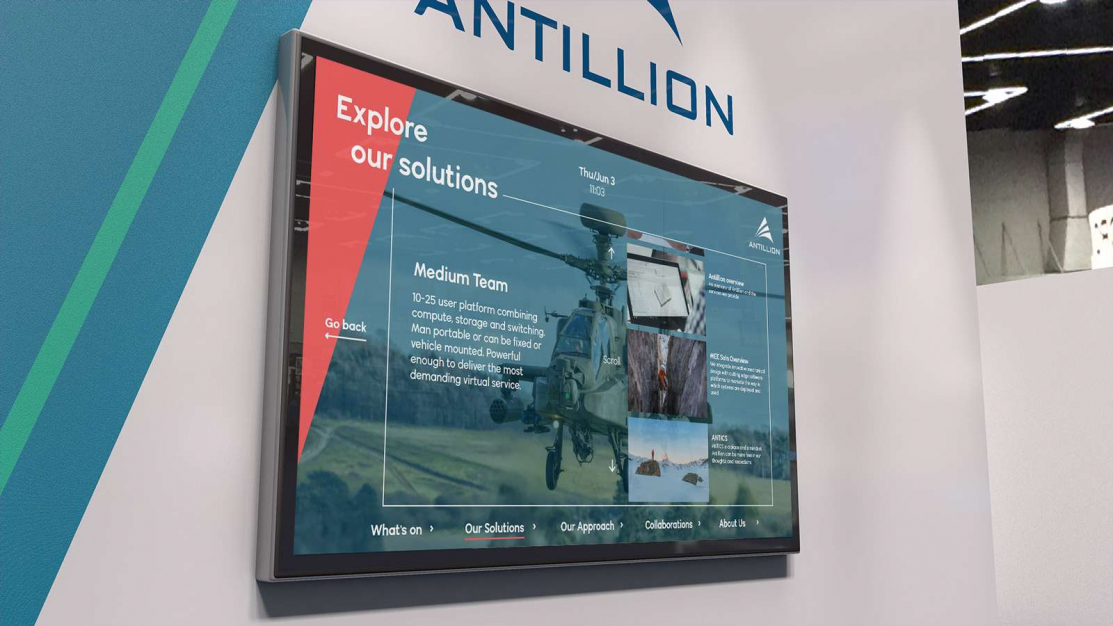
7 Things to Know: Interactive Touchscreen Solutions | POPcomms
Read
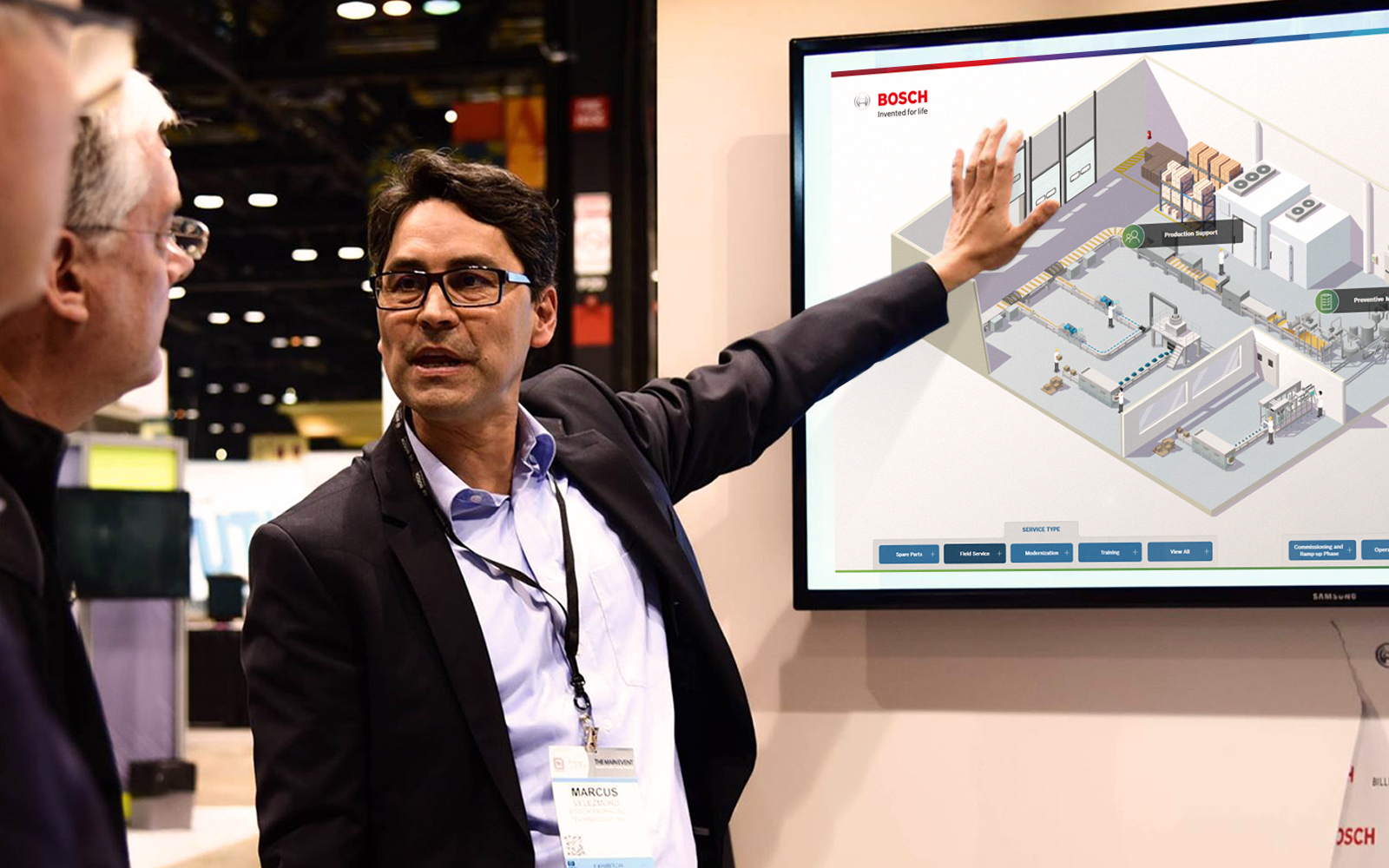
Infrared Touchscreen Display Software in 2026
Read
3 Valuable Brand Lessons for Success in the Experience Economy
Read