




Interactive Touchscreen Displays for Tradeshows
Last updated: 12 May 2026
Most exhibitors spend thousands on tradeshow booth design, only to watch visitors walk past in less than a minute. But here’s what changes that: booths with interactive screens draw 35% more visitors compared to traditional setups, and they keep those visitors engaged for 5 to 12 minutes instead of 45 seconds. If you’re pouring budget into events and not seeing the ROI you expect, the gap isn’t usually your product or your team, it’s the experience itself. Tradeshows have become a crowded, attention-starved environment where passive displays simply don’t compete. Interactive touchscreen displays flip that dynamic entirely. This article walks you through exactly why interactive touchscreen displays matter for modern tradeshow strategies, what real results look like, and how to implement them without the traditional barriers of cost and complexity.
Key Takeaways
- Interactive touchscreen displays attract 35% more visitors to your booth and extend average dwell time to 5–12 minutes, compared to 45 seconds for passive displays.
- 68% of tradeshow attendees believe booths with innovative technology have limitless potential, meaning visitors actively expect and reward tech-driven experiences.
- Touchscreen displays can increase lead capture by up to 35% because they remove friction from the exploration process and allow attendees to move at their own pace.
- Modern touchscreen software platforms like POPcomms work offline, require no coding, and can be set up in a fraction of the time traditional interactive solutions demand.
Why Tradeshow Visitors Expect Interactive Experiences
The tradeshow floor has fundamentally shifted. Attendees no longer come to passively absorb information from brochures and banner stands, they come ready to engage, explore, and experience. 68% of trade show attendees believe booths featuring innovative technology have limitless potential, signalling that visitors actively expect and reward tech-driven experiences. This isn’t a nice-to-have anymore, it’s a baseline expectation.
Walk through any major event in 2026 and the pattern is clear: the booths drawing crowds are the ones offering something interactive. Static displays have become nearly invisible in comparison. The psychology here is simple, engagement is bidirectional. When a visitor can touch, swipe, tap, and control how they explore content, they shift from passive spectator to active participant. Touchscreens in particular give attendees control over how they explore a brand, making them one of the most effective tools for self-guided engagement.
This shift matters because it aligns with how people naturally want to learn about products and services. Nobody enjoys waiting for a busy sales rep to become available, or reading through a dense brochure hoping something catches their eye. Interactive touchscreen displays remove that friction entirely. Visitors can dive into the exact information that interests them, at their own pace, without intermediaries. That level of autonomy is what turns a casual booth visit into a meaningful conversation starter.
The Engagement Lift: Real Numbers Behind Touchscreen Success
Numbers tell the story better than any pitch. Let’s start with the most dramatic stat: interactive trade show booths achieve average dwell times of 5 to 12 minutes per visitor, compared to roughly 45 seconds for passive displays—that’s a 10–15x increase in the window your sales team has to start a meaningful conversation. This is verified data from EXHIBITOR Magazine, and it represents a seismic shift in how much time you have to influence a prospect.
But dwell time is just the beginning. Booths with interactive screens draw 35% more visitors in the first place, meaning you’re not just keeping people longer, you’re attracting more of them through the door. Beyond traffic, interactive displays can increase booth dwell time by 30–40% and lead capture by up to 35%. That combination, traffic plus engagement plus conversion, is what separates high-performing booths from the rest.
The memory factor is equally compelling. 81% of attendees remember booths that feature interactive touchscreens, and 84% feel more confident about brands that offer hands-on experiences. This matters weeks after the event ends, when decision-makers are comparing vendors and narrowing their list. A memorable experience compounds your advantage long after the show floor closes.
Interactive elements also boost engagement between visitors and exhibitors by around 50%, which translates directly to richer conversations. Your team isn’t scrambling to grab attention or convince someone to stop, they’re walking into conversations already in progress. The visitor has already self-qualified by choosing to engage with your content.
Self-Service Exploration Transforms Passive Observers Into Active Leads
The self-service nature of touchscreens is the core mechanism that drives these results. Unlike static banners or brochures, interactive displays invite participation and transform passive observers into active leads. This distinction is fundamental.
Consider what happens when a visitor encounters a traditional booth. They scan quickly, grab a brochure if something catches their eye, and move on. There’s no investment, no exploration, no moment of discovery. Now consider what happens with an interactive touchscreen display. A visitor stops. They tap. They discover something unexpected. They swipe to learn more. They zoom into a detail they couldn’t see in a brochure. Each interaction creates momentum, each tap adds investment, and each gesture moves them deeper into your narrative.
Attendees can browse content, explore products, and drill into detail at their own pace, without waiting for a rep to become available. This is the practical advantage that resonates. No pressure, no rushed pitch, no queue to speak with someone. The touchscreen becomes the first conversation, and it’s happening on the visitor’s terms.
This approach works across all industries and booth sizes. Whether you’re showcasing healthcare technology, industrial equipment, or software solutions, the underlying psychology is the same. Give people control, remove friction, and they engage. For deeper insights into how these dynamics play out across different industries, check our blog.
Offline Capability and Easy Implementation: Removing Common Barriers
Here’s where traditional interactive solutions have historically fallen short, and where modern platforms like POPcomms have made a real difference. Three objections have long held exhibitors back from interactive touchscreens.
First, time to build. Creating interactive experiences used to require programming. A developer would need to hand-code every interaction, every animation, every transition. A single booth experience could take weeks. Not anymore. No-code platforms now let marketing and events teams create polished interactive experiences in days or even hours.
Second, cost. When building interactive content required dedicated dev teams, budgets spiraled. Now, no-code solutions have democratised access. You’re not paying for months of development, you’re paying for software and support, which is fundamentally cheaper.
Third, connectivity. This is where many exhibitors still trip up. Wifi is expensive and unreliable at tradeshow venues. Battery power is limited. Connectivity can’t be guaranteed. Except modern touchscreen platforms are built specifically for this environment. Touchscreen software with offline capability works without internet. The content lives on the device itself, which means full functionality whether the venue wifi is working or not. No loading delays, no dropped connections, no fallback to brochures.
These three barriers have effectively been solved. That means the only real question left is whether you’re ready to move from thinking about interactive displays to actually implementing them. Our services are built to guide that transition smoothly.
Lead Capture and Memorable Experiences That Drive Action
An engaged visitor is only half the equation. You need to capture that engagement as actionable lead data. The ability to collect emails, phone numbers, and content preferences directly through the touchscreen, then send materials instantly to the visitor’s inbox, closes the loop between booth interaction and post-event follow-up. This isn’t a feature, it’s a necessity.
Real-world examples illustrate how powerful this is. One exhibitor using touchscreen software with lead capture tools noted that they could track what materials were sent and opened after the show, giving them unprecedented insight into which booth interactions turned into genuine interest. Another team highlighted that visitors loved the ability to zoom in on product details and have everything sent directly to their device, eliminating the friction of manual data exchange.
The experience becomes memorable precisely because it’s seamless. Visitors aren’t waiting for a business card, they’re not filling out forms on paper, they’re not trying to remember details later. Everything they explored is in their inbox within minutes of leaving your booth. That convenience factor is sticky. It’s the kind of thoughtful experience that makes a brand stand out.
Beyond lead capture, touchscreen interactions generate data that informs future strategy. Which products are people most interested in? Which content pieces are getting the most engagement? What questions are coming up repeatedly? This feedback loop is invaluable for refining your messaging and product roadmap.
Real-World Results From Exhibitors Using Touchscreen Technology
Theory is one thing, results are another. Let’s look at what’s actually happening when companies deploy interactive touchscreen displays at scale.
Rapid Content Creation Without Technical Barriers
Mark Currier, Director of Marketing & New Business at CLD Inc, summed it up clearly, “If you need a platform that lets you quickly create and customize interactive touchscreen content while having an experienced team to support and enhance your ideas, then POPcomms is for you.” The speed advantage is real. His team was able to build an engaging booth experience that incorporated videos, interviews, and product demos in a fraction of the time a coded solution would require.
What made the difference was simplicity. As one marketing manager noted, “We needed a solution that was truly user-friendly, something that anyone on our team could pick up and use without needing coding experience or specialized training. Simplicity and accessibility were absolutely key for us.” That’s not a luxury, it’s a prerequisite when you need to iterate content right up to event week.
Engagement That Speaks for Itself
The real test comes on the show floor. Olga Bryzgalova, Marketing Manager, described the moment, “At the show, people were just coming up, interacting, and swiping through. They loved the lift and learn.” That casual language, “just coming up,” is telling. Visitors weren’t trickling by, they were actively seeking out the booth. The interactive elements created draw, and the experience kept them engaged.
She also highlighted the practical advantage of zoom capability, “We love the ability to zoom in and show details that can’t be conveyed with a brochure. The interactive map is far more engaging than a static PDF, and sending materials directly from the booth to customers is invaluable.” This captures both the engagement layer and the lead capture layer working in concert.
Scale and Flexibility
Another case study, GEA, demonstrated how the approach scales. “With four touchscreens, we could present four unique experiences across departments, which brought a lot of traffic and engagement to our booth. Tracking what materials were sent and opened afterward has been very useful for us.” Multiple screens mean multiple conversation streams. Visitors can explore different departments simultaneously. The data tracking adds a post-event intelligence layer.
The confidence in execution also came through in feedback, “With other companies, you might get 60% of what you want. With POPcomms, I got 100%, everything I wanted and more. It’s impressive how exact everything was. Even internally, doubts were quickly dispelled as we realized POPcomms delivered on its promises.” That clarity of outcome matters, especially when budget is on the line.
Visitor Perspective: The Experience Itself
Finally, here’s what visitors themselves said about the experience, “The interactive screens were a hit! People were genuinely excited to explore. Visitors loved being able to poke around and discover different projects at their own pace, it really made the experience memorable and fun.” That word, “fun,” matters. Tradeshows are exhausting for attendees. An experience that’s engaging rather than tedious stands out.
Frequently Asked Questions
How much does it cost to set up interactive touchscreen displays at a tradeshow?
Modern no-code platforms have dramatically reduced costs compared to traditional coded solutions. Rather than paying for months of developer time, you invest in software and hardware. The exact cost depends on screen size, quantity, and software features, but expect to budget significantly less than you would have five years ago. Contact POPcomms directly for a customized quote based on your booth size and content complexity.
What happens if the wifi fails at the venue?
Most modern touchscreen platforms, including POPcomms, are built with offline capability as a core feature. The content and software run directly on the device, not in the cloud, so loss of internet connection doesn’t affect functionality. Your booth operates at full capacity whether the venue wifi is working or not.
Can our team create the content without hiring a developer?
Yes. No-code touchscreen platforms are specifically designed for marketing and events teams to use without technical training. You can upload images, videos, PDFs, and create interactive experiences using simple drag-and-drop interfaces. Learn how to customize touchscreen interfaces for tradeshows to see what’s possible in minutes rather than weeks.
How long does it take to build an interactive booth experience?
Using no-code platforms, a basic interactive booth experience can be built and deployed in 1-2 weeks, including design, content upload, and testing. More complex experiences with custom branding and multiple screens might take 3-4 weeks. Compare that to 8-12 weeks for traditional coded solutions, and the time savings become obvious.
Will touchscreen displays actually increase our lead count?
The data is strong. Booths with interactive displays capture up to 35% more leads than traditional setups, and visitors spend 10-15x longer at interactive booths, giving your team significantly more time to qualify and convert. Lead capture integrations let visitors submit contact information directly through the screen, eliminating manual data entry.
Most exhibitors underestimate how much engagement they’re leaving on the table by sticking with static displays, but setting up interactive touchscreen displays doesn’t have to be complex or expensive.
The right platform and support team can have your booth experience running in weeks, not months, and the ROI compounds from your first event.
Related Posts
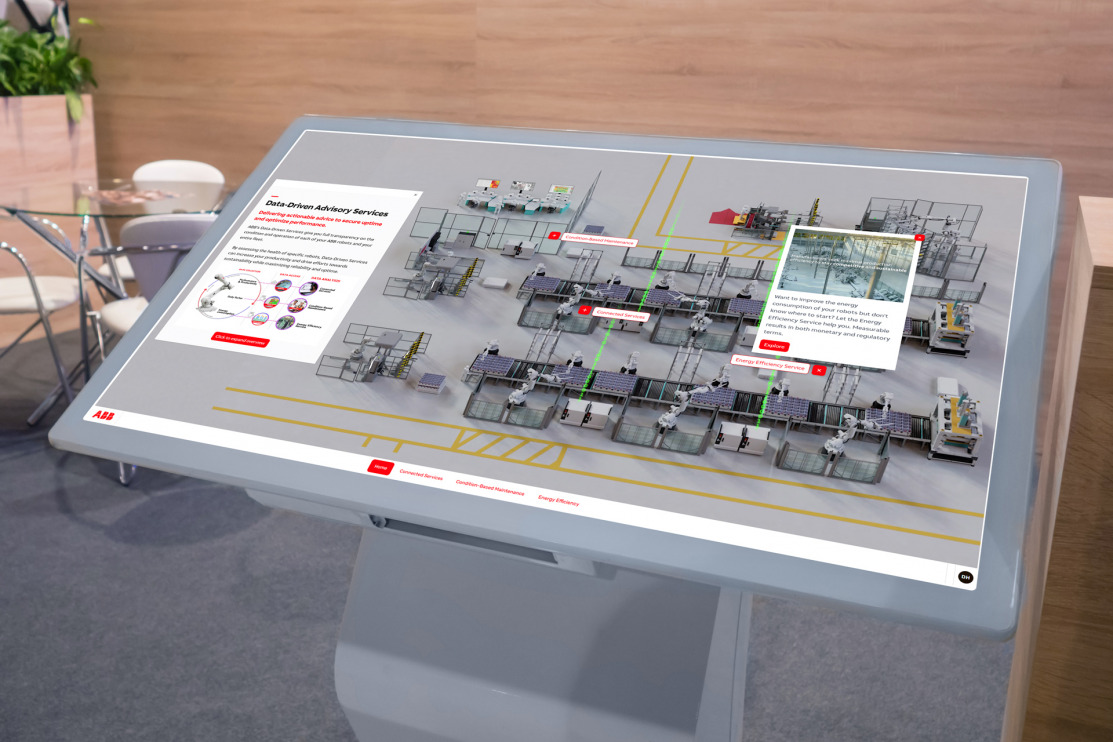
Touchscreen Software With Lead Capture Tools
Read
Professional Event Touchscreen Software License
Read
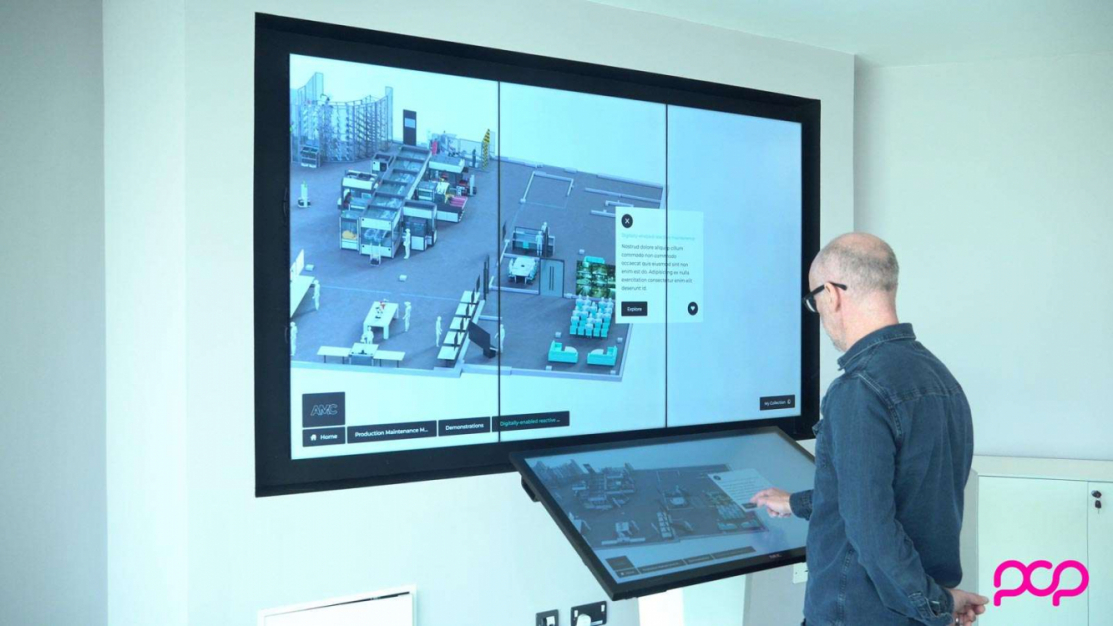
ABB – Digital Manufacturing Ireland customer experience center
Read
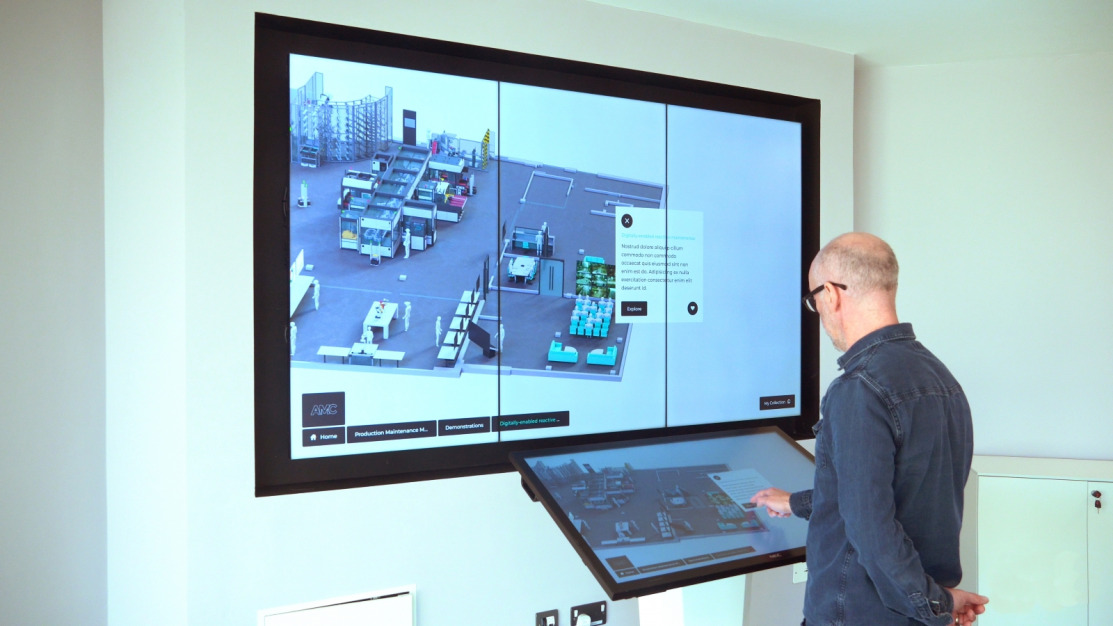
Pharmaceutical Event Touchscreen Platforms in 2026
Read