




Last updated: 17 April 2026
When a prospect first experiences your solution in a demo, they see it clearly. When they try to explain it to their buying committee three days later, that clarity evaporates. They’re left with half-remembered talking points, scattered emails, and a PDF nobody has actually read. This is where most complex B2B deals begin to stall, and where guided product tour builders become essential.
Your buyers aren’t confused by your product. They’re confused by each other. And the moment your champion tries to build consensus without a structured, shareable way to walk through your solution together, the deal starts moving toward “no decision.”
Guided product tour builders solve this by creating an interactive, self-guided walkthrough that lets buying committees experience your solution as a cohesive story, not a collection of disconnected emails and slides. In our first year of helping enterprise customers implement this approach, we helped them capture an additional $3 million in revenue that would have otherwise stalled in longer cycles or been lost entirely.
This article explains what guided product tour builders are, why they work in industrial and healthcare B2B sales, and how to choose one that actually delivers results instead of adding complexity.
We’ll cover the specific problems they solve, the data behind why they matter, and the practical framework for implementing them so your sales team and buyers both win.
Key Takeaways
- Guided product tour builders enable buying committees to experience your solution together as a unified narrative, reducing the time between demo and internal alignment from days to hours.
- The post-demo black hole, where buyers try to explain complex solutions to stakeholders using memory and email, is where most deals stall; guided tours eliminate this friction point.
- 86% of B2B deals stall because buying groups cannot reach internal agreement; guided tours engineer alignment by ensuring all stakeholders see the same story, not fragmented pieces.
- Industrial and healthcare companies need tour builders designed for complex, multi-stakeholder sales cycles, not lightweight SaaS tools that assume fast, individual decision-making.
What Are Guided Product Tour Builders?
A guided product tour builder is a platform that lets you create an interactive, step-by-step walkthrough of your solution that buyers can experience on their own or share with their team. Unlike a static PDF or video, a guided tour is a structured, self-paced experience where stakeholders can explore your product, understand how it solves specific problems, and see the business value without needing a salesperson in the room.
The core idea is simple: your buyers should be able to walk through your solution together, ask questions in context, and leave with a shared understanding of what you do and why it matters to them.
In practice, this means your tour builder should allow you to:
- Highlight specific features and explain the business problem each one solves
- Show the ROI, timeline, and implementation process in a way that addresses the concerns of different stakeholders (procurement, clinical, operations, finance)
- Create a narrative flow that guides buyers from “what does this do?” to “can we implement this?” to “what does success look like?”
- Track which stakeholders engaged with which content, so you know whether the buying group actually understands your solution
- Update critical information instantly without version control nightmares or brand inconsistencies
The difference between a guided tour builder and your current sales enablement platform is critical. Your enablement platform helps your sales rep find the right deck. A tour builder helps your buyer make sense of it. Your buyer enablement technology stack must include both, but most companies are still missing the second piece.
Why They Matter in Complex B2B Sales
Most industrial and healthcare companies are still operating in a world where demos happen in real-time, and everything after the demo is email-based chaos. A prospect sits with your sales team, sees your solution work, nods along, and commits to “getting back to the team.” Then what happens?
They open PowerPoint. They try to remember what you said about implementation timelines. They send three different documents to three different stakeholders. Finance sees the cost side. Clinical sees the workflow side. Operations sees neither. Nobody sees the same story.
Deals don’t die in your pipeline. They die in your buyer’s inbox.
Guided product tour builders interrupt this pattern by creating a single, coherent experience that the entire buying committee can reference. Instead of your champion trying to recap everything from memory, they share a link. The tour does the explaining. All stakeholders are looking at the same content, in the same sequence, and building understanding together.
Research shows that organisations with structured buyer enablement see 49% higher win rates. That improvement doesn’t come from having more content, it comes from having content that’s designed for how buyers actually make decisions, not how sellers prefer to deliver it.
For industrial and healthcare companies specifically, this matters even more. Your sales cycles are longer. Your stakeholder groups are larger and more diverse. Your products are more complex. The cost of a stalled deal is higher. A guided tour builder that’s actually designed for your complexity, not adapted from SaaS tools, becomes a direct revenue driver.
The Buying Committee Alignment Problem
Buying committees don’t fail because they disagree. They fail because they can’t build a shared picture.
Consider a typical healthcare technology purchase. Your solution requires buy-in from clinical staff (who care about workflow impact), IT (who care about integration), procurement (who care about cost and compliance), and C-suite (who care about ROI and strategic fit). Each stakeholder has different questions. Each reads different content. Each arrives at internal meetings with a different mental model of what your solution is and what it will cost.
The clinical director thinks your software saves 15 hours per week. Finance thinks it costs $2M to implement. IT thinks it requires a 6-month infrastructure rebuild. The CFO never saw the business case at all. In the meeting where they’re supposed to decide, there’s no alignment, only competing interpretations of incomplete information.
This isn’t a sales problem. It’s an architecture problem. And it’s expensive. The silent veto, one stakeholder who never saw the full story killing a deal without speaking up, is one of the most expensive events in complex B2B sales.
Guided product tour builders solve this by engineering alignment. Instead of leaving it to chance that all stakeholders will receive and understand the same information, the tour ensures they all experience the same narrative, in the same sequence, with context relevant to their specific role.
A tour designed for a healthcare purchase, for example, would have distinct pathways: one that speaks to clinical workflows and time savings, one that addresses IT integration requirements, one that shows procurement the compliance and security framework, and one that gives C-suite the financial model and implementation timeline. All of these feed into a single shared story, but each stakeholder sees why it matters to them.
How Guided Tours Drive Faster Decisions
The mechanics of how guided product tour builders actually accelerate deals is worth understanding because it explains why they work better than the alternatives.
The Post-Demo Gap
After every great demo, your buyer has to recap everything to their team using a half-remembered story and a messy inbox. That’s the moment your deal starts to die. The gap between the demo and the decision is where most complex deals are won or lost, and it’s the gap where sellers have the least visibility and buyers have the least support.
A guided tour fills this gap. Your champion doesn’t have to recap anything. They send a link. The tour does the explaining. The buyer’s internal team experiences what you showed in the demo, but with the added benefit of being able to pause, rewind, explore, and discuss in context.
The most effective way to close the post-demo gap is to give your champion an interactive walkthrough they can share, not a presentation deck they have to remember.
Engagement You Can Actually Track
One of the hidden benefits of a guided tour platform is visibility into what’s actually happening in the buyer’s world. You can see which stakeholders engaged with which sections, how much time they spent on specific features, whether they watched the ROI explanation or skipped it, and whether they completed the entire tour.
This data is gold in complex B2B sales. It tells you what your buying committee actually understands and what’s still unclear. If the CFO never watched the implementation timeline section, that’s a signal that you need to proactively address timeline concerns before the buying committee meets to decide. If the clinical team skipped the workflow integration section but spent 20 minutes on the compliance section, that tells you what’s actually blocking consensus.
With this visibility, you’re no longer flying blind between the demo and the decision. You have real data about buyer behaviour, data that lets you intervene intelligently.
Instant Updates Without Version Control Hell
In industrial and healthcare sales, information changes constantly. A competitor releases new pricing. Your implementation timeline shifts. Regulatory requirements update. Compliance documentation changes.
With traditional sales enablement, every change means creating a new PowerPoint, uploading it to your platform, notifying your team, and hoping the old version gets deleted so someone doesn’t send the outdated one to a prospect. Version control becomes a nightmare. Buyers see conflicting information. Trust erodes.
A guided tour builder solves this by letting you update content instantly. One change propagates everywhere. Every buyer who accesses the tour sees the current information. No manual distribution. No version confusion. One single source of truth.
This is particularly powerful in healthcare, where compliance documentation and regulatory frameworks can change, and in industrial, where supply chain timelines and pricing shift. The ability to keep critical information current without breaking sales workflows is a direct revenue protection mechanism.
Choosing the Right Platform
Not all guided product tour builders are created equal. Many are designed for SaaS velocity, fast, individual decision-makers, simple products, short sales cycles. Your world is different.
When evaluating a platform, watch for these critical mismatches:
SaaS Tools Don’t Scale to Industrial Complexity
Traditional sales enablement platforms like Seismic, Highspot, and Showpad were built for SaaS companies. They optimise for speed, ease of use, and individual consumption. They’re designed to help a sales rep grab a deck and send it to a buyer. What they don’t do well is orchestrate the experience for a 10-person buying committee over a 90-day sales cycle where stakeholder alignment is the bottleneck.
For industrial and healthcare companies, this is a fundamental mismatch. Your buyers aren’t clicking through a simple product demo in 5 minutes. They’re evaluating integration complexity, implementation risk, TCO across three years, regulatory compliance, workflow impact, and ROI. A buyer enablement platform needs to be designed for that level of complexity, not adapted from a tool that assumes simplicity.
Implementation Complexity vs. Adoption Reality
Many platforms promise power but deliver bureaucracy. They require your marketing team to learn complex workflows. They demand IT integration. They need training. Sales teams see them as another system to log into, and adoption flatlines.
What actually matters isn’t how powerful the platform is. It’s whether your sales team will actually use it and whether your buyers will actually engage with it. A platform that’s 80% as powerful but has 5x adoption rate will always beat a platform that’s 100% powerful but requires a 3-month implementation to get live.
The best platforms for industrial B2B have one essential characteristic: check our blog for case studies showing that they required days to stand up interactive buyer experiences,not months. Our customers report creating complex interactive buyer experiences now takes days instead of months, with a 75% reduction in development costs compared to building custom solutions.
Role-Based Personalisation Without Drowning in Configuration
You need to be able to customize the tour for different stakeholders, clinical vs. IT vs. finance vs. C-suite. But you don’t need a system so complex that it takes a developer to create variations.
Look for platforms where you can create multiple pathways or emphasize different sections for different roles without rebuilding the entire tour. Personalized sales collateral software should make personalisation easy, not punitive.
Engagement Tracking That Informs Action, Not Vanity Metrics
Some platforms show you “views” and “time spent” and call that engagement. That’s noise. What you actually need is clarity on which stakeholders saw which parts of your business case and whether they engaged with the critical decision-driving content.
The right metrics tell you whether your buyer’s internal alignment is building or whether specific stakeholders are still unclear. They point to what you need to follow up on, not just confirm what already happened.
Implementation Strategy for Industrial & Healthcare
Knowing what a guided tour builder is and why it works is one thing. Actually implementing it so you get adoption and results is another.
Start With Your Most Complex, Highest-Value Deals
Don’t try to create tours for your entire product portfolio at once. Start with the deals that are currently stalling, the ones where your champion gets stuck trying to align a diverse buying committee around a complex solution.
Pick one deal type or solution where the post-demo stall is most painful. That’s where you’ll see results fastest and build internal support for rolling out more widely.
Involve Your Sales Team in the Design, Not Just the Rollout
Sales reps know what questions buyers actually ask. They know where confusion happens. They know what parts of the solution actually move deals forward. If you’re building a tour in a vacuum, marketing deciding what matters, you’ll miss what actually drives consensus.
Get your top sellers involved in designing the tour narrative. Let them voice which talking points move different stakeholders. This serves two purposes: the tour gets better because it reflects real buyer concerns, and your sales team becomes invested in using it because they helped build it.
Measure the Right Things
Don’t measure success by “how many tours we created” or “how many views we got.” Measure it by the outcome that matters: deal velocity and win rate.
Before you implement a guided tour, establish a baseline: How long is your average sales cycle? What’s your win rate? What percentage of deals get stuck in the 30-60 day window after the initial demo? After you implement tours in a cohort of deals, track the same metrics. That’s where the ROI becomes visible.
The research is consistent: organisations with structured buyer enablement see 49% higher win rates and 84% of sales reps hit their targets when their employer incorporates a best-in-class enablement strategy. But you need to measure it for your specific business to believe it.
Create a Feedback Loop Between Sales and Content
Your first tour won’t be perfect. A buyer might skip a section that you thought was critical, or they might ask a question that the tour doesn’t answer. The platform gives you visibility into that. Use it.
Set up a regular rhythm where your sales team and content team review engagement data together. What’s working? What’s confusing? What questions are still coming up that the tour should address? This feedback loop is what turns a decent tool into a competitive advantage.
Democratize Tour Creation So Marketing Doesn’t Become the Bottleneck
Your marketing team shouldn’t be the only people who can create or update tours. If every small change requires a marketing request, adoption will stall. Our services include helping teams build internal capability so that product managers, subject matter experts, and even senior sales folks can update and create variations without needing to go through a formal approval process every time.
The best platforms make it so easy to update content that your sales team can point out “that implementation timeline is wrong, let me fix it” and it’s done in minutes instead of being a three-week change request.
Common Objections (And Why They’re Missing the Point)
Objection: “We’ve Already Invested in Sales Enablement”
Your enablement platform helps sellers find content. Guided tours help buyers make sense of it. These solve different problems. Your enablement platform optimised the seller’s workflow. It didn’t change how buyers experience your solution. That’s why win rates haven’t improved despite a decade of platform investment.
A guided tour isn’t a replacement for enablement. It’s the missing piece that makes everything you’ve already invested in actually reach the people who decide.
Objection: “Our Products Are Too Technical and Complex”
That complexity is exactly why your buyers need a better way to navigate it together. The more complex the solution, the more a buying group needs a shared space to build understanding,not more documents to read alone.
Your products aren’t too complex for an interactive platform. Your buyers’ experience of evaluating them is too fragmented. Complexity is the reality. Fragmentation is the problem.
Objection: “We Don’t Have Budget for Another Platform”
You’re already spending on content that goes unused and deals that stall. This isn’t an additional cost, it’s a reallocation toward the part of the process where revenue is actually won or lost. When creating complex interactive buyer experiences that previously took months now takes days, and development costs drop by 75%, the ROI becomes hard to ignore.
Objection: “Our Sales Team Won’t Adopt Another Tool”
This isn’t a tool for your sales team to learn. It’s an experience your buyers use. Sales shares a link. The buyer does the rest. Adoption isn’t about changing seller behaviour, it’s about changing the buyer’s experience. Contact us to discuss how this works with your specific sales process.
Frequently Asked Questions
What’s the difference between a guided product tour and a product demo video?
A demo video is a one-way experience: you watch, the salesperson talks. A guided tour is interactive and self-paced: the buyer controls the flow, can pause and explore, and the experience adapts to their role and questions. Tours also provide engagement data so you know what stakeholders actually understood. Videos don’t.
How long does it take to build a guided product tour?
With the right platform, weeks instead of months. Our customers report that creating complex interactive buyer experiences now takes days instead of the months it would take to build custom solutions or manage traditional PowerPoint workflows. The timeline depends on product complexity and content readiness, but a well-scoped tour for a specific buyer segment can go live in 1–2 weeks.
Can guided tours work for products as complex as medical devices or industrial equipment?
Yes, that’s exactly where they shine. The more stakeholders involved and the more complex the buying decision, the more a structured, shareable walkthrough matters. Medical device and industrial companies benefit most because their buyers face longer cycles, larger buying committees, and higher stakes around implementation risk and compliance.
How do you track whether a buying committee actually understands your solution using a guided tour?
The platform shows you which stakeholders engaged, what sections they spent time on, whether they completed the full tour, and which content they revisited. If the CFO never engaged with the ROI section or the clinical director skipped workflow integration, that’s a signal to follow up proactively. You’re no longer blind after the demo.
What happens when product information changes, do you have to rebuild the entire tour?
No. The best platforms let you update content instantly. When implementation timelines shift, pricing changes, or compliance documentation updates, one edit propagates everywhere. Every buyer who accesses the tour sees the current information. No version control nightmares. One single source of truth.
Building consensus across a buying committee shouldn’t require your champion to remember everything from the demo and translate it over email.
If your sales team is currently losing deals to “no decision” or watching 30-day post-demo windows turn into 60-day stalls, a guided tour builder designed for industrial and healthcare complexity can change that.

Related Posts
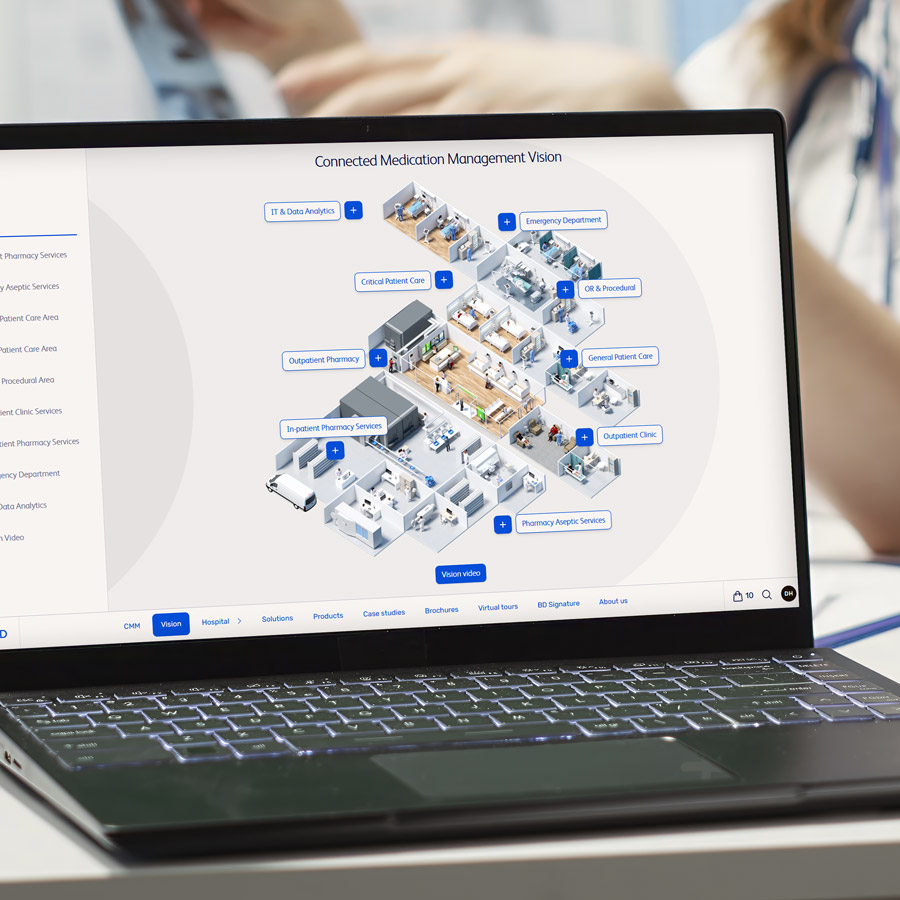
Build Compliant Buyer Enablement Materials in 2026
Read
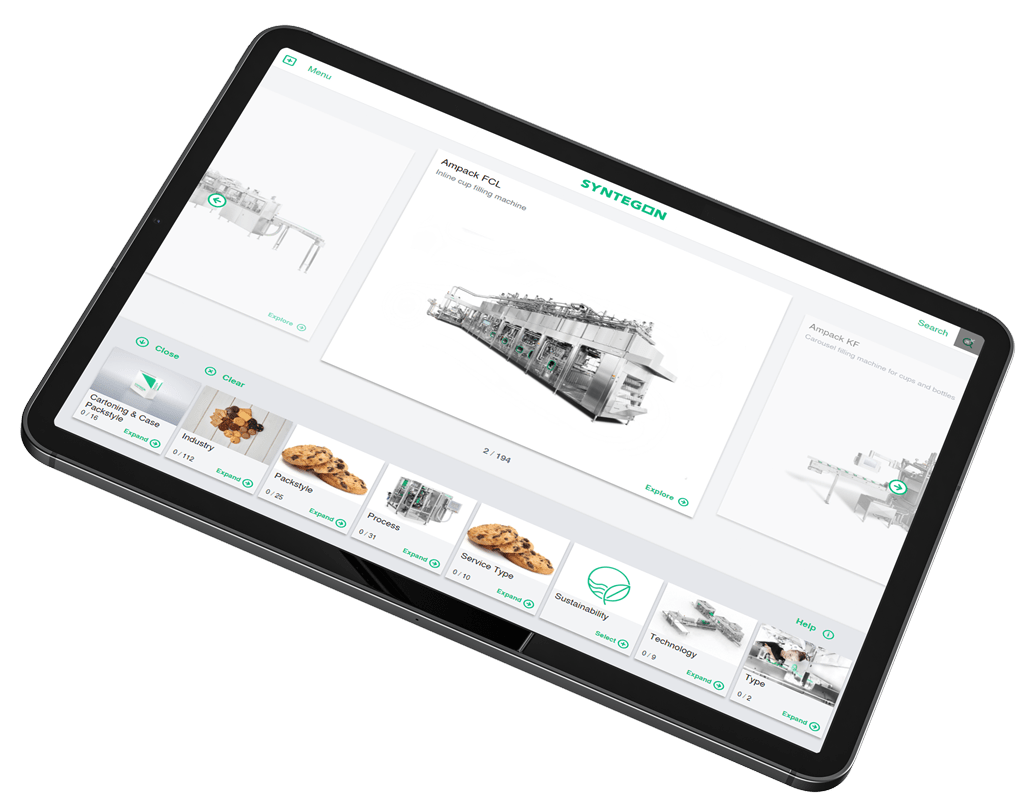
Syntegon – Buyer enablement experience for a global sales team
Read
5 Ways to Create Persuasive Presentations | POPcomms
Read
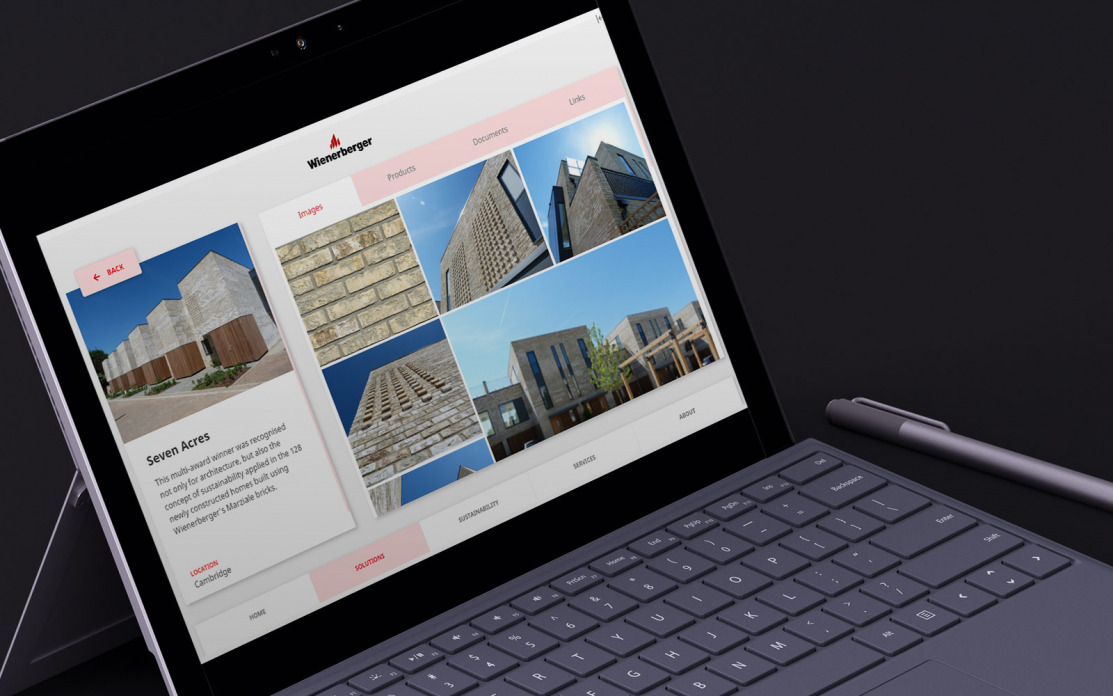
Designing for Buyer Pull: Product-Led Adoption Tactics for Buyer Enablement
Read