




85-Inch Touchscreen Software for Events
Last updated: 12 May 2026
Most exhibitors still think large-format interactive displays are out of reach, either too complex to operate or too expensive to justify. The reality is that 85-inch touchscreen software has evolved dramatically, and what used to require specialist developers can now be deployed by any marketing team in days, not weeks. When we review trade show data, the numbers are compelling, booths with interactive screens draw 35% more visitors compared to traditional setups, and interactive displays can increase booth dwell time by 30–40% and lead capture by up to 35%. This article walks you through everything you need to know about choosing, deploying, and maximizing an 85-inch touchscreen software solution, including how to avoid the hidden costs and complexity that trap most first-time buyers.
Key Takeaways
- Booths featuring 85-inch touchscreen software attract 35% more visitors and achieve dwell times 10-15 times longer than passive displays, creating genuine conversation opportunities for your sales team.
- Modern 85-inch touchscreen software no longer requires coding or IT specialists, meaning marketing teams can build and update interactive experiences in-house without external developers.
- Offline capability is non-negotiable at trade shows where WiFi is unreliable or unavailable, and premium platforms deliver full functionality without internet dependency.
- Lead capture and real-time analytics integrated into touchscreen software turn engagement into measurable business outcomes, with attendees 84% more confident about brands offering hands-on experiences.
Why Large-Format Touchscreens Drive Real Results
An 85-inch touchscreen is not just a bigger screen, it is a different category of engagement tool. At that scale, the visual impact stops people mid-stride on a crowded trade show floor. But the real advantage goes deeper than aesthetics. The self-service nature of touchscreens transforms passive observers into active participants, giving attendees complete control over how they explore your brand. Unlike static banners or brochures, interactive displays invite participation and remove the friction of waiting for a sales representative to become available.
Consider the data from attendee behavior studies. Interactive trade show booths achieve average dwell times of 5 to 12 minutes per visitor, compared to roughly 45 seconds for passive displays, that is a 10-15x increase in the window your sales team has a chance to start a meaningful conversation. Beyond engagement time, 81% of attendees remember booths that feature interactive touchscreens, and 84% feel more confident about brands that offer hands-on experiences. These are not vanity metrics, they translate directly into qualified leads and brand recall.
The psychology is straightforward. 68% of trade show attendees believe booths featuring innovative technology have limitless potential, signalling that visitors actively expect and reward tech-driven experiences. When someone interacts with your brand on a touchscreen, they shift from being a spectator to a participant. They own the pace of discovery, they choose which products to explore, which videos to watch, and which details matter to them. That control is enormously powerful.
If you have attended a modern trade show, you have likely witnessed this dynamic yourself. The booths with long lines and engaged crowds are almost always the ones with interactive elements. The ones with expensive printed collateral and banner stands? Those draw eyes for a second and then people move on. Our services include full strategy and deployment support specifically designed to help brands capture this attention advantage.
Core Features to Demand From 85-Inch Touchscreen Software
Not all 85-inch touchscreen software is created equal. When evaluating platforms, there are specific capabilities that separate solutions that actually deliver results from those that sound good in a pitch deck. Understanding what to look for will save you time, money, and frustration down the line.
No-Code Content Creation
The most effective way to deploy 85-inch touchscreen software quickly is to choose a platform that requires no coding knowledge and lets non-technical team members build experiences in hours, not weeks. Before modern platforms emerged, custom touchscreen applications had to be programmed by developers, which meant months of lead time, expensive contractor costs, and locked-in solutions that were expensive to modify. Today, solutions like POPcomms eliminate that bottleneck entirely. Your marketing team should be able to drag and drop content, configure navigation, and publish interactive experiences without writing a single line of code or involving your IT department.
Offline Functionality Without Compromise
WiFi at trade shows is simultaneously expensive, unreliable, and often intentionally restricted by venues. Any 85-inch touchscreen software worth deploying must work flawlessly offline. That means the software is installed directly on the display hardware, all content is stored locally, and functionality does not degrade when the internet drops. Touchscreen software with offline capability is not an optional nice-to-have, it is a baseline requirement for professional event deployment.
Content Flexibility, Video, PDFs, Interactive Elements
Your booth narrative probably spans multiple formats. You may want to showcase a product video, display interactive maps or timelines, embed downloadable PDFs, or create a simple gallery of high-resolution product photography. The software should handle all of these without requiring workarounds or technical glue. One of our clients at GEA noted that the ability to seamlessly integrate videos, PDFs, and interactive demos transformed how visitors engaged with their booth content.
Touch Responsiveness and User Interface Design
On an 85-inch screen, every design decision is magnified. Touch targets must be large enough to tap reliably, navigation must be intuitive enough for a stranger to understand in seconds, and the overall aesthetic must reflect your brand. The software should provide pre-built templates optimized for touchscreen interaction, but allow enough customization that your booth looks distinctly yours, not like a generic kiosk.
The Offline Advantage, Why Events Need It
Offline capability deserves its own section because it is misunderstood by many first-time buyers and it is a critical differentiator between robust event solutions and cloud-dependent platforms that fail when connectivity drops. At a busy trade show, relying on WiFi or cellular data is gambling with your booth experience. Venues prioritize bandwidth for their own operations, attendee networks are congested, and signal strength is unpredictable. When your 85-inch touchscreen goes dark because the network is congested, every second of downtime is a lost lead and a damaged impression.
Offline-capable touchscreen software works by loading all content and functionality onto the device storage before the event, eliminating any network dependency without sacrificing features or performance. When the event begins, the touchscreen operates completely independently. Attendees browse content, watch videos, interact with maps, and submit their contact information, all without a single packet traveling to a remote server. The software can then sync any captured leads back to your systems after the event, or even during slower moments if connectivity becomes available.
This architecture delivers several practical advantages. First, performance is instantly responsive, since content is loaded locally rather than streaming from the cloud. Second, your data is more secure, because sensitive information stays on the device until you consciously export it. Third, you have total control, you are not dependent on a vendor’s servers or cloud infrastructure remaining online. If a platform vendor experiences an outage on the day of your major show, an offline solution is completely unaffected.
One marketing director we worked with at CLD Inc described it perfectly. They needed a solution that would work offline and include interactive touchscreens with user-friendly navigation. The offline aspect was non-negotiable because their events often took place at venues with restricted internet access. Once they deployed with POPcomms, they discovered that the offline setup also meant dramatically faster performance, since every tap and swipe registered instantly without any latency waiting for cloud responses.
Lead Capture and Analytics Built Into the Software
An 85-inch touchscreen that engages visitors is worthless if you cannot capture who they are and measure what they engaged with. This is where embedded lead capture and touchscreen software with lead capture tools becomes the difference between an impressive booth experience and an actual revenue driver.
Modern platforms should allow you to request contact information at strategic moments in the experience, either as a gate to access premium content or as a voluntary opt-in. The software should store that data securely, associate it with the content the visitor engaged with, and make it easy to export to your CRM or marketing automation platform immediately after the event. Some platforms go further and track which materials were opened, how long visitors spent on each section, and what content resonated most.
The Analytics Advantage
When you combine engagement data with lead capture, you get genuine business intelligence. You can see that visitors in the manufacturing sector spent 8 minutes exploring your automation solutions but only 2 minutes on your service offerings. That tells your sales team something valuable before they even pick up the phone. You can identify which pieces of content drove the most interaction, and which underperformed. You can measure exactly how many qualified prospects your booth actually attracted, and how that compares to the cost of the booth space and technology investment.
The Freeman Trends Report documents a 3-5x engagement lift from interactive technology overall, but the brands that see the highest ROI are the ones that measure the engagement and use that data to refine their approach. Without analytics, you are flying blind. With them, every future event becomes incrementally more effective because you know what actually works.
Implementation, Cost, and Timeline Reality
Objection one, will this take a long time to create? No. With specialist software like POPcomms, touchscreen experiences can be created in a fraction of the time they used to take. A moderately complex interactive experience that once required 8-12 weeks of developer time can now be built and deployed in 1-2 weeks by your internal marketing team, with support from the software vendor if needed. That speed translates into the ability to iterate, test new concepts, and respond to market feedback between events without massive cost overhead.
Objection two, will this be very expensive? Not anymore. Before no-code platforms emerged, touchscreen experiences usually required custom programming, which meant engaging a development agency, defining requirements, managing a multi-week project, and paying accordingly, the total cost often exceeded $50,000 for a single experience. POPcomms provides a no-code solution for companies to use, eliminating the need for a dedicated developer team and dramatically reducing the barrier to entry. The software is available as a service with transparent pricing, no surprise consultant fees, and a cost structure that scales with your usage.
Objection three, won’t this be complicated to set up and manage? No. The entire platform is designed for marketing and events teams, not software engineers. Setup takes hours, not days. Training is straightforward, because the interface is intuitive. Ongoing updates and content changes are done through a simple admin dashboard, with no backend access required. One of our clients with four touchscreen displays across different departments noted that anyone on the team could pick up and use the platform without needing coding experience or specialized training.
Hardware Considerations
Your 85-inch display is the hardware foundation, but the touchscreen software is what transforms it into an engagement tool. When selecting a display, confirm that the software you choose is compatible with the touch technology, whether infrared, capacitive, or resistive. Confirm that the display runs an operating system the software supports, typically Windows, Android, or webOS. Most 85-inch commercial displays sold today are compatible with major platforms, but confirming compatibility before purchase prevents costly surprises later.
POPcomms vs. Competitors, What Sets Us Apart
The touchscreen software market has expanded significantly in 2026, with options ranging from generic digital signage platforms to specialized event solutions. Understanding what differentiates a strong platform from a mediocre one is critical to making the right choice.
Generic digital signage software treats your touchscreen like a billboard that happens to be interactive, designed for retail environments where the primary goal is displaying content, not capturing leads or enabling self-service exploration. That approach works fine for a menu board in a restaurant, but it falls short for trade show environments where engagement depth and lead capture are the entire point. These platforms often lack offline capability, their analytics are superficial, and they are frustrating to customize for specific brand needs.
Specialized event platforms, like POPcomms, are purpose-built for trade shows, exhibitions, and conferences. They assume from day one that you need offline functionality, that you want to capture leads, that your content will change frequently, and that your team does not have IT resources available. The feature set reflects those realities.
What Our Clients Tell Us
Mark Currier, Director of Marketing and New Business at CLD Inc, summarized it clearly, if you need a platform that lets you quickly create and customize interactive touchscreen content while having an experienced team to support and enhance your ideas, then POPcomms is for you. He added that with other companies, you might get 60% of what you want, but with POPcomms he got 100%, everything he wanted and more.
Olga Bryzgalova, Marketing Manager at the same company, highlighted a specific capability, the ability to zoom in and show details that cannot be conveyed with a brochure. The interactive map is far more engaging than a static PDF, and sending materials directly from the booth to customers is invaluable. That combination, rich interactivity plus lead capture, is what separates an impressive booth from one that actually converts.
GEA deployed multiple touchscreens and noted that having four unique experiences across departments brought significant traffic and engagement to the booth. More importantly, tracking what materials were sent and opened afterward provided valuable intelligence for follow-up. That closed-loop, from engagement to lead capture to measurable follow-up, is what ROI in events actually looks like. Contact us to discuss how a similar setup could transform your event results.
Why Speed Matters
In 2026, exhibitors who wait until six weeks before an event to start planning their booth technology are already behind. Lead time for 85-inch displays can span 4-6 weeks, and custom integrations can add more time. Learn how to customize touchscreen interfaces for tradeshows and start your planning earlier. Platforms that enable rapid iteration and last-minute customization without developer involvement give you a competitive advantage. You can test ideas, refine based on feedback, and deploy updates even after installation, without cost overruns or schedule delays.
Frequently Asked Questions
What operating system does 85-inch touchscreen software run on?
Most modern 85-inch commercial displays run Windows, Android, or webOS. Premium platforms like POPcomms support all three, so you are not locked into one hardware choice. Confirm software compatibility before purchasing the display to avoid integration headaches.
Can I use 85-inch touchscreen software offline at events without internet?
Yes, purpose-built event platforms like POPcomms are designed to run completely offline by installing all content and software directly on the display hardware before the event. You get full functionality, fast performance, and no network dependency at all.
How much does 85-inch touchscreen software typically cost in 2026?
Pricing varies, but no-code event platforms typically charge a monthly subscription ranging from $200-$800 per month depending on features and usage, plus hardware costs for the 85-inch display itself. Custom programming solutions cost significantly more, $25,000-$75,000+, making no-code platforms substantially more affordable.
Can I capture leads directly from the touchscreen software?
Yes, modern event-focused platforms include built-in lead capture forms and integrate with CRM systems. You can collect contact information, track which content each visitor engaged with, and export the data to your sales team immediately after the event or in real-time.
How long does it take to create a custom touchscreen experience on 85-inch software?
With no-code platforms designed for marketers, a moderately complex experience typically takes 1-2 weeks to build and deploy, compared to 8-12 weeks with custom programming. Your internal team can manage updates without external developers, making iteration fast and affordable.
Selecting and deploying the right 85-inch touchscreen software is the single biggest factor in whether your booth draws foot traffic, engages meaningfully, and converts visitors into qualified leads.
Take the next step today.

Related Posts
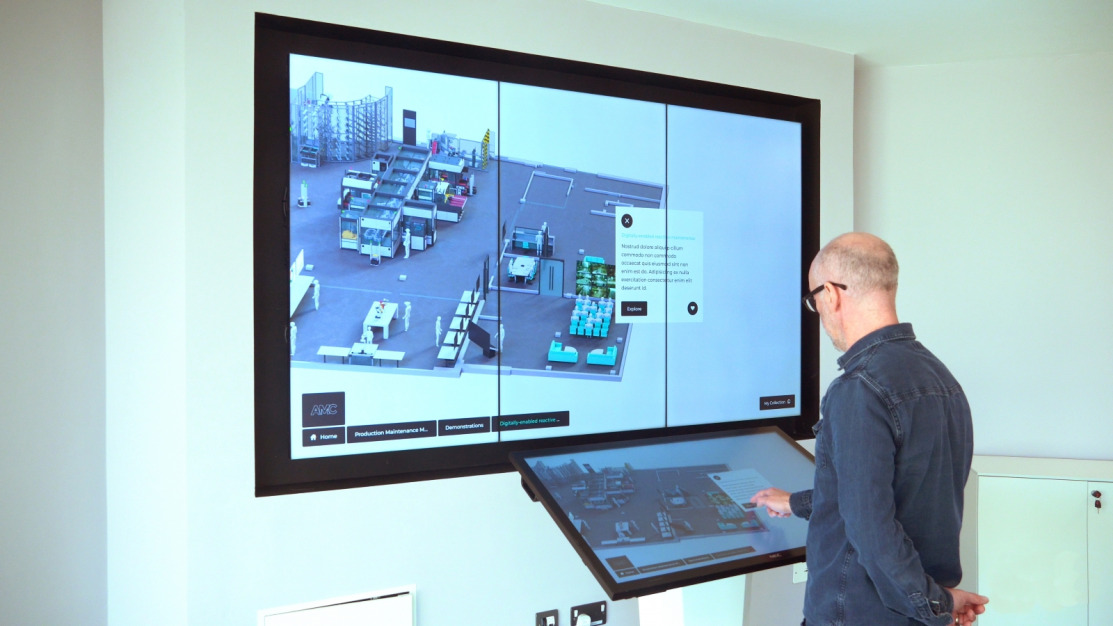
Tradeshow Touchscreen Platform Subscription in 2026
Read
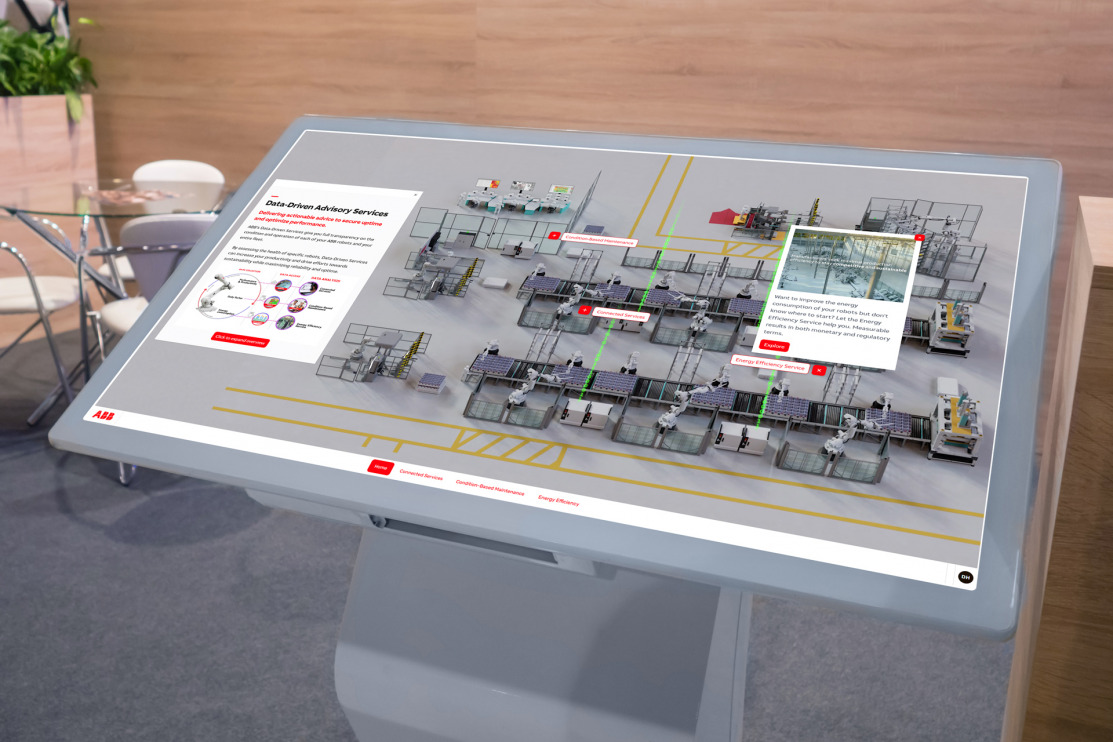
Touchscreen Software OS Compatibility in 2026
Read
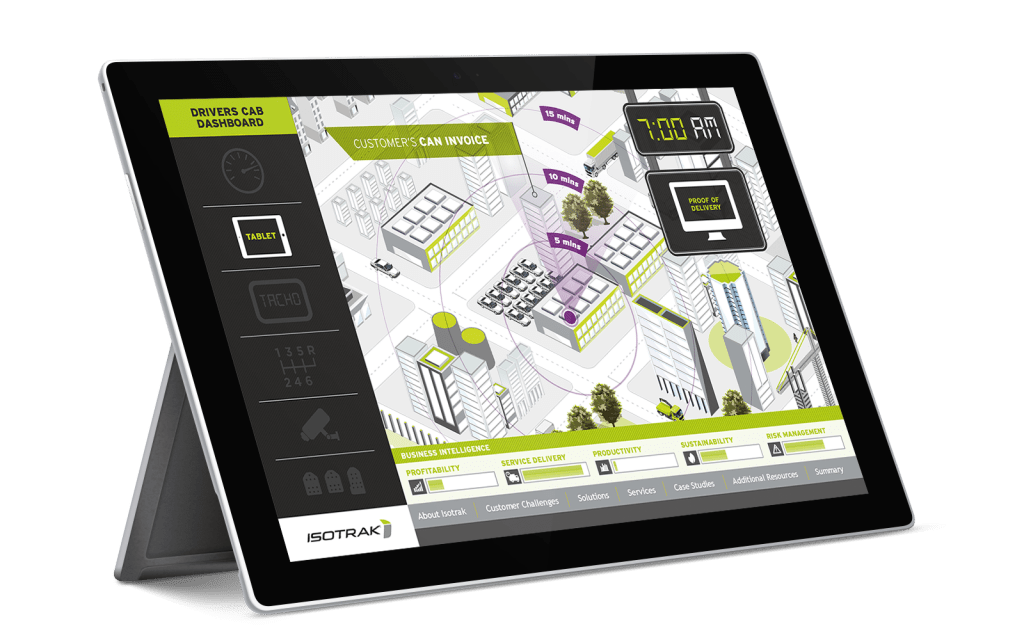
Sales Enablement CMS | Right Info, Right Time
Read
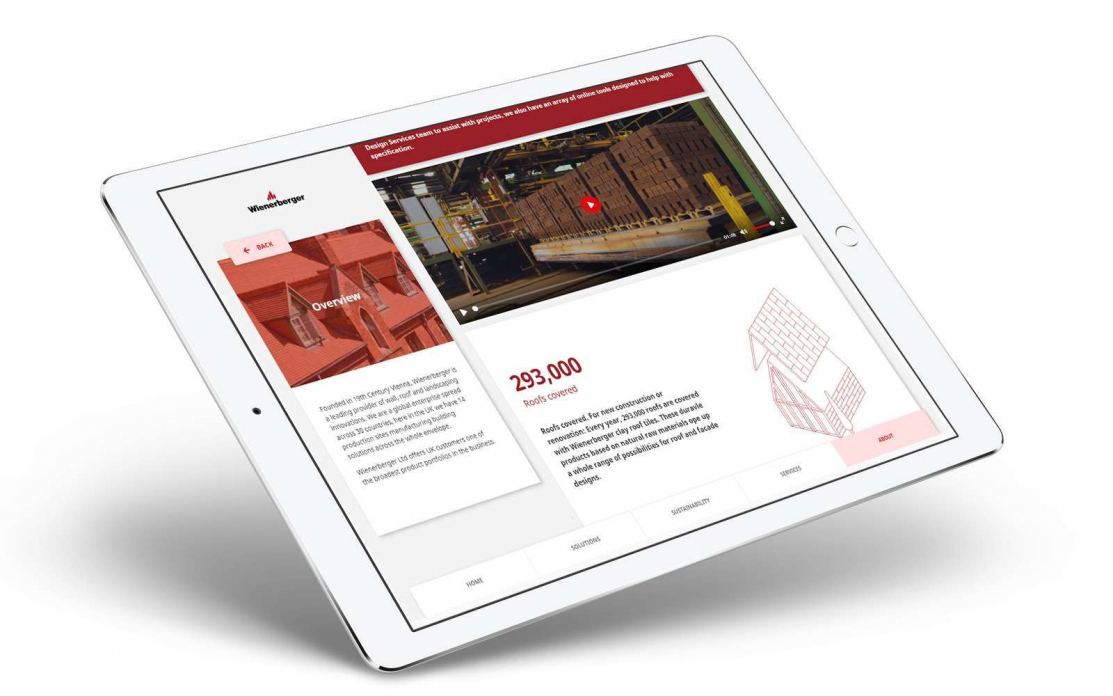
5 Sales Enablement Best Practices to Help Drive Growth
Read