




5G Compatible Touchscreen Display Platform Guide
Last updated: 12 May 2026
Most event teams assume that bringing interactive touchscreen experiences to their booth means choosing between expensive connectivity solutions or settling for limited functionality offline. The reality in 2026 is entirely different, and it’s reshaping how brands capture attention at trade shows. A 5G compatible touchscreen display platform gives you the flexibility to work seamlessly with the latest connectivity while maintaining full feature parity whether you’re connected or not, yet many marketing teams are still deploying single-purpose displays that offer neither. If you’re evaluating a touchscreen display platform that genuinely supports your team’s workflow and your event’s technical reality, understanding the difference between connectivity options, offline capability, and real lead capture matters more than ever. In this guide, we’ll walk you through what makes a 5G compatible touchscreen display platform worth your investment, how to evaluate your options fairly, and which features actually translate to measurable results at events.
Key Takeaways
- 5G connectivity enables faster content delivery and real-time analytics, but offline capability is equally essential because venue WiFi and cellular networks are unreliable at events.
- Interactive touchscreen displays draw 35% more visitors and increase dwell time by 30–40% compared to static booths, making platform selection a direct revenue driver.
- The best 5G compatible touchscreen display platforms offer no-code content creation, meaning your team can build and customize experiences without technical resources or expensive developer time.
- Lead capture tools integrated directly into the platform, combined with analytics tracking, allow you to measure ROI and follow up with attendees immediately after an event concludes.
Why 5G Connectivity Matters for Modern Trade Shows
5G connectivity in a touchscreen display platform enables faster content delivery, seamless cloud synchronization, and real-time analytics collection without the latency problems that plagued earlier generations of event technology. The shift from 4G to 5G networks isn’t just about speed, though that matters, it’s about reliability and the ability to push content updates, collect lead data, and monitor booth performance simultaneously without degradation.
In 2026, event venues are increasingly rolling out 5G infrastructure, and smart exhibitors are building platforms that leverage this infrastructure without depending on it. That dual approach, the ability to work with 5G when available and transition seamlessly to offline operation when connectivity drops, is the hallmark of a platform designed for real-world event conditions. Consider that most trade show venues still experience patchy WiFi coverage, bandwidth throttling, and unpredictable cellular performance during peak hours, even with 5G deployment, your team needs a solution that doesn’t collapse when the network does.
68% of trade show attendees believe booths featuring innovative technology have limitless potential, signalling that visitors actively expect and reward tech-driven experiences. A 5G compatible touchscreen display platform positions your brand as forward-thinking and professional, but only if the underlying platform can actually deliver reliability under pressure. When your touchscreen content loads instantly, transitions are smooth, and lead capture happens in real time, attendees notice, and they remember.
Core Features of a Strong 5G Touchscreen Display Platform
Not all touchscreen platforms are built the same, and the presence of 5G compatibility doesn’t automatically mean the platform is optimized for events. Here are the features that separate platforms purpose-built for trade shows from generic digital signage software.
No-Code Content Creation and Customization
The most effective way to deploy a touchscreen display platform at an event is to use no-code software that allows any team member, regardless of technical skill, to create and modify content in minutes rather than weeks. Before 2026, building interactive touchscreen experiences required custom programming, which meant hiring developers, lengthy timelines, and budgets that spiralled. That barrier no longer exists. When you select a 5G compatible touchscreen display platform, prioritize solutions that let your marketing team own the content creation process without writing a single line of code. Mark Currier, Director of Marketing and New Business at CLD Inc, noted that “if you need a platform that lets you quickly create and customize interactive touchscreen content while having an experienced team to support and enhance your ideas, then POPcomms is for you.” This approach saves weeks of development time and eliminates the risk that technical changes require external resources.
Touchscreen-First Interface Design
The interface of your 5G touchscreen display platform must be designed specifically for touch interaction, not adapted from mouse-driven software. Buttons should be large, interactions intuitive, and navigation logical. Customizing a touchscreen interface for trade shows requires understanding attendee behavior, attention span, and the physical ergonomics of standing in front of a screen. Poor design leads to confusion, abandoned interactions, and wasted booth traffic. Strong platforms include templates and best practices built in, guiding your team toward designs that actually work.
Content Variety and Media Support
Your platform should handle video, PDFs, images, interactive maps, product demos, and live data feeds without performance degradation. One customer from a manufacturing firm shared, “we love the ability to zoom in and show details that can’t be conveyed with a brochure. The interactive map is far more engaging than a static PDF, and sending materials directly from the booth to customers is invaluable.” The flexibility to mix media types keeps attendees engaged and allows different team members to showcase their area of expertise through the same platform.
Multi-Screen Orchestration
Many booths use multiple touchscreens to address different departments or product lines. Your 5G compatible touchscreen display platform should allow you to manage and update all screens from a single dashboard, schedule different content for different times of day, and track engagement separately by screen. One global engineering firm used four synchronized touchscreens across their booth, and the ability to present four unique experiences simultaneously drove significantly higher traffic than a single-screen approach.
Offline Capability, the Overlooked Game Changer
A 5G compatible touchscreen display platform must function completely offline because event venue connectivity is unreliable, and depending on external networks during your most important customer interactions is a strategic risk. This isn’t a nice-to-have feature, it’s essential infrastructure.
We’ve seen countless platforms promise 5G integration and cloud synchronization, then fail when the venue’s WiFi network saturates or the cellular carrier throttles bandwidth during peak hours. Your touchscreen displays should load all content locally, run all interactions independently, and only sync with cloud services when a stable connection is available. This architecture means your booth operates at full capability whether you have 5G, WiFi, or neither.
Implementing touchscreen software with offline capability also protects your team from the anxiety of technical failure during an event. The most memorable booth experiences happen when technology feels invisible and just works. When attendees see “Reconnecting” messages or frozen screens, it damages your brand perception and wastes the traffic you’ve worked to attract.
Lead Capture and Real-Time Data Integration
A 5G compatible touchscreen display platform is only as valuable as the leads and insights it captures. The best platforms integrate lead capture directly into the user journey, making it effortless for attendees to provide contact information while deepening their engagement with your content.
Interactive elements boost engagement between visitors and exhibitors by around 50%, and 81% of attendees remember booths that feature interactive touchscreens. But memory isn’t conversion, leads are. Your platform should allow attendees to submit their information directly through the touchscreen, receive instant confirmation or materials, and allow your team to track what content resonated with each visitor. After the event, you’ll know exactly which features each person explored, which demos they watched, and what materials they requested, enabling highly targeted follow-up conversations.
Advanced platforms include touchscreen software with lead capture tools that sync automatically to your CRM, email platform, or marketing automation system once connectivity is restored. This ensures no lead data is lost and your sales team can act within hours, when the event is still fresh in the attendee’s mind.
One customer reported that “tracking what materials were sent and opened afterward has been very useful for us.” This level of attribution transforms a booth from a brand awareness tactic into a measurable part of your pipeline.
Comparing Platforms: What to Actually Look For
When evaluating a 5G compatible touchscreen display platform, skip the generic feature checklists and focus on these critical differentiators.
Speed of Deployment
“Will this take a long time to create?” is the question every event marketer asks. With specialist software built for touchscreens, experiences can be created in a fraction of the time they used to take. Compare your options by actually building a test experience, not just reading case studies. Can you upload content, customize layouts, and preview on a real touchscreen within a day? Or do you need to schedule a call with a specialist and wait for delivery? The faster platform wins, because your event schedule won’t wait.
Cost Structure and No Hidden Setup Fees
“Will this be very expensive?” Before POPcomms and similar platforms emerged, touchscreen experiences usually needed to be programmed, which was expensive, time-consuming and had to be done by a dedicated team. Modern 5G compatible touchscreen display platforms offer a fundamentally different model, a flat fee for software access, no per-screen charges, and no ongoing development costs. Request a transparent quote that includes software licensing, any hardware recommendations, and support. Avoid platforms with surprise per-transaction fees or expensive integrations.
Offline Functionality Verification
Ask the vendor directly: “Can I disconnect this from the network right now and run a full interactive experience without WiFi or 5G?” Request a live demonstration. Load content, test navigation, submit a lead form, play a video, and confirm everything works. If they hesitate or need to set up a special demo, the offline capability is probably limited or experimental.
Analytics and ROI Measurement
Look for platforms that track engagement metrics, time spent on each screen, content popularity, lead submission completion rates, and follow-up material delivery. Some platforms offer touchscreen software with ROI tracking that shows you exactly how your touchscreen investment influenced attendance, dwell time, and lead quality compared to traditional displays.
One customer from a manufacturing company shared that “with POPcomms, I got 100%, everything I wanted and more. It’s impressive how exact everything was.” Precision matters because it allows you to justify the investment to finance, and it informs your strategy for the next event.
Support and Customization Options
Does the platform offer template libraries, design support, and content strategy guidance, or do you buy software and figure it out alone? The best platforms include access to our services that help you optimize layouts, improve engagement, and troubleshoot issues in real time. Ask about onboarding, training for your team, and post-event support.
Implementation and Ongoing Support
Once you’ve selected your 5G compatible touchscreen display platform, implementation sets the tone for success.
Timeline and Preparation
Plan your deployment timeline with buffer room. Content creation should begin at least four weeks before an event, allowing time for testing, iteration, and staff training. Your team should rehearse with actual touchscreen hardware in your booth layout before the event, identifying ergonomic issues, content gaps, and navigation confusion while you still have time to fix them.
On-Site Support and Contingencies
Have a dedicated person on your event team who understands the platform, can troubleshoot connectivity issues, and can quickly modify content if something isn’t resonating. Establish a relationship with your platform vendor such that support is available during event hours, even if by phone or email. Know what happens if a touchscreen hardware fails, have a backup device staged, and understand the recovery process.
Interactive trade show booths achieve average dwell times of 5 to 12 minutes per visitor, compared to roughly 45 seconds for passive displays. That’s a 10–15x increase in the window your sales team has to start a meaningful conversation. When a technical failure interrupts that window, it compounds the loss.
Post-Event Analysis and Iteration
Immediately after an event, export your analytics. Which content pieces were most popular? Where did attendees abandon the experience? Which lead capture prompts had the highest completion rate? Use this data to refine content for your next event. The platforms that offer the deepest insights allow you to improve continuously, turning each event into better ROI than the last.
If you’re ready to evaluate platforms seriously, contact us for a conversation about your specific booth goals, event timeline, and technical constraints. We’ll help you assess whether a 5G compatible touchscreen display platform makes sense for your next event and guide you toward a solution that delivers.
Frequently Asked Questions
What is a 5G compatible touchscreen display platform?
A 5G compatible touchscreen display platform is software designed to run on physical touchscreen hardware and optimize performance whether connected via 5G, WiFi, or operating completely offline. It enables interactive content delivery, lead capture, and real-time analytics at events, trade shows, and public spaces without requiring constant internet connectivity.
Can a touchscreen platform work without WiFi or 5G connectivity?
Yes, modern touchscreen platforms designed for events include offline capability, meaning all content, navigation, and functionality load locally on the device. Lead data and analytics are cached and sync automatically once connectivity is restored, ensuring no data loss and full feature access regardless of network availability at a venue.
How long does it take to create interactive content for a touchscreen display?
With no-code platforms like POPcomms, interactive content can be created and customized in hours or days, not weeks. Traditional approaches requiring custom programming took months and cost significantly more. Modern platforms include templates, drag-and-drop editors, and support resources that allow marketing teams to own the creation process without technical resources.
What data can a 5G touchscreen platform capture from attendees?
Advanced touchscreen platforms capture contact information submitted through lead forms, track which content each person viewed and for how long, record interaction patterns, measure completion rates on demos or product tours, and monitor overall booth engagement metrics. This data integrates with CRM systems, enabling precise follow-up targeting based on demonstrated interest.
Is a 5G touchscreen display platform more expensive than traditional booth displays?
Modern no-code touchscreen platforms have eliminated the custom programming costs that made them expensive historically. Today, licensing is typically flat-rate, with no per-screen or per-transaction charges. When you factor in 35% higher visitor attraction and 30–40% longer dwell times compared to static displays, the ROI is positive within the first or second event.
Choosing a 5G compatible touchscreen display platform requires hands-on evaluation, transparent vendor partnerships, and a clear view of what ROI looks like for your specific business model.
Take the next step today.

Related Posts
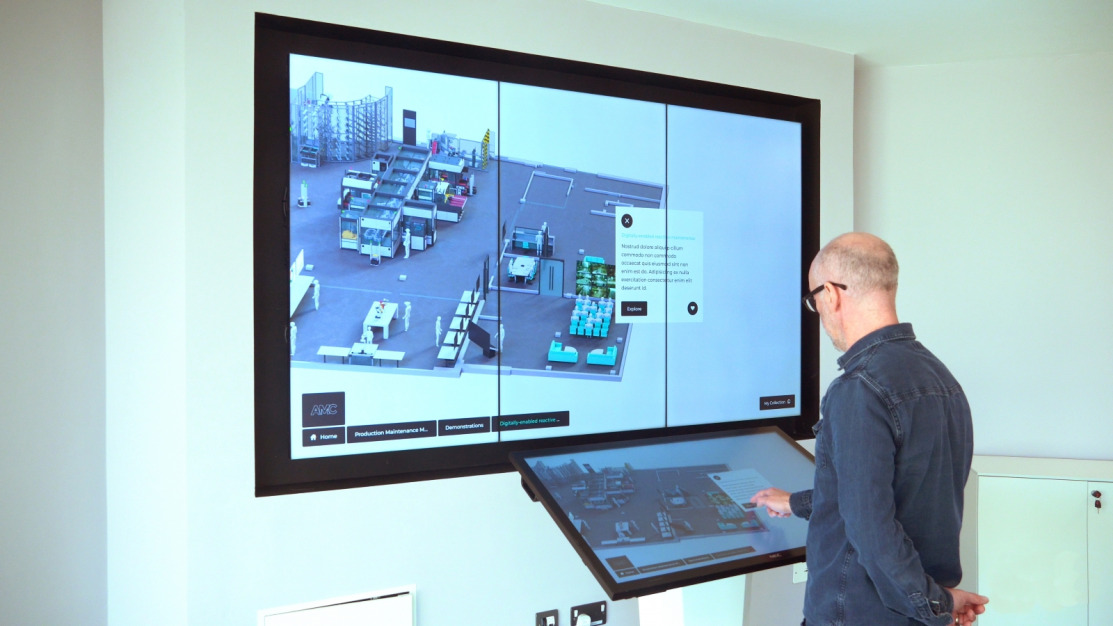
Touchscreen Software for Product Launches
Read
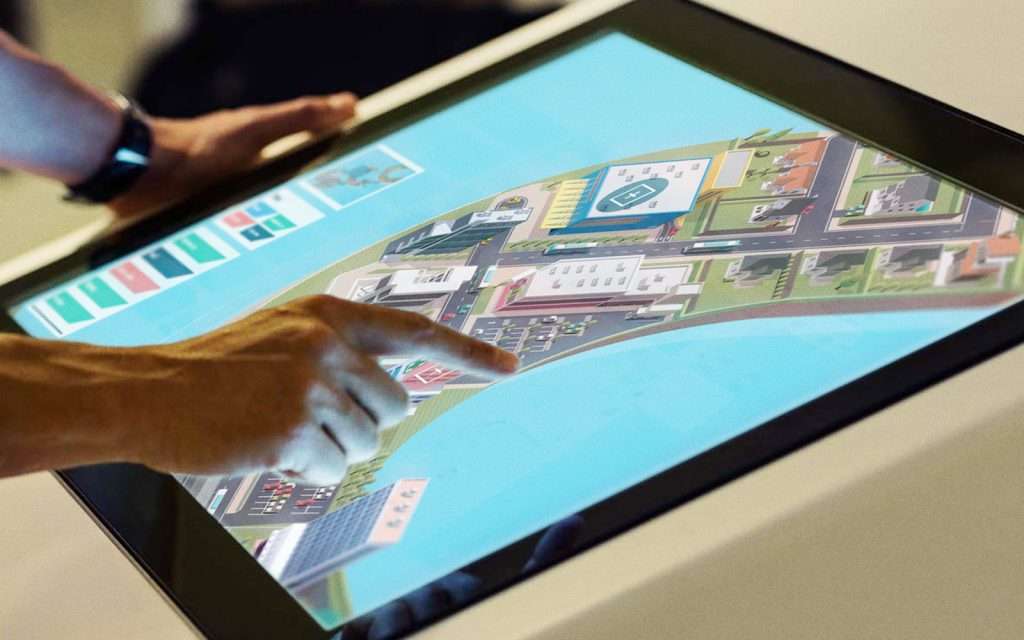
3D Modelling Made Easy | POPcomms
Read
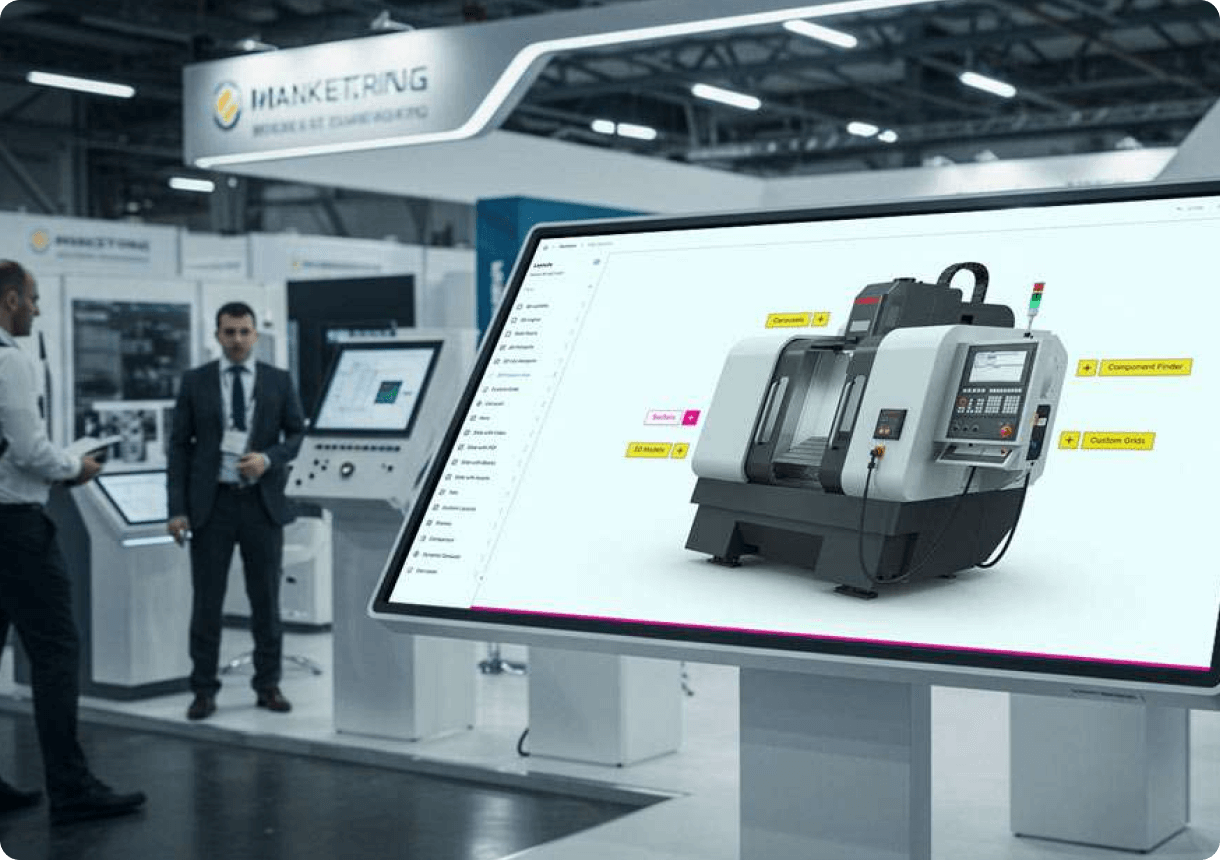
Mid-Size 55-Inch Touchscreen Display Software for 2026
Read
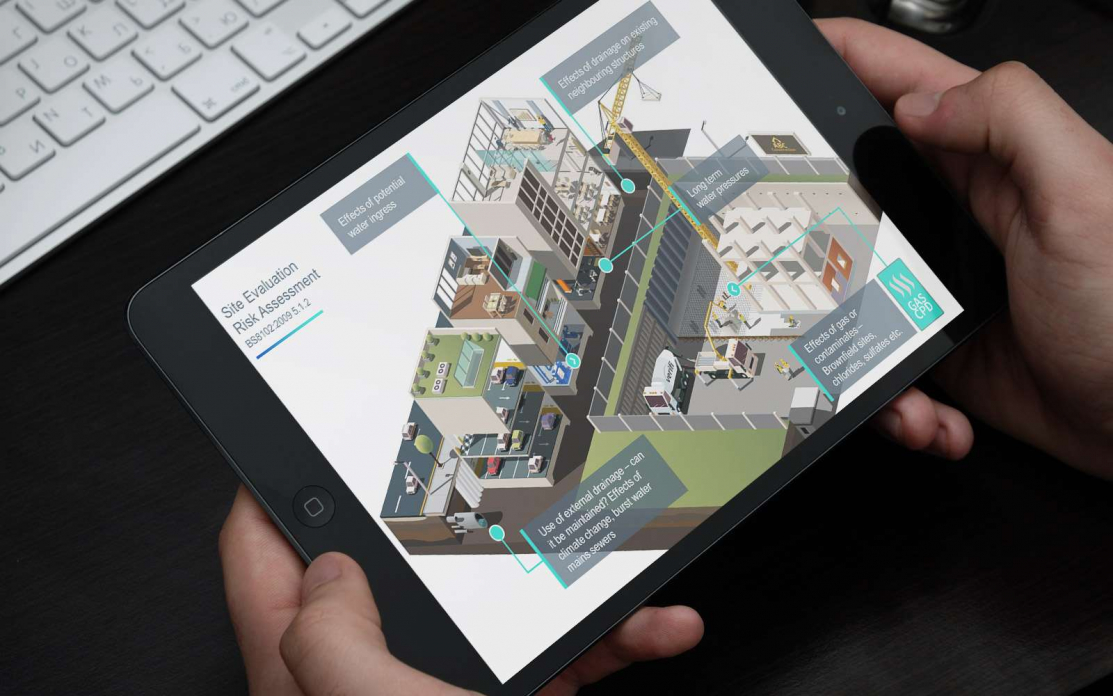
What B2B Marketing Challenges Can Interactive Customer Experiences Help You Overcome?
Read